Results by title

2 books match the query 'Ramírez, Sergio'
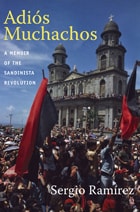
cover of Adiós Muchachos: A Memoir of the Sandinista Revolution

Adiós Muchachos

A Memoir of the Sandinista Revolution

Sergio Ramírez

Duke University Press, 2012

Adiós Muchachos is a candid insider’s account of the leftist Sandinista revolution in Nicaragua. During the 1970s, Sergio Ramírez led prominent intellectuals, priests, and business leaders to support the Sandinista National Liberation Front (FSLN), against Anastasio Somoza’s dictatorship. After the Sandinistas overthrew the Somoza regime in 1979, Ramírez served as vice-president under Daniel Ortega from 1985 until 1990, when the FSLN lost power in a national election. Disillusioned by his former comrades’ increasing intolerance of dissent and resistance to democratization, Ramírez defected from the Sandinistas in 1995 and founded the Sandinista Renovation Movement. In Adiós Muchachos, he describes the utopian aspirations for liberation and reform that motivated the Sandinista revolution against the Somoza regime, as well as the triumphs and shortcomings of the movement’s leadership as it struggled to turn an insurrection into a government, reconstruct a country beset by poverty and internal conflict, and defend the revolution against the Contras, an armed counterinsurgency supported by the United States. Adiós Muchachos was first published in 1999. Based on a later edition, this translation includes Ramírez’s thoughts on more recent developments, including the re-election of Daniel Ortega as president in 2006.
[more]
cover of Margarita, How Beautiful the Sea

Margarita, How Beautiful the Sea

Sergio Ramírez

Northwestern University Press, 2007

León, Nicaragua, 1907. During a tribute he delivers during his triumphal return to his native city, Rubén Darío writes on the fan of a little girl one of his most famous poems, "Margarita, How Beautiful the Sea."

In 1956 in a cafe in León, a group of literati gather, dedicated, among other things, to the rigorous reconstruction of the legend surrounding Darío—but also to conspire. There will be an attempt against dictator Somoza's life, and that little girl with the fan a half-century before will not be a disinterested party.

In Margarita, How Beautiful the Sea, Sergio Ramírez encompasses, in a complete metaphor of reality and legend, the entire history of his country. The narrative moves along paths fifty years apart, which inevitably converge. The story becomes a fascinating exercise on the power of memory, on the influence of the past, fictitious or not, in the finality of reality.

[more]