Results by title
12 books match the query 'Rational choice theory'
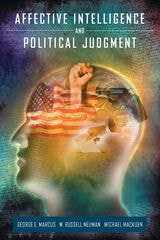
Affective Intelligence and Political Judgment
George E. Marcus, W. Russell Neuman, and Michael MacKuen
University of Chicago Press, 2000
Although the rational choice approach toward political behavior has been severely criticized, its adherents claim that competing models have failed to offer a more scientific model of political decisionmaking. This measured but provocative book offers precisely that: an alternative way of understanding political behavior based on cognitive research.
The authors draw on research in neuroscience, physiology, and experimental psychology to conceptualize habit and reason as two mental states that interact in a delicate, highly functional balance controlled by emotion. Applying this approach to more than fifteen years of election results, they shed light on a wide range of political behavior, including party identification, symbolic politics, and negative campaigning.
Remarkably accessible, Affective Intelligence and Political Judgment urges social scientists to move beyond the idealistic notion of the purely rational citizen to form a more complete, realistic model that includes the emotional side of human judgment.
[more]
Choice-Free Rationality
A Positive Theory of Political BehaviorRobert Grafstein
University of Michigan Press, 1999
Rational choice theory has become the basis for much of the recent work done in political science. Yet explanations of many political phenomena elude rational choice theorists. Robert Grafstein offers a modification to rational choice theory that extends its ability to explain social behavior.
Grafstein argues that, instead of basing the analysis on the assumption that an actor will maximise her expected utility or her utility given the probability that the event will happen, we should define rationality as the maximisation of expected utility conditional on the probability that her act will bring the event about. This definition of utility, based on the work of Richard Jeffrey, restores the consequences of an individual's act to rational choice analysis. For example, in making a decision to vote, a conditional expected utility maximiser will compare the likelihood of victory for her preferred candidate given her own participation with the likelihood of a victory given her abstention.
The author shows the theoretical implications of this new definition of rationality and then uses it to explain certain aspects of ethnic identity and mobilization, ideology, and altruism and intertemporal choice. He then explores the implications of this idea for policy analysis and econometrics. This book will provoke a debate about how work based in rational choice theories is done.
Robert Grafstein is Professor of Political Science, University of Georgia.
[more]
Choosing an Identity
A General Model of Preference and Belief FormationSun-Ki Chai
University of Michigan Press, 2001
Social science research is fragmented by the widely differing and seemingly contradictory approaches used by the different disciplines of the social sciences to explain human action. Attempts at integrating different social science approaches to explain action have often been frustrated by the difficulty of incorporating cultural assumptions into rational choice theories without robbing them of their generality or making them too vague for predictions. Another problem has been the major disagreements among cultural theorists regarding the ways in which culture affects preferences and beliefs.
This book provides a general model of preference and belief formation, addressing the largest unresolved issue in rational choice theories of action. It attempts to play a bridging role between these approaches by augmenting and modifying the main ideas of the "rational choice" model to make it more compatible with empirical findings in other fields. The resulting model is used to analyze three major unresolved issues in the developing world: the sources of a government's economic ideology, the origins of ethnic group boundaries, and the relationship between modernization and violence.
Addressing theoretical problems that cut across numerous disciplines, this work will be of interest to a diversity of theoretically-minded scholars.
Sun-Ki Chai is Assistant Professor of Sociology, University of Arizona.
[more]
Is Rational Choice Theory All of Social Science?
Mark I. Lichbach
University of Michigan Press, 2003
Advocates of rational choice theory in political science have been perceived by their critics as attempting to establish an intellectual hegemony in contemporary social science, to the detriment of alternative methods of research. The debate has gained a nonacademic audience, hitting the pages of the New York Times and the New Republic. In the academy, the antagonists have expressed their views in books, journal articles, and at professional conferences.
Mark I. Lichbach addresses the question of the place of rational choice theory in the social sciences in general and in political science in particular. He presents a typology of the antagonists as either rationalist, culturalist, or structuralist and offers an insightful examination of the debate. He reveals that the rationalist bid for hegemony and synthesis is rooted in the weaknesses, not the strengths, of rationalist thought. He concludes that the various theoretical camps are unlikely to accept the claimed superiority of the rationalist approach but that this opposition is of value in itself to the social sciences, which requires multiple perspectives to remain healthy.
With its penetrating examination of the assumptions and basic arguments of each of the sides to this debate, this book cuts through the partisan rhetoric and provides an essential roadmap for the future of the discipline.
Mark I. Lichbach is Professor of Government and Politics, University of Maryland.
[more]
Politics and the Architecture of Choice
Bounded Rationality and GovernanceBryan D. Jones
University of Chicago Press, 2001
Politics and the Architecture of Choice draws on work in political science, economics, cognitive science, and psychology to offer an innovative theory of how people and organizations adapt to change and why these adaptations don't always work. Our decision-making capabilities, Jones argues, are both rational and adaptive. But because our rationality is bounded and our adaptability limited, our actions are not based simply on objective information from our environments. Instead, we overemphasize some factors and neglect others, and our inherited limitations—such as short-term memory capacity—all act to affect our judgment.
Jones shows how we compensate for and replicate these limitations in groups by linking the behavioral foundations of human nature to the operation of large-scale organizations in modern society. Situating his argument within the current debate over the rational choice model of human behavior, Jones argues that we should begin with rationality as a standard and then study the uniquely human ways in which we deviate from it.
Jones shows how we compensate for and replicate these limitations in groups by linking the behavioral foundations of human nature to the operation of large-scale organizations in modern society. Situating his argument within the current debate over the rational choice model of human behavior, Jones argues that we should begin with rationality as a standard and then study the uniquely human ways in which we deviate from it.
[more]
Positive Political Theory I
Collective PreferenceDavid Austen-Smith and Jeffrey S. Banks
University of Michigan Press, 2000
Positive Political Theory I is concerned with the formal theory of preference aggregation for collective choice. The theory is developed as generally as possible, covering classes of aggregation methods that include such well-known examples as majority and unanimity rule and focusing in particular on the extent to which any aggregation method is assured to yield a set of "best" alternatives. The book is intended both as a contribution to the theory of collective choice and a pedagogic tool.
Austen-Smith and Banks have made the exposition both rigorous and accessible to people with some technical background (e.g., a course in multivariate calculus). The intended readership ranges from more technically-oriented graduate students and specialists to those students in economics and political science interested less in the technical aspects of the results than in the depth, scope, and importance of the theoretical advances in positive political theory.
"This is a stunning book. Austen-Smith and Banks have a deep understanding of the material, and their text gives a powerfully unified and coherent perspective on a vast literature. The exposition is clear-eyed and efficient but never humdrum. Even those familiar with the subject will find trenchant remarks and fresh insights every few pages. Anyone with an interest in contemporary liberal democratic theory will want this book on the shelf." --Christopher Achen, University of Michigan
David Austen-Smith is Professor of Political Science, Professor of Economics, and Professor of Management and Strategy, Northwestern University. Jeffrey S. Banks is Professor of Political Science, California Institute of Technology.
[more]
Positive Political Theory II
Strategy and StructureDavid Austen-Smith and Jeffrey S. Banks
University of Michigan Press, 2005
“A major piece of work . . . a classic. There is no
other book like it.”
—Norman Schofield, Washington University
“The authors succeed brilliantly in tackling a large
number of important questions concerning the
interaction among voters and elected representatives
in the political arena, using a common, rigorous
language.”
—Antonio Merlo, University of Pennsylvania
Positive Political Theory II: Strategy and Structure
is the second volume in Jeffrey Banks and David
Austen-Smith’s monumental study of the links
between individual preferences and collective choice.
The book focuses on representative systems, including
both elections and legislative decision-making
processes, clearly connecting individual preferences to
collective outcomes. This book is not a survey. Rather,
it is the coherent, cumulative result of the authors’
brilliant efforts to indirectly connect preferences to
collective choice through strategic behaviors such as
agenda-selection and voting.
The book will be an invaluable reference and teaching
tool for economists and political scientists, and an
essential companion to any scholar interested in the
latest theoretical advances in positive political theory.
[more]
Preferences and Situations
Points of Intersection Between Historical and Rational Choice In.Ira Katznelson
Russell Sage Foundation, 2005
A scholarly gulf has tended to divide historians, political scientists, and social movement theorists on how people develop and act on their preferences. Rational choice scholars assumed that people—regardless of the time and place in which they live—try to achieve certain goals, like maximizing their personal wealth or power. In contrast, comparative historical scholars have emphasized historical context in explaining people's behavior. Recently, a common emphasis on how institutions—such as unions or governments—influence people's preferences in particular situations has emerged, promising to narrow the divide between the two intellectual camps. In Preferences and Situations, editors Ira Katnelson and Barry Weingast seek to expand that common ground by bringing together an esteemed group of contributors to address the ways in which institutions, in their wider historical setting, induce people to behave in certain ways and steer the course of history. The contributors examine a diverse group of topics to assess the role that institutions play in shaping people's preferences and decision-making. For example, Margaret Levi studies two labor unions to determine how organizational preferences are established. She discusses how the individual preferences of leaders crystallize and become cemented into an institutional culture through formal rules and informal communication. To explore how preferences alter with time, David Brady, John Ferejohn, and Jeremy Pope examine why civil rights legislation that failed to garner sufficient support in previous decades came to pass Congress in 1964. Ira Katznelson reaches back to the 13th century to discuss how the institutional development of Parliament after the signing of the Magna Carta led King Edward I to reframe the view of the British crown toward Jews and expel them in 1290. The essays in this book focus on preference formation and change, revealing a great deal of overlap between two schools of thought that were previously considered mutually exclusive. Though the scholarly debate over the merits of historical versus rational choice institutionalism will surely rage on, Preferences and Situations reveals how each field can be enriched by the other.
[more]
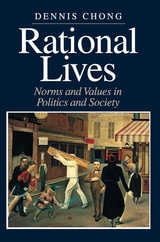
Rational Lives
Norms and Values in Politics and SocietyDennis Chong
University of Chicago Press, 2000
Those who study value conflicts have resisted rational choice approaches in the social sciences, contending that political conflict over cultural values is best explained by group loyalties, symbolic motives, and other "nonrational" factors. However, Chong shows that a single model can explain how people make decisions across both social and economic realms. He argues that our preferences result from a combination of psychological dispositions, which are shaped by social influences and developed over the life span.
Chong's book yields insights about the circumstances under which preferences, beliefs, values, norms and group identifications are formed. It offers a provocative explanation of how ingrained social norms and values can change over time despite the forces maintaining the status quo.
"Going beyond the tired polemics on both sides, [Chong] constructs a new interpretation of human behavior in which culture and individual rationality both matter. The synthesis is a more comprehensive and powerful explanatory framework than either side could have produced, and Chong's creativity should influence subsequent interpretations of our social life in fundamental ways."—Christopher H. Achen, University of Michigan
[more]
Rationalizing Capitalist Democracy
The Cold War Origins of Rational Choice LiberalismS.M. Amadae
University of Chicago Press, 2003
In Rationalizing Capitalist Democracy, S. M. Amadae tells the remarkable story of how rational choice theory rose from obscurity to become the intellectual bulwark of capitalist democracy. Amadae roots Rationalizing Capitalist Democracy in the turbulent post-World War II era, showing how rational choice theory grew out of the RAND Corporation's efforts to develop a "science" of military and policy decisionmaking. But while the first generation of rational choice theorists—William Riker, Kenneth Arrow, and James Buchanan—were committed to constructing a "scientific" approach to social science research, they were also deeply committed to defending American democracy from its Marxist critics. Amadae reveals not only how the ideological battles of the Cold War shaped their ideas but also how those ideas may today be undermining the very notion of individual liberty they were created to defend.
[more]
The Five Life Decisions
How Economic Principles and 18 Million Millennials Can Guide Your ThinkingRobert T. Michael
University of Chicago Press, 2016
Choices matter. And in your teens and twenties, some of the biggest life decisions come about when you feel the least prepared to tackle them.
Economist Robert T. Michael won’t tell you what to choose. Instead, he’ll show you how to make smarter choices. Michael focuses on five critical decisions we all face about college, career, partners, health, and parenting. He uses these to demonstrate how the science of scarcity and choice—concepts used to guide major business decisions and shape national legislation—can offer a solid foundation for our own lives. Employing comparative advantage can have a big payoff when picking a job. Knowing how to work the marketplace can minimize uncertainty when choosing a partner. And understanding externalities—the ripple of results from our actions—can clarify the if and when of having children.
Michael also brings in data from the National Longitudinal Survey of Youth, a scientific sample of 18 million millennials in the United States that tracks more than a decade of young adult choices and consequences. As the survey’s longtime principal investigator and project director, Michael shows that the aggregate decisions can help us understand what might lie ahead along many possible paths—offering readers insights about how their own choices may turn out.
There’s no singular formula for always making the right choice. But the adaptable framework and rich data at the heart of The Five Life Decisions will help you feel confident in whatever you decide.
[more]
The Philosophy Scare
The Politics of Reason in the Early Cold WarJohn McCumber
University of Chicago Press, 2016
From the rise of formalist novels that championed the heroism of the individual to the proliferation of abstract art as a counter to socialist realism, the years of the Cold War had a profound impact on American intellectual life. As John McCumber shows in this fascinating account, philosophy, too, was hit hard by the Red Scare. Detailing the immense political pressures that reshaped philosophy departments in midcentury America, he shows just how radically politics can alter the course of intellectual history.
McCumber begins with the story of Max Otto, whose appointment to the UCLA Philosophy Department in 1947 was met with widespread protest charging him as an atheist. Drawing on Otto’s case, McCumber details the hugely successful conservative efforts that, by 1960, had all but banished the existentialist and pragmatist paradigms—not to mention Marxism—from philosophy departments all across the country, replacing them with an approach that valorized scientific objectivity and free markets and which downplayed the anti-theistic implications of modern thought. As he shows, while there have since been many instances of definitive and even explosive rejection of this conservative trend, its effects can still be seen at American universities today.
McCumber begins with the story of Max Otto, whose appointment to the UCLA Philosophy Department in 1947 was met with widespread protest charging him as an atheist. Drawing on Otto’s case, McCumber details the hugely successful conservative efforts that, by 1960, had all but banished the existentialist and pragmatist paradigms—not to mention Marxism—from philosophy departments all across the country, replacing them with an approach that valorized scientific objectivity and free markets and which downplayed the anti-theistic implications of modern thought. As he shows, while there have since been many instances of definitive and even explosive rejection of this conservative trend, its effects can still be seen at American universities today.
[more]