Results by title
3 books match the query 'Raven'
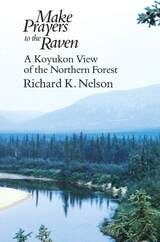
Make Prayers to the Raven
A Koyukon View of the Northern ForestRichard K. Nelson
University of Chicago Press, 1986
A powerful account of the deep connection between the Koyukon people of western Alaska and the natural world that sustains them
A blending of ethnography, personal reflections, and natural history, Make Prayers to the Raven is a moving account of the Koyukon people of western Alaska, who follow a traditional lifeway of hunting, trapping, and fishing in remote villages scattered across the boreal forest. Intimacy with nature is the foundation of their existence, and they have accumulated a masterly knowledge of their environment. The Koyukon hunter moves through a watchful forest, kills with humility and respect, and treats his catch as a being filled with power.
In Make Prayers to the Raven, Nelson describes, from a Koyukon point of view, , elements of the earth, sky, and atmosphere of the boreal forest, as well as the significant plants and animals. He retells their origins in the dreamlike Distant Time, their spirit powers, their behavior and personality, and the rules dictating their proper treatment by men and women. Make Prayers to the Raven leads the reader to an appreciation of the power and substantiality of Koyukon beliefs, and it serves the Koyukon people themselves by educating others about their way of life and by providing the Koyukon with a means of passing on traditional knowledge to their children.
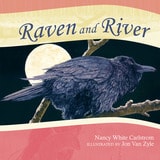
Raven and River
Nancy White Carlstrom
University of Alaska Press, 2011
Raven and River leads young readers on a fantastical journey with a raven across the icy Alaska landscape on the verge of spring. Along the way, the raven’s sonorous cry wakes a cast of sleeping woodland creatures, including a bear, a beaver, a hare, and a squirrel—all of whom join him in imploring the still-frozen river to melt and thereby initiate the change of seasons. Packed with information and featuring vibrant full-color illustrations by Jon Van Zyle, Raven and River brings to life these two important harbingers of Alaska’s spring.
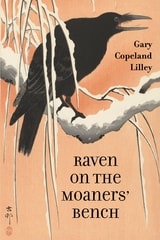
Raven on the Moaners' Bench
Gary Copeland Lilley
Four Way Books, 2025
Raven on the Moaners' Bench writes into grace, opening an exit from a violent cycle, making possible a lighter future while refusing to forget this country's incalculable debt. The inward searching and cross-country migration that Lilley's family, and many other African Americans, have experienced several times in their own histories form the desire for a livable place where safety and opportunity coincide. Jeff walked across America, all the way to the Pacific Ocean, only to die sleeping outside in Los Angeles; this book bears witness to that desperate pilgrimage. Addressing Jeff, Lilley pens a requiem for roadkill he encountered "in a Northwest pathway of [his] own / migration, far from [their] Southern roots": "I offer up the sacrifice of one doe sprawled / in the what-was-left-of-her on the pathway / where I had to meet her and bring her away / to show you I understood something of how / you bore a terrible cost for our family, / for this unholy country, a cost for which / I won't allow any repayment / by words, not mine or anyone's, / on any unstained page."