Results by title
9 books match the query 'Read'
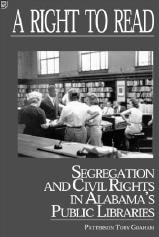
A Right to Read
Segregation and Civil Rights in Alabama's Public Libraries, 1900–1965Patterson Toby Graham
University of Alabama Press, 2006
This original and significant contribution to the historiography of the civil rights movement and education in the South details a dramatic and disturbing chapter in American cultural history.
The tradition of American public libraries is closely tied to the perception that these institutions are open to all without regard to social background. Such was not the case in the segregated South, however, where public libraries barred entry to millions of African Americans and provided tacit support for a culture of white supremacy. A Right to Read is the first book to examine public library segregation from its origins in the late 19th century through its end during the tumultuous years of the 1960s civil rights movement. Graham focuses on Alabama, where African Americans, denied access to white libraries, worked to establish and maintain their own "Negro branches." These libraries-separate but never equal-were always underfunded and inadequately prepared to meet the needs of their constituencies.
By 1960, however, African Americans turned their attention toward desegregating the white public libraries their taxes helped support. They carried out "read-ins" and other protests designed to bring attention and judicial pressure upon the segregationists. Patterson Toby Graham contends that, for librarians, the civil rights movement in their institutions represented a conflict of values that pitted their professional ethics against regional mores. He details how several librarians in Alabama took the dangerous course of opposing segregationists, sometimes with unsettling results.
This groundbreaking work built on primary evidence will have wide cross-disciplinary appeal. Students and scholars of southern and African-American history, civil rights, and social science, as well as academic and public librarians, will appreciate Graham's solid research and astute analysis.
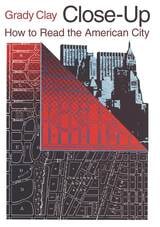
Close-Up
How to Read the American CityGrady Clay
University of Chicago Press, 1980
"The emphasis on the informal aspects of city-shaping—topographical, historical, economic and social—does much to counteract the formalist approach to American urban design. Close-Up...should be required reading for anyone wishing to understand Americans and their cities."—Roger Cunliffe, Architectural Review
"Close-Up is a provocative and stimulating book."—Thomas J. Schlereth, Winterthur Portfolio
"Within this coherent string of essays, the urban dweller or observer, as well as the student, will find refreshing strategies for viewing the environmental 'situations' interacting to form a landscape."—Dallas Morning News
"Clay's Close-Up, first published in 1973, is still a key book for looking at the real American city. Too many urban books and guidebooks concentrate on the good parts of the city....Clay looks at all parts of the city, the suburbs, and the places between cities, and develops new terms to describe parts of the built environment—fronts, strips, beats, stacks, sinks, and turf. No one who wants to understand American cities or to describe them, should fail to know this book. The illustrations are of special interest to the guidebook writer."—American Urban Guidenotes
How to Read a Moment
The American Novel and the Crisis of the PresentMathias Nilges
Northwestern University Press, 2021
“Time is a thing that grows scarcer every day,” observes one of Don DeLillo’s characters. “The future is gone,” The Baffler argues. “Where’s my hoverboard!?” a meme demands. Contemporary capitalism, a system that insists that everything happen at once, creates problems for social thought and narrative alike. After all, how does one tell the time of instantaneity? In this moment of on-demand service and instant trading, it has become difficult to imagine the future.
The novel emerged as the art form of a rapidly changing modern world, a way of telling time in its progress. Nilges argues that this historical mission is renewed today through works that understand contemporaneity as a form of time shaping that props up our material world and cultural imagination. But the contemporary American novel does not simply associate our present with a crisis of futurity. Through analyses of works by authors such as DeLillo, Jennifer Egan, Charles Yu, and Colson Whitehead, Nilges illustrates that the novel presents ways to make sense of the temporality that controls our purportedly fully contemporary world. In so doing, the novel recovers a sense of possibility and hope, forwarding a dazzling argument for its own importance today.
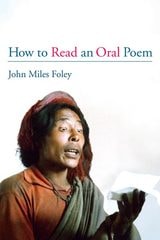
How to Read an Oral Poem
John Miles Foley
University of Illinois Press, 2002
Using dozens of examples, including a North American slam poet, a Tibetan paper-singer, a South African praise-poet, and an ancient Greek bard, John Miles Foley shows that although oral poetry long predates the invention of writing, it continues to be a vital culture-making and communications tool in societies all over the world. Based on fieldwork and archival research on epics, folktales, lyrics, laments, charms, and other oral traditions, How to Read an Oral Poem answers the questions, What is oral poetry? How does it work? What is reading, literally and figuratively?
This accessible and engaging work is enhanced by audio and video examples of oral poetry, which are available at http://www.oraltradition.org. The book can also be used as companion volume to Foley's Teaching Oral Traditions.
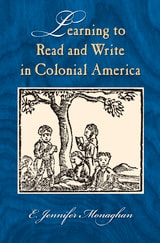
Learning to Read and Write in Colonial America
E. Jennifer Monaghan
University of Massachusetts Press, 2005
An experienced teacher of reading and writing and an award-winning historian, E. Jennifer Monaghan brings to vibrant life the process of learning to read and write in colonial America. Ranging throughout the colonies from New Hampshire to Georgia, she examines the instruction of girls and boys, Native Americans and enslaved Africans, the privileged and the poor, revealing the sometimes wrenching impact of literacy acquisition on the lives of learners.
For the most part, religious motives underlay reading instruction in colonial America, while secular motives led to writing instruction. Monaghan illuminates the history of these activities through a series of deeply researched and readable case studies. An Anglican missionary battles mosquitoes and loneliness to teach the New York Mohawks to write in their own tongue. Puritan fathers model scriptural reading for their children as they struggle with bereavement. Boys in writing schools, preparing for careers in counting houses, wield their quill pens in the difficult task of mastering a “good hand.” Benjamin Franklin learns how to compose essays with no teacher but himself. Young orphans in Georgia write precocious letters to their benefactor, George Whitefield, while schools in South Carolina teach enslaved black children to read but never to write.
As she tells these stories, Monaghan clears new pathways in the analysis of colonial literacy. She pioneers in exploring the implications of the separation of reading and writing instruction, a topic that still resonates in today's classrooms.
Monaghan argues that major improvements occurred in literacy instruction and acquisition after about 1750, visible in rising rates of signature literacy. Spelling books were widely adopted as they key text for teaching young children to read; prosperity, commercialism, and a parental urge for gentility aided writing instruction, benefiting girls in particular. And a gentler vision of childhood arose, portraying children as more malleable than sinful. It promoted and even commercialized a new kind of children's book designed to amuse instead of convert, laying the groundwork for the “reading revolution” of the new republic.

Literacy in American Schools
Learning to Read and WriteEdited by Nancy L. Stein
University of Chicago Press, 1986
Nothing to Read
Newspapers and Elections in a Social ExperimentJeffery J. Mondak
University of Michigan Press, 1995
Nothing to Read compares the information gathering and voting behavior of residents in Pittsburgh and Cleveland during the 1992 campaign season. Comparable in demographics and political behavior, the only significant difference between the two cities was the availability of local newspapers. Using a research design that combines elements of the opinion survey and the laboratory experiment, the author exploited this situation to produce an unusually sound and thorough examination of media effects on voters.
The results are startling. First and foremost, Nothing to Read reasserts the role of the newspaper in the dissemination of information acquisition. It is the only media source that can rival television in the electoral arena, and it is often more important to voters as a source for local information, including information about U.S. House races. Nothing to Read also shows that voters are more active in seeking out information than typically postulated. Indeed, many voters even differentiate between media sources for information about Senate and House contests and sources for the presidential campaign. Within limits, the electorate is clearly not a passive news audience. Nothing to Read provides a wealth of information on such related topics as the relationship between partisanship and media influence, the interplay between media exposure and interpersonal political conversations and other social interaction, and newspapers' effect on coattail voting. A unique book, Mondak's important study lays a solid foundation for all future work on the relationship between American media and politics.
Jeffery J. Mondak is Associate Professor of Political Science, University of Pittsburgh.
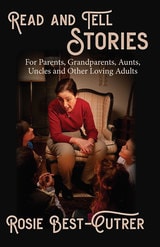
Read and Tell Stories
For parents, grandparents, aunts, uncles, and other loving adultsRosie Cutrer
Parkhurst Brothers, Inc., 2020
When Russia Learned to Read
Literacy and Popular Literature, 1861-1917Jeffrey Brooks
Northwestern University Press, 2003
With a new introduction that underscores its relevance to a post-Soviet Russia, When Russia Learned to Read addresses the question of Russia's common heritage with the liberal democratic market societies of Western Europe and the United States. This prize-winning book also exposes the unsuspected complexities of a mass culture little known and less understood in the West. Jeffrey Brooks brings out the characteristically Russian aspect of the nation's popular writing as he ranges through chapbooks, detective stories, newspaper serials, and women's fiction, tracing the emergence of secular, rational, and cosmopolitan values along with newly minted notions of individual initiative and talent. He shows how crude popular tales and serials of the era find their echoes in the literary themes of Dostoevsky, Tolstoy, and other great Russian writers, as well as in the current renaissance of Russian detective stories and thrillers.