Results by title
9 books match the query 'Reading interests'
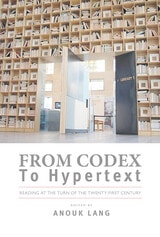
From Codex to Hypertext
Reading at the Turn of the Twenty-first CenturyAnouk Lang
University of Massachusetts Press, 2012
In From Codex to Hypertext, scholars from multiple disciplines engage with both of these strands. This volume includes essays that consider how changes such as the mounting ubiquity of digital technology and the globalization of structures of publication and book distribution are shaping the way readers participate in the encoding and decoding of textual meaning. Contributors also examine how and why reading communities cohere in a range of contexts, including prisons, book clubs, networks of zinesters, state-funded programs designed to promote active citizenship, and online spaces devoted to sharing one's tastes in books.
As concerns circulate in the media about the ways that reading—for so long anchored in print culture and the codex—is at risk of being irrevocably altered by technological shifts, this book insists on the importance of tracing the historical continuities that emerge between these reading practices and those of previous eras.
In addition to the volume editor, contributors include Daniel Allington, Bethan Benwell, Jin Feng, Ed Finn, Danielle Fuller, David S. Miall, Julian Pinder, Janice Radway, Julie Rak, DeNel Rehberg Sedo, Megan Sweeney, Joan Bessman Taylor, Molly Abel Travis, and David Wright.
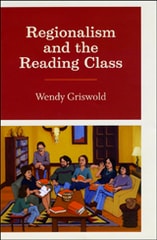
Regionalism and the Reading Class
Wendy Griswold
University of Chicago Press, 2008
Wendy Griswold draws on cases from Italy, Norway, and the United States to show that fans of books form their own reading class, with a distinctive demographic profile separate from the general public. This reading class is modest in size but intense in its literary practices. Paradoxically these educated and mobile elites work hard to put down local roots by, among other strategies, exploring regional writing. Ultimately, due to the technological, economic, and political advantages they wield, cosmopolitan readers are able to celebrate, perpetuate, and reinvigorate local culture.
Griswold’s study will appeal to students of cultural sociology and the history of the book—and her findings will be welcome news to anyone worried about the future of reading or the eclipse of place.

Romance Reader's Advisory
The Librarian's Guide to Love in the StacksAmerican Library Association, 2000
The Readers' Advisory Guide to Genre Blends
Megan M. McArdle
American Library Association, 2014
The Readers' Advisory Guide to Genre Blends
Megan McArdle
American Library Association, 2022
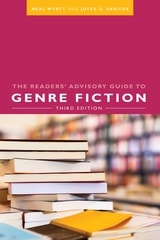
The Readers' Advisory Guide to Genre Fiction
Neal Wyatt
American Library Association, 2018
Everyone’s favorite guide to fiction that’s thrilling, mysterious, suspenseful, thought-provoking, romantic, and just plain fun is back—and better than ever in this completely revamped and revised edition. A must for every readers’ advisory desk, this resource is also a useful tool for collection development librarians and students in LIS programs. Inside, RA experts Wyatt and Saricks
- cover genres such as Psychological Suspense, Horror, Science Fiction, Fantasy, Romance, Mystery, Literary and Historical Fiction, and introduce the concepts of Adrenaline and Relationship Fiction;
- include everything advisors need to get up to speed on a genre, including its appeal characteristics, key authors, sure bets, and trends;
- demonstrate how genres overlap and connect, plus suggestions for guiding readers among genres; and
- tie genre fiction to the whole collection, including nonfiction, audiobooks, graphic novels, film and TV, poetry, and games.
Both insightful and comprehensive, this matchless guidebook will help librarians become familiar with many different fiction genres, especially those they do not regularly read, and aid library staff in connecting readers to books they’re sure to love.
The Readers' Advisory Guide to Genre Fiction
Joyce G. Saricks
American Library Association, 2009
The Readers' Advisory Guide to Genre Fiction
Neal Wyatt
American Library Association, 2001
The Readers' Advisory Guide to Nonfiction
Neal Wyatt
American Library Association, 2007