Results by title
9 books match the query 'Realities'

American Childhood
Risks and RealitiesSchneider, Dona
Rutgers University Press, 1995
To show how the statistics can both disguise and highlight problems, Schneider alternates a discussion of the numbers with vivid encounters with individual children and adults: the middle-class black high school student's offhand explanation about how to get a gun; a vital statistics bureau worker's astonishment at his own classification as Hispanic; a young woman's pleasure in holding down a job after teachers dismissed her as learning disabled; and a latchkey child's nightmare of coming home from school to an empty house when she was sick.
This book guides us through the morass of numbers bandied about to describe the state of America's children—what the numbers tell us and what they don't—and it offers a call for action. Comprehensive in its treatment of all groups of children and accessible in style, this book is essential for anyone concerned about children in American society.
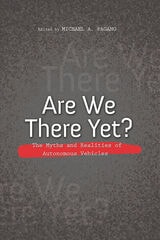
Are We There Yet?
The Myths and Realities of Autonomous VehiclesEdited by Michael A. Pagano
University of Illinois Press, 2020
The new volume in the Urban Agenda series examines the technological questions still surrounding autonomous vehicles and the uncertain societal and legislative impact of widespread AV adoption. Assessing both short- and long-term concerns, the authors probe how autonomous vehicles might change transportation but also land use, energy consumption, mass transit, commuter habits, traffic safety, job markets, the freight industry, and supply chains. At the same time, the essays discuss opportunities for industry, researchers, and policymakers to make the autonomous future safer, more efficient, and more mobile.
Contributors: Austin Brown, Stan Caldwell, Chris Hendrickson, Kazuya Kawamura, Taylor Long, and P. S. Srira.
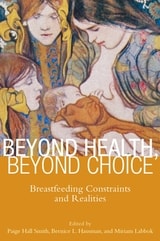
Beyond Health, Beyond Choice
Breastfeeding Constraints and RealitiesEdited by Paige Hall Smith, Bernice L Hausman, and Miriam Labbok
Rutgers University Press, 2012
Current public health promotion of breastfeeding relies heavily on health messaging and individual behavior change. Women are told that “breast is best” but too little serious attention is given to addressing the many social, economic, and political factors that combine to limit women’s real choice to breastfeed beyond a few days or weeks. The result: women’s, infants’, and public health interests are undermined. Beyond Health, Beyond Choice examines how feminist perspectives can inform public health support for breastfeeding.
Written by authors from diverse disciplines, perspectives, and countries, this collection of essays is arranged thematically and considers breastfeeding in relation to public health and health care; work and family; embodiment (specifically breastfeeding in public); economic and ethnic factors; guilt; violence; and commercialization. By examining women’s experiences and bringing feminist insights to bear on a public issue, the editors attempt to reframe the discussion to better inform public health approaches and political action. Doing so can help us recognize the value of breastfeeding for the public’s health and the important productive and reproductive contributions women make to the world.

Breaking the Banks
Representations and Realities in New England Fisheries, 1866-1966Matthew McKenzie
University of Massachusetts Press, 2018
Books, films, and the media have long portrayed the Yankee fisherman's hard-scrabble existence, as he faced brutal weather on the open seas and unnecessary governmental restrictions. As McKenzie contends, this simplistic view has long betrayed commercial fisheries' sophisticated legislative campaigns in Washington, DC, as they sought federal subsidies and relief and, eventually, fewer constricting regulations. This clash between fisheries' representation and their reality still grips fishing communities today as they struggle to navigate age-old trends of fleet consolidation, stock decline, and intense competition.
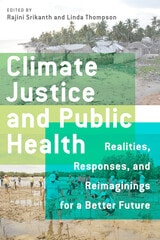
Climate Justice and Public Health
Realities, Responses, and Reimaginings for a Better FutureEdited by Rajini Srikanth and Linda Thompson
University of Massachusetts Press, 2024
When climate disasters like hurricanes, heatwaves, and tsunamis strike, they reveal the inequities of our social, political, and economic structures. They also lay bare the negative impacts of these structures on the health and safety of all people, and particularly socioeconomically vulnerable groups. With original contributions from scholars from a wide range of diverse fields—including environmental studies, public health, legal studies, urban planning, literary studies, and nursing—Climate Justice and Public Health examines this nexus of climate change, which has become impossible to ignore in the twenty-first century.
Expanding the climate and health equity discussions to populations all over the globe, the contributors in this volume address an impressive and broad range of topics that include Indigenous health and cultural practices, mental and emotional health, senior health, and impacts on African American communities. Collectively, they present radical new ways of confronting these issues and propose holistic solutions.

Environmentally Devastated Neighborhoods
Perceptions, Policies, and RealitiesGreenberg, Michael
Rutgers University Press, 1996
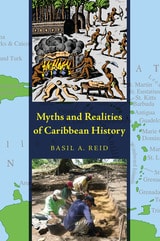
Myths and Realities of Caribbean History
Basil A. Reid
University of Alabama Press, 2009
This book seeks to debunk eleven popular and prevalent myths about Caribbean history. Using archaeological evidence, it corrects many previous misconceptions promulgated by history books and oral tradition as they specifically relate to the pre-Colonial and European-contact periods. It informs popular audiences, as well as scholars, about the current state of archaeological/historical research in the Caribbean Basin and asserts the value of that research in fostering a better understanding of the region’s past.
Contrary to popular belief, the history of the Caribbean did not begin with the arrival of Europeans in 1492. It actually started 7,000 years ago with the infusion of Archaic groups from South America and the successive migrations of other peoples from Central America for about 2,000 years thereafter. In addition to discussing this rich cultural diversity of the Antillean past, Myths and Realities of Caribbean History debates the misuse of terms such as "Arawak" and "Ciboneys," and the validity of Carib cannibalism allegations.
Post-Racial No More
Race, Realities, and Resources of Ethnic Minority Families: Groves Monographs on Marriage and Family (Volume 7)Helyne Frederick
Michigan Publishing Services, 2022

Russian Foreign Policy in Transition
Concepts and RealitiesAndrew Melville
Central European University Press, 2005