70 books match the query 'Reason' and 4 start with a

cover of Abysmal: A Critique of Cartographic Reason

Abysmal

A Critique of Cartographic Reason

Gunnar Olsson

University of Chicago Press, 2007

People rely on reason to think about and navigate the abstract world of human relations in much the same way they rely on maps to study and traverse the physical world. Starting from that simple observation, renowned geographer Gunnar Olsson offers in Abysmal an astonishingly erudite critique of the way human thought and action have become deeply immersed in the rhetoric of cartography and how this cartographic reasoning allows the powerful to map out other people’s lives.

A spectacular reading of Western philosophy, religion, and mythology that draws on early maps and atlases, Plato, Kant, and Wittgenstein, Thomas Pynchon, Gilgamesh, and Marcel Duchamp, Abysmal is itself a minimalist guide to the terrain of Western culture. Olsson roams widely but always returns to the problems inherent in reason, to question the outdated assumptions and fixed ideas that thinking cartographically entails. A work of ambition, scope, and sharp wit, Abysmal will appeal to an eclectic audience—to geographers and cartographers, but also to anyone interested in the history of ideas, culture, and art.
[more]
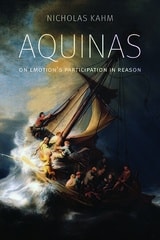
cover of Aquinas on Emotion's Participation in Reason

Aquinas on Emotion's Participation in Reason

Nicholas Kahm

Catholic University of America Press, 2019
Aquinas on Emotion’s Participation in Reason aims to present Aquinas’s answer to the perennial and now popular question: In what way can the emotions be rational? For Aquinas, the starting point of this inquiry is Aristotle’s claim (EN. I. 13) that there are three parts to the soul: 1) the rational part, 2) the non-rational part which can participate in reason, and 3) the non-rational part that does not participate in reason. It is the extent to which the second part (the sense appetites, the seat of the emotions) participates in reason that the emotions can become rational. However, immediately after Aristotle introduces his tripartite division of the soul, he warns that one need not delve into the details of the division or the participation. Aquinas, however, ignores Aristotle, and uses his precise metaphysics of participation within in his sophisticated anthropology to great effect in his ethics. Unlike Aristotle, to fully understand Aquinas’s thinking on how the emotions can become rational, we simply must delve into the kinds of precisions that Aristotle thinks are misplaced. When Aquinas’s views emerge from these precisions, he has a surprisingly level-headed and commonsense view of how the emotions can become rational. On this point, he is more pessimistic than Aristotle and more optimistic than Kant; he is certainly not, as is he is often thought to be, the faithful follower of Aristotle and the polar opposite of Kant. Nicholas Kahm argue that Aquinas has a realistic and plausible view of how far reason can go in shaping our emotions. Furthermore, his plausible views can accommodate the serious current challenge raised against virtue ethics from social psychology. The method has mainly been a careful reading of primary texts, but unlike the rest of the scholarship on Aquinas’s ethics, Kahm is particularly sensitive to Aquinas’s historical and philosophical development.
[more]
cover of Aquinas on the Twofold Human Good: Reason and Human Happiness in Aquinas's Moral Science

Aquinas on the Twofold Human Good

Reason and Human Happiness in Aquinas's Moral Science

Denis J. M. Bradley

Catholic University of America Press, 1997
[more]
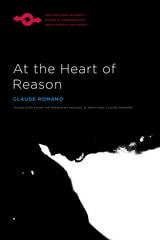
cover of At the Heart of Reason

At the Heart of Reason

Translated from the French by Michael B. Smith and Claude Romano

Northwestern University Press, 2015

In At the Heart of Reason, Claude Romano boldly calls for a reformulation of the phenomenological project. He contends that the main concern of phenomenology, and its originality with respect to other philosophical movements of the last century, such as logical empiricism, the grammatical philosophy of Wittgenstein, and varieties of neo-Kantianism, was to provide a "new image of Reason."

Against the common view, which restricts the range of reason to logic and truth-theory alone, Romano advocates "big-hearted rationality," including in it what is only ostensibly its opposite, that is, sensibility, and locating in sensibility itself the roots of the categorical forms of thought. Contrary to what was claimed by the "linguistic turn," language is not a self-enclosed domain; it cannot be conceived in its specificity unless it is led back to its origin in the pre-predicative or pre-linguistic structure of experience itself.
[more]