Results by title

23 books match the query 'Reception'
cover of Aquinas's Summa: background, structure, & reception

Aquinas's Summa

background, structure, & reception

Jean-Pierre Torrell

Catholic University of America Press, 2005

In this concise new volume by the acclaimed author of the biography of Saint Thomas Aquinas, Jean-Pierre Torrell brings his expertise to bear on Aquinas's Summa Theologiae.
[more]
cover of Black Cultural Life in South Africa: Reception, Apartheid, and Ethics

Black Cultural Life in South Africa

Reception, Apartheid, and Ethics

Lily Saint

University of Michigan Press, 2018

Under apartheid, black South Africans experienced severe material and social disadvantages occasioned by the government’s policies, and they had limited time for entertainment. Still, they closely engaged with an array of textual and visual cultures in ways that shaped their responses to this period of ethical crisis. Marshaling forms of historical evidence that include passbooks, memoirs, American “B” movies, literary and genre fiction, magazines, and photocomics, Black Cultural Life in South Africa considers the importance of popular genres and audiences in the relationship between ethical consciousness and aesthetic engagement.

This study provocatively posits that states of oppression, including colonial and postcolonial rule, can elicit ethical responses to imaginative identification through encounters with popular culture, and it asks whether and how they carry over into ethical action. Its consideration of how globalized popular culture “travels” not just in material form, but also through the circuits of the imaginary, opens a new window for exploring the ethical and liberatory stakes of popular culture. Each chapter focuses on a separate genre, yet the overall interdisciplinary approach to the study of genre and argument for an expansion of ethical theory that draws on texts beyond the Western canon speak to growing concerns about studying genres and disciplines in isolation. Freed from oversimplified treatments of popular forms—common to cultural studies and ethical theory alike—this book demonstrates that people can do things with mass culture that reinvigorate ethical life.

Lily Saint’s new volume will interest Africanists across the humanities and the social sciences, and scholars of Anglophone literary, globalization, and cultural studies; race; ethical theories and philosophies; film studies; book history and material cultures; and the burgeoning field of comics and graphic novels.
[more]
cover of Classics from Papyrus to the Internet: An Introduction to Transmission and Reception

Classics from Papyrus to the Internet

An Introduction to Transmission and Reception

By Jeffrey M. Hunt, R. Alden Smith, and Fabio Stok

University of Texas Press, 2017

Winner, PROSE Award, Classics, Association of American Publishers (AAP), 2018

Writing down the epic tales of the Trojan War and the wanderings of Odysseus in texts that became the Iliad and the Odyssey was a defining moment in the intellectual history of the West, a moment from which many current conventions and attitudes toward books can be traced. But how did texts originally written on papyrus in perhaps the eighth century BC survive across nearly three millennia, so that today people can read them electronically on a smartphone?

Classics from Papyrus to the Internet provides a fresh, authoritative overview of the transmission and reception of classical texts from antiquity to the present. The authors begin with a discussion of ancient literacy, book production, papyrology, epigraphy, and scholarship, and then examine how classical texts were transmitted from the medieval period through the Renaissance and the Enlightenment to the modern era. They also address the question of reception, looking at how succeeding generations responded to classical texts, preserving some but not others. This sheds light on the origins of numerous scholarly disciplines that continue to shape our understanding of the past, as well as the determined effort required to keep the literary tradition alive. As a resource for students and scholars in fields such as classics, medieval studies, comparative literature, paleography, papyrology, and Egyptology, Classics from Papyrus to the Internet presents and discusses the major reference works and online professional tools for studying literary transmission.

[more]
cover of Darwin and the General Reader: The Reception of Darwin's Theory of Evolution in the British Periodical Press, 1859-1872

Darwin and the General Reader

The Reception of Darwin's Theory of Evolution in the British Periodical Press, 1859-1872

Alvar Ellegård

University of Chicago Press, 1990
Drawing on his investigation of over one hundred mid-Victorian British newspapers and periodicals, Alvar Ellegård describes and analyzes the impact of Darwin's theory of evolution during the first dozen years after the publication of the Origin of Species. Although Darwin's book caused an immediate stir in literary and scientific periodicals, the popular press largely ignored it. Only after the work's implications for theology and the nature of man became evident did general publications feel compelled to react; each social group responded according to his own political and religious prejudices. Ellegård charts the impact of this revolution in science, maintaining that although the idea of evolution was generally accepted, Darwin's primary contribution, the theory of natural selection, was either ignored or rejected among the public.
[more]
cover of Disney's Star Wars: Forces of Production, Promotion, and Reception

Disney's Star Wars

Forces of Production, Promotion, and Reception

William Proctor and Richard McCulloch

University of Iowa Press, 2019

In 2012, Disney purchased Lucasfilm, which meant it also inherited the beloved Star Wars franchise. This corporate marriage sent media critics and fans into a frenzy of speculation about what would happen next with the hugely popular series. Disney’s Star Wars gathers twenty-one noted fan and media studies scholars from around the world to examine Disney’s revival of the franchise.

Covering the period from Disney’s purchase through the release of The Force Awakens, the book reveals how fans anticipated, interpreted, and responded to the steady stream of production stories, gossip, marketing materials, merchandise, and other sources in the build-up to the movie’s release. From fears that Princess Leia would be turned into a “Disney princess” to collaborative brand management, the authors explore the shifting relationship between fans, texts, and media industries in the context of a crucial rebranding campaign. The result is a fascinating examination of a critical moment in the iconic series’ history.

[more]
cover of Engaging Classical Texts in the Contemporary World: From Narratology to Reception

Engaging Classical Texts in the Contemporary World

From Narratology to Reception

Louise Pratt and C. Michael Sampson, Editors

University of Michigan Press, 2018

Contemporary classicists often find themselves advocating for the value and relevance of Greco-Roman literature and culture, whether in the classroom, or social media, or newsprint and magazines. In this collection, twelve top scholars apply major critical approaches from other academic fields to open new channels for dialogue between ancient texts and the contemporary world.

This volume considers perennial favorites of classical literature—the Iliad and Odyssey, Greek tragedy, Roman comedy, the Argonautica, and Ovid’s Metamorphoses—and their influence on popular entertainment from Shakespeare’s plays to Hollywood’s toga films. It also engages with unusual and intriguing texts across the centuries, including a curious group of epigrams by Artemidorus found on the island sanctuary of Thera, mysterious fragments of two Aeschylean tragedies, and modern-day North African novels. These essays engage an array of theoretical approaches from other fields—narratology, cognitive literary theory, feminist theory, New Historicist approaches to gender and sexuality, and politeness theory—without forsaking more traditional philological methods. A new look at hospitality in the Argonautica shows its roots in the changed historical circumstances of the Hellenistic world. The doubleness of Helen and her phantom in Euripides’ Helen is even more complex than previously noted. Particularly illuminating is the recurrent application of reception studies, yielding new takes on the ancient reception of Homer by Apollonius and of Aeschylus by Macrobius, the reception of Plautus by Shakespeare, and more contemporary examples from the worlds of cinema and literature.

Students and scholars of classics will find much in these new interpretations and approaches to familiar texts that will expand their intellectual horizons. Specialists in other fields, particularly English, comparative literature, film studies, and gender and sexuality studies, will also find these essays directly relevant to their work.
[more]
cover of From the New Criticism to Deconstruction: The Reception of Structuralism and Post-Structuralism

From the New Criticism to Deconstruction

The Reception of Structuralism and Post-Structuralism

Art Berman

University of Illinois Press, 1988

From the New Criticism to Deconstruction
  traces the transitions in American critical theory and practice from the 1950s
  to the 1980s. It focuses on the influence of French structuralism and post-structuralism
  on American deconstruction within a wide-ranging context that includes literary
  criticism, philosophy, psychology, technology, and politics.

 
[more]
cover of Imagining the Method: Reception, Identity, and American Screen Performance

Imagining the Method

Reception, Identity, and American Screen Performance

Justin Owen Rawlins

University of Texas Press, 2024

A revisionist history of Method acting that connects the popular reception of “methodness” to entrenched understandings of screen performance still dominating American film discourse today.

Only one performance style has dominated the lexicon of the casual moviegoer: “Method acting.” The first reception-based analysis of film acting, Imagining the Method investigates how popular understandings of the so-called Method—what its author Justin Rawlins calls "methodness"—created an exclusive brand for white, male actors while associating such actors with rebellion and marginalization. Drawing on extensive archival research, the book maps the forces giving shape to methodness and policing its boundaries.

Imagining the Method traces the primordial conditions under which the Method was conceived. It explores John Garfield's tenuous relationship with methodness due to his identity. It considers the links between John Wayne's reliance on "anti-Method" stardom and Marlon Brando and James Dean's ascribed embodiment of Method features. It dissects contemporary emphases on transformation and considers the implications of methodness in the encoding of AI performers. Altogether, Justin Rawlins offers a revisionist history of the Method that shines a light on the cultural politics of methodness and the still-dominant assumptions about race, gender, and screen actors and acting that inform how we talk about performance and performers.

[more]
cover of Irish Drama in Poland: Staging and Reception, 1900-2000

Irish Drama in Poland

Staging and Reception, 1900-2000

Barry Keane

Intellect Books, 2016

Irish Drama in Poland is the first book to broadly assess Irish drama’s impact on both Poland’s theatrical world and its cultural and literary heritage in the twentieth century. With a wide-ranging analysis—from Yeats, Synge, O’Casey, and Behan, to Wilde, Shaw, and Beckett—this engaging study explores the translation, production, and reception of Irish plays in Poland. Barry Keane presents readers with the historical and literary context for each production, allowing readers to understand the many ways Irish theater has informed Poland’s theatrical and literary heritage. Including a foreword by translation scholar Michael Cronin, Irish Drama in Poland drives home the importance of exploring intercultural contexts, allowing readers a more informed understanding of European culture and identity.
[more]
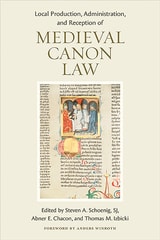
cover of Local Production, Administration, and Reception of Medieval Canon Law

Local Production, Administration, and Reception of Medieval Canon Law

Steven A. Schoenig

Catholic University of America Press, 2026

These nine essays, written by leading experts in the field, focus on the production and application of canon law at the local level. This broad theme permits many subjects to be explored: canonical collections produced in a particular locale by key figures in that area; local manuscript copies of widespread texts; administrative usages and canonical rules for churches within a certain area; specific synodal decrees important to regional ecclesiastical activity and governance; and the reception and adaptation of canonical norms and rules in a particular diocese or other venue. These studies collectively deepen our appreciation of the importance of canon law for people in their home churches and regions. They help us understand canon law in its decentralized, non-papally administered forms, across the full temporal range of the Middle Ages. The special value of these works lies in illuminating the pragmatic role of particular circumstances in adapting the church’s tradition in order to be relevant and to meet local needs.
[more]
cover of Textual History and the Reception of Scripture in Early Christianity

Textual History and the Reception of Scripture in Early Christianity

Johannes de Vries

SBL Press, 2013
The essays in this volume summarize an international research project on early Christian citations from Israel’s scriptures. These quotations are not only theologically significant but are also part of the textual history of the Septuagint and adjacent textual traditions of the Greek and Hebrew Old Testament. The essays discuss relevant manuscripts (Bible codices, papyri, etc.) up to the fifth century, signs and marginal notes (e.g., the diplé) that were used in the ancient scriptoria, and the specifics of the reception history in early Christianity from Matthew to 1 Peter and from the apostolic fathers to Theophilos of Antioch. The contributors are Felix Albrecht, Ronald H. van der Bergh, Heinz-Josef Fabry, Kerstin Heider, Martin Karrer, Christin Klein, Arie van der Kooij, Siegfried Kreuzer, Horacio E. Lona, Martin Meiser, Maarten J. J. Menken, Matthias Millard, Darius Müller, Ferdinand R. Prostmeier, Alexander Stokowski, Martin Vahrenhorst, Christiane Veldboer, and Johannes de Vries.
[more]
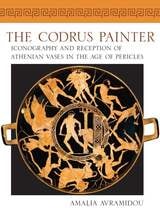
cover of The Codrus Painter: Iconography and Reception of Athenian Vases in the Age of Pericles

The Codrus Painter

Iconography and Reception of Athenian Vases in the Age of Pericles

Amalia Avramidou

University of Wisconsin Press, 2011

The Codrus Painter was a painter of cups and vases in fifth-century B.C.E. Athens with a distinctive style; he is named after Codrus, a legendary Athenian king depicted on one of his most characteristic vases. He was active as an artist during the rule of Pericles, as the Parthenon was built and then as the troubled times of the Peloponnesian War began. In contrast to the work of fellow artists of his day, the vases of the Codrus Painter appear to have been created almost exclusively for export to markets outside Athens and Greece, especially to the Etruscans in central Italy and to points further west.
    Amalia Avramidou offers a thoroughly researched, amply illustrated study of the Codrus Painter that also comments on the mythology, religion, arts, athletics, and daily life of Greece depicted on his vases. She evaluates his style and the defining characteristics of his own hand and of the minor painters associated with him. Examining the subject matter, figure types, and motifs on the vases, she compares them with sculptural works produced during the same period. Avramidou’s iconographic analysis not only encompasses the cultural milieu of the Athenian metropolis, but also offers an original and intriguing perspective on the adoption, meaning, and use of imported Attic vases among the Etruscans.

[more]
cover of The Epic Catalogue: List Form and Reception from Beowulf to Paradise Lost

The Epic Catalogue

List Form and Reception from Beowulf to Paradise Lost

Eva von Contzen

The Ohio State University Press, 2026
In The Epic Catalogue, Eva von Contzen offers the first sustained study of the catalogue as form in epic poetry, tracing its functions and meanings across medieval and early modern literature. Ever since the Catalogue of Ships in Homer’s Iliad, catalogues have stood at the heart of epic poetry, yet their status is paradoxical: canonical and indispensable for the genre of epic, but also resistant to narrative flow and therefore both a challenge and a nuisance to audiences. Moving from biblical epic and Milton’s Paradise Lost to Beowulf and early English poetry, von Contzen presents four case studies that examine the catalogue’s role in shaping poetic authority, readerly engagement, and the reception of classical models. Von Contzen’s literary-historical approach bridges classical and vernacular traditions from early English to early modern poetry and sharpens our view of both continuities and ruptures in the epic tradition, challenging conventional narratives of classical reception. Bringing together formalist and cognitive literary methodologies, she argues that catalogues are not inert enumerations but dynamic cognitive forms that invite audiences to think differently about order, memory, and the status of epic itself.
[more]
cover of The Politics of Reception: Critical Constructions of Mikhail Zoshchenko

The Politics of Reception

Critical Constructions of Mikhail Zoshchenko

Greg Carleton

Northwestern University Press, 1998
Mikhail Zoshchenko was one of the most popular and contentious Russian writers in the period from 1920 to 1950. Scholars and critics have long enlisted Zoshchenko to fight the cultural battles of early Soviet history, the Cold War, and even the glasnost era. In The Politics of Reception, Gregory Carleton analyzes how and why Zoshchenko's legacy has become a battleground for competing ideological interests.
[more]
cover of The Reception of Pragmatism in France and the Rise of Roman Catholic Modernism, 1890-1914

The Reception of Pragmatism in France and the Rise of Roman Catholic Modernism, 1890-1914

David G. Schultenover

Catholic University of America Press, 2009
This collection of essays provides a small revolution in the study of Roman Catholic Modernism, a movement that until now has been largely seen as an episode that underscored institutional Catholicism's isolation from the mainstream intellectual currents of the time.
[more]
cover of Thomas Holcroft’s Revolutionary Drama: Reception and Afterlives

Thomas Holcroft’s Revolutionary Drama

Reception and Afterlives

Amy Garnai

Bucknell University Press, 2023

A key figure in British literary circles following the French Revolution, novelist and playwright Thomas Holcroft promoted ideas of reform and equality informed by the philosophy of his close friend William Godwin. Arrested for treason in 1794 and released without trial, Holcroft was notorious in his own time, but today appears mainly as a supporting character in studies of 1790s literary activism. Thomas Holcroft’s Revolutionary Drama authoritatively reintroduces and reestablishes this central figure of the revolutionary decade by examining his life, plays, memoirs, and personal correspondence. In engaging with theatrical censorship, apostacy, and the response of audiences and critics to radical drama, this thoughtful study also demonstrates how theater functions in times of political repression. Despite his struggles, Holcroft also had major successes: this book examines his surprisingly robust afterlife, as his plays, especially The Road to Ruin, were repeatedly revived worldwide in the nineteenth century.
[more]
cover of Toward an Aesthetic of Reception

Toward an Aesthetic of Reception

Hans Jauss

University of Minnesota Press, 1982
[more]
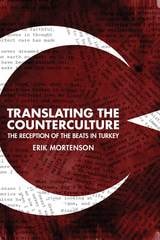
cover of Translating the Counterculture: The Reception of the Beats in Turkey

Translating the Counterculture

The Reception of the Beats in Turkey

Erik Mortenson

Southern Illinois University Press, 2018

In Turkey the Beat message of dissent is being given renewed life as publishers, editors, critics, readers, and others dissatisfied with the conservative social and political trends in the country have turned to the Beats and other countercultural forebears for alternatives. Through an examination of a broad range of literary translations, media portrayals, interviews, and other related materials, this book seeks to uncover how the Beats and their texts are being circulated, discussed, and used in Turkey to rethink the possibilities they might hold for social critique today.
 
Mortenson examines how in Turkey the Beats have been framed by the label “underground literature”; explores the ways they are repurposed in the counterculture-inspired journal Underground Poetix; looks at the reception of Jack Kerouac’s On the Road and how that reaction provides a better understanding of the construction of “American-ness”; delves into the recent obscenity trial of William S. Burroughs’s novel The Soft Machine and the attention the book’s supporters brought to government repression and Turkish homophobia; and analyzes the various translations of Allen Ginsberg’s Howl to demonstrate the relevance Ginsberg still holds for social rebellion today.
 
Translating the Counterculture takes a revolutionary look at how contemporary readers in other parts of the world respond to the Beats. Challenging and unsettling an American-centric understanding of the Beats, Mortenson pushes the discipline toward a fuller consideration of their cultural legacy in a globalized twenty-first century.
 
[more]
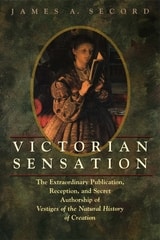
cover of Victorian Sensation: The Extraordinary Publication, Reception, and Secret Authorship of Vestiges of the Natural History of Creation

Victorian Sensation

The Extraordinary Publication, Reception, and Secret Authorship of Vestiges of the Natural History of Creation

James A. Secord

University of Chicago Press, 2000

Fiction or philosophy, profound knowledge or shocking heresy? When Vestiges of the Natural History of Creation was published anonymously in 1844, it sparked one of the greatest sensations of the Victorian era. More than a hundred thousand readers were spellbound by its startling vision—an account of the world that extended from the formation of the solar system to the spiritual destiny of humanity. As gripping as a popular novel, Vestiges combined all the current scientific theories in fields ranging from astronomy and geology to psychology and economics. The book was banned, it was damned, it was hailed as the gospel for a new age. This is where our own public controversies about evolution began.

In a pioneering cultural history, James A. Secord uses the story of Vestiges to create a panoramic portrait of life in the early industrial era from the perspective of its readers. We join apprentices in a factory town as they debate the consequences of an evolutionary ancestry. We listen as Prince Albert reads aloud to Queen Victoria from a book that preachers denounced as blasphemy vomited from the mouth of Satan. And we watch as Charles Darwin turns its pages in the flea-ridden British Museum library, fearful for the fate of his own unpublished theory of evolution. Using secret letters, Secord reveals how Vestiges was written and how the anonymity of its author was maintained for forty years. He also takes us behind the scenes to a bustling world of publishers, printers, and booksellers to show how the furor over the book reflected the emerging industrial economy of print.

Beautifully written and based on painstaking research, Victorian Sensation offers a new approach to literary history, the history of reading, and the history of science. Profusely illustrated and full of fascinating stories, it is the most comprehensive account of the making and reception of a book (other than the Bible) ever attempted.
 
Winner of the 2002 Pfizer Award from the History of Science Society
[more]
cover of Watching Films: New Perspectives on Movie-Going, Exhibition and Reception

Watching Films

New Perspectives on Movie-Going, Exhibition and Reception

Edited by Albert Moran and Karina Aveyard

Intellect Books, 2013
 
Whether we stream them on our laptops, enjoy them in theaters, or slide them into DVD players to watch on our TVs, movies are part of what it means to be socially connected in the twenty-first century.  Despite its significant role in our lives, the act of watching films remains an area of social activity that is little studied, and thus, little understood. 
 
In Watching Films, an international cast of contributors correct this problem with a comprehensive investigation of movie going, cinema exhibition, and film reception around the world. With a focus on the social, economic, and cultural factors that influence how we watch and think about movies, this volume centers its investigations on four areas of inquiry: Who watches films? Under what circumstances? What consequences and affects follow? And what do these acts of consumption mean? Responding to these questions, the contributors provide both historical perspective and fresh insights about the ways in which new viewing arrangements and technologies influence how films get watched everywhere from Canada to China to Ireland.
 
A long-overdue consideration of an important topic, Watching Films provides an engrossing overview of how we do just that in our homes and across the globe.
[more]
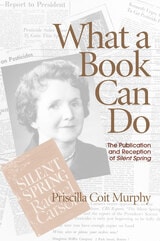
cover of What a Book Can Do: The Publication and Reception of "Silent Spring"

What a Book Can Do

The Publication and Reception of "Silent Spring"

Priscilla Coit Murphy

University of Massachusetts Press, 2005

In 1962 the publication of Rachel Carson's Silent Spring sparked widespread public debate on the issue of pesticide abuse and environmental degradation. The discussion permeated the entire print and electronic media system of mid-twentieth century America. Although Carson's text was serialized in the New Yorker, it made a significant difference that it was also published as a book. With clarity and precision, Priscilla Coit Murphy explores the importance of the book form for the author, her editors and publishers, her detractors, the media, and the public at large.

Murphy reviews the publishing history of the Houghton Mifflin edition and the prior New Yorker serialization, describing Carson's approach to her project as well as the views and expectations of her editors. She also documents the response of opponents to Carson's message, notably the powerful chemical industry, including efforts to undermine, delay, or stop publication altogether.

Murphy then investigates the media's role, showing that it went well beyond providing a forum for debate. In addition, she analyzes the perceptions and expectations of the public at large regarding the book, the debate, and the media. By probing all of these perspectives, Murphy sheds new light on the dynamic between newsmaking books, the media, and the public. In the process, she addresses a host of broader questions about the place of books in American culture, past, present, and future.
[more]
cover of Whitman in Poland: The Reception and Role of the American Poet in Polish National Culture

Whitman in Poland

The Reception and Role of the American Poet in Polish National Culture

Marta A. Skwara

University of Iowa Press, 2020

Whitman in Poland examines the reception of Walt Whitman in Poland from 1872 to the present day. The many ways in which Whitman was read, translated, and constructed in Polish culture are analyzed using a unique interdisciplinary approach that melds reception, communication, translation, and comparative studies. Marta Skwara shows how Whitman’s biography was portrayed in
Poland; how and why the mid-1950s saw the greatest flourish of interest in Whitman as he was read in terms of “socialist realism” in accordance with the political indoctrination of the era; how Whitman’s image in Poland evolved from his first Polish translators and enthusiasts on through modernist poets’ responses; and how reading multiple Polish translations of the same Whitman poem by different translators allows us to see changing cultural and comparative contexts. Readers will get a full picture of how Whitman has functioned as a presence in Polish prose and poetry, and even in cinema and television.
[more]
cover of Who is Buried in Chaucer's Tomb?: Studies in the Reception of Chaucer's Book

Who is Buried in Chaucer's Tomb?

Studies in the Reception of Chaucer's Book

Joseph A. Dane

Michigan State University Press, 1998

Joseph A. Dane examines the history of the books we now know as "Chaucer’s"—a history that includes printers and publishers, editors, antiquarians, librarians, and book collectors. The Chaucer at issue here is not a medieval poet, securely bound within his fourteenth-century context, but rather the product of the often chaotic history of the physical books that have been produced and marketed in his name.
This history involves a series of myths about Chaucer—a reformist Chaucer, a realist Chaucer, a political and critical Chaucer who seems oddly like us. It also involves more self-reflective critical myths—the conveniently coherent editorial tradition that leads progressively to modern editions of Chaucer. Dane argues that the material background of these myths remains irreducibly and often amusingly recalcitrant. The great Chaucer monuments—his editions, his book, and even his tomb—defy our efforts to stabilize them with our critical descriptions and transcriptions.
Part I concentrates on the production and reception of the Chaucerian book from the sixteenth to the eighteenth centuries, a period dominated by the folio "Complete Works" and a period that culminates in what Chaucerians have consistently (if uncritically) defined as the worst Chaucer edition of 1721. Part II considers the increasing ambivalence of modern editors and critics in relation to the book of Chaucer, and the various attempts of modern scholars to provide alternative sources of authority.
[more]