Results by title
2 books match the query 'Recycling (Waste, etc.)'
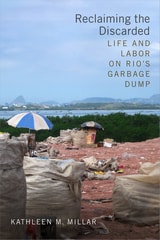
Reclaiming the Discarded
Life and Labor on Rio's Garbage DumpKathleen M. Millar
Duke University Press, 2018
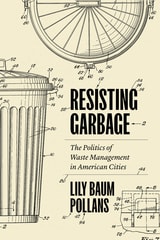
Resisting Garbage
The Politics of Waste Management in American CitiesLily Baum Pollans
University of Texas Press, 2021
Resisting Garbage presents a new approach to understanding practices of waste removal and recycling in American cities, one that is grounded in the close observation of case studies while being broadly applicable to many American cities today.
Most current waste practices in the United States, Lily Baum Pollans argues, prioritize sanitation and efficiency while allowing limited post-consumer recycling as a way to quell consumers’ environmental anxiety. After setting out the contours of this “weak recycling waste regime,” Pollans zooms in on the very different waste management stories of Seattle and Boston over the last forty years. While Boston’s local politics resulted in a waste-export program with minimal recycling, Seattle created new frameworks for thinking about consumption, disposal, and the roles that local governments and ordinary people can play as partners in a project of resource stewardship. By exploring how these two approaches have played out at the national level, Resisting Garbage provides new avenues for evaluating municipal action and fostering practices that will create environmentally meaningful change.