Results by title

6 books match the query 'Reed, Christopher Robert'
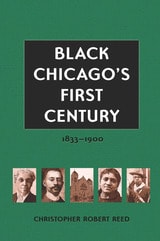
cover of Black Chicago's First Century: 1833-1900

Black Chicago's First Century

1833-1900

Christopher Robert Reed

University of Missouri Press, 2005
In Black Chicago’s First Century, Christopher Robert Reed provides the first comprehensive study of an African American population in a nineteenth-century northern city beyond the eastern seaboard. Reed’s study covers the first one hundred years of African American settlement and achievements in the Windy City, encompassing a range of activities and events that span the antebellum, Civil War, Reconstruction, and post-Reconstruction periods. The author takes us from a time when black Chicago provided both workers and soldiers for the Union cause to the ensuing decades that saw the rise and development of a stratified class structure and growth in employment, politics, and culture. Just as the city was transformed in its first century of existence, so were its black inhabitants.
 
Methodologically relying on the federal pension records of Civil War soldiers at the National Archives, as well as previously neglected photographic evidence, manuscripts, contemporary newspapers, and secondary sources, Reed captures the lives of Chicago’s vast army of ordinary black men and women. He places black Chicagoans within the context of northern urban history, providing a better understanding of the similarities and differences among them. We learn of the conditions African Americans faced before and after Emancipation. We learn how the black community changed and developed over time: we learn how these people endured—how they educated their children, how they worked, organized, and played. Black Chicago’s First Century is a balanced and coherent work. Anyone with an interest in urban history or African American studies will find much value in this book.
[more]
cover of Building the Black Metropolis: African American Entrepreneurship in Chicago

Building the Black Metropolis

African American Entrepreneurship in Chicago

Robert Weems Jr., Jason Chambers

University of Illinois Press, 2017

From Jean Baptiste Point DuSable to Oprah Winfrey, black entrepreneurship has helped define Chicago. Robert E. Weems Jr. and Jason P. Chambers curate a collection of essays that place the city as the center of the black business world in the United States. Ranging from titans like Anthony Overton and Jesse Binga to McDonald’s operators to black organized crime, the scholars shed light on the long-overlooked history of African American work and entrepreneurship since the Great Migration. Together they examine how factors like the influx of southern migrants and the city’s unique segregation patterns made Chicago a prolific incubator of productive business development—and made building a black metropolis as much a necessity as an opportunity.

Contributors: Jason P. Chambers, Marcia Chatelain, Will Cooley, Robert Howard, Christopher Robert Reed, Myiti Sengstacke Rice, Clovis E. Semmes, Juliet E. K. Walker, and Robert E. Weems Jr.
[more]
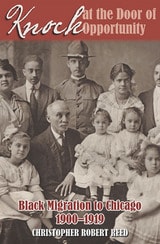
cover of Knock at the Door of Opportunity: Black Migration to Chicago, 1900-1919

Knock at the Door of Opportunity

Black Migration to Chicago, 1900-1919

Christopher Robert Reed

Southern Illinois University Press, 2014

Disputing the so-called ghetto studies that depicted the early part of the twentieth century as the nadir of African American society, this thoughtful volume by Christopher Robert Reed investigates black life in turn-of-the-century Chicago, revealing a vibrant community that grew and developed on Chicago’s South Side in the early 1900s. Reed also explores the impact of the fifty thousand black southerners who streamed into the city during the Great Migration of 1916–1918, effectively doubling Chicago’s African American population. Those already residing in Chicago’s black neighborhoods had a lot in common with those who migrated, Reed demonstrates, and the two groups became unified, building a broad community base able to face discrimination and prejudice while contributing to Chicago’s growth and development.

Reed not only explains how Chicago’s African Americans openly competed with white people for jobs, housing and an independent political voice but also examines the structure of the society migrants entered and helped shape. Other topics include South Side housing, black politics and protest, the role of institutionalized religion, the economic aspects of African American life,  the push for citizenship rights and political power for African Americans, and the impact of World War I and the race riot of 1919. The first comprehensive exploration of black life in turn-of-the-century Chicago beyond the mold of a ghetto perspective, this revealing work demonstrates how the melding of migrants and residents allowed for the building of a Black Metropolis in the 1920s.


2015 ISHS Superior Achievement Award
[more]
cover of Roots of the Black Chicago Renaissance: New Negro Writers, Artists, and Intellectuals, 1893-1930

Roots of the Black Chicago Renaissance

New Negro Writers, Artists, and Intellectuals, 1893-1930

Edited by Richard A. Courage and Christopher Robert Reed

University of Illinois Press, 2020

The Black Chicago Renaissance emerged from a foundational stage that stretched from the 1893 World's Columbian Exposition to the start of the Great Depression. During this time, African American innovators working across the landscape of the arts set the stage for an intellectual flowering that redefined black cultural life.

Richard A. Courage and Christopher Robert Reed have brought together essays that explore the intersections in the backgrounds, education, professional affiliations, and public lives and achievements of black writers, journalists, visual artists, dance instructors, and other creators working in the late nineteenth and early twentieth centuries. Organized chronologically, the chapters unearth transformative forces that supported the emergence of individuals and social networks dedicated to work in arts and letters. The result is an illuminating scholarly collaboration that remaps African American intellectual and cultural geography and reframes the concept of urban black renaissance.

Contributors: Richard A. Courage, Mary Jo Deegan, Brenda Ellis Fredericks, James C. Hall, Bonnie Claudia Harrison, Darlene Clark Hine, John McCluskey Jr., Amy M. Mooney, Christopher Robert Reed, Clovis E. Semmes, Margaret Rose Vendryes, and Richard Yarborough
[more]
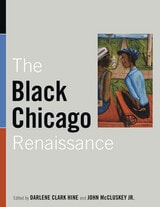
cover of The Black Chicago Renaissance

The Black Chicago Renaissance

Edited by Darlene Clark Hine and John McCluskey Jr.

University of Illinois Press, 2012
Beginning in the 1930s, Black Chicago experienced a cultural renaissance that lasted into the 1950s and rivaled the cultural outpouring in the Harlem Renaissance of the 1920s. The contributors to this volume analyze this prolific period of African American creativity in music, performance art, social science scholarship, and visual and literary artistic expression.
 
Unlike Harlem, Chicago was an urban industrial center that gave a unique working class and internationalist perspective to the cultural work being done in Chicago. This collection's various essays discuss the forces that distinguished the Black Chicago Renaissance from the Harlem Renaissance and placed the development of black culture in a national and international context. Among the topics discussed in this volume are Chicago writers Gwendolyn Brooks and Richard Wright, The Chicago Defender and Tivoli Theater, African American music and visual arts, and the American Negro Exposition of 1940.
 
Contributors are Hilary Mac Austin, David T. Bailey, Murry N. DePillars, Samuel A. Floyd Jr., Erik S. Gellman, Jeffrey Helgeson, Darlene Clark Hine, John McCluskey Jr., Christopher Robert Reed, Elizabeth Schlabach, and Clovis E. Semmes.
[more]
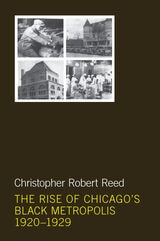
cover of The Rise of Chicago's Black Metropolis, 1920-1929

The Rise of Chicago's Black Metropolis, 1920-1929

Christopher Robert Reed

University of Illinois Press, 2014

During the Roaring '20s, African Americans rapidly transformed their Chicago into a "black metropolis." In this book, Christopher Robert Reed describes the rise of African Americans in Chicago's political economy, bringing to life the fleeting vibrancy of this dynamic period of racial consciousness and solidarity.
 
Reed shows how African Americans rapidly transformed Chicago and achieved political and economic recognition by building on the massive population growth after the Great Migration from the South, the entry of a significant working class into the city's industrial work force, and the proliferation of black churches. Mapping out the labor issues and the struggle for control of black politics and black business, Reed offers an unromanticized view of the entrepreneurial efforts of black migrants, reassessing previous accounts such as St. Clair Drake and Horace R. Cayton's 1945 study Black Metropolis.
 
Utilizing a wide range of historical data, The Rise of Chicago's Black Metropolis, 1920–1929 delineates a web of dynamic social forces to shed light on black businesses and the establishment of a black professional class. The exquisitely researched volume draws on fictional and nonfictional accounts of the era, black community guides, mainstream and community newspapers, contemporary scholars and activists, and personal interviews.
[more]