Results by title
160 books match the query 'Reflections' and 17 start with a
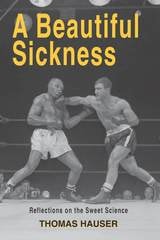
A Beautiful Sickness
Reflections on the Sweet ScienceThomas Hauser
University of Arkansas Press, 2001

A Curious and Ingenious Art
Reflections on Daguerreotypes at HarvardMelissa Banta
University of Iowa Press, 2000
Around the time Louis Jacques Mandé Daguerre perfected his method for fixing images on polished metal plates in 1839, Harvard was emerging as a modern research institution. Accordingly, the college began amassing vast collections for teaching and research. Among these collections in the university's libraries, museums, archives, and academic departments are some of the earliest photographic documents of American life: daguerreotypes.
A Curious and Ingenious Art brings together a representative sampling of Harvard's internationally significant but relatively unknown collection of daguerreotypes. Many of these images were made for, by, and of members of the university's community and have been in its holdings for more than 150 years. The collection includes the work of some of America's pioneering daguerreotypists, such as Mathew Brady, Southworth and Hawes, and John Adams Whipple. Most notably, the Harvard collection preserved for posterity such faces of the era as Oliver Wendell Holmes, Ralph Waldo Emerson, Harriet Beecher Stowe, Henry James, James McNeill Whistler, Dorothea Dix, Jenny Lind, and even Tom Thumb.
The university also seized upon photography as a tool of scientific research, stunningly exemplified in one of the first detailed daguerreotypes of the moon taken in 1851 as well as in images capturing the emergence of modern anesthesia. An unfortunate misuse of photography is recalled in the now famous slave daguerreotypes commissioned by natural historian Louis Agassiz, who believed in the theory of separate human species.
The Harvard collection represents the early history of photography and its social meaning. The accompanying essays explore the personal, telling histories behind the images, stories that unveil the reflections of individuals who searched for purpose and promise in the new medium.
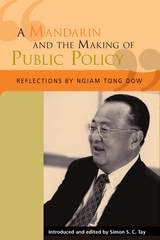
A Mandarin and the Making of Public Policy
ReflectionsTong Dow Ngiam
National University of Singapore Press, 2001
A North Country Almanac
Reflections of an Old-School Conservationist in a Modern WorldThomas C Bailey
Michigan State University Press, 2018
A People Numerous and Armed
Reflections on the Military Struggle for American IndependenceJohn Shy
University of Michigan Press, 1990
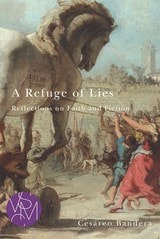
A Refuge of Lies
Reflections on Faith and FictionCesareo Bandera
Michigan State University Press, 2013
Erich Auerbach’s seminal Mimesis: The Representation of Reality in Western Literature was published more than sixty years ago and is deservedly considered a classic. The book brought into focus the fundamental difference that exists between the two basic approaches to the textual representation of reality in Western culture. These two “styles,” as Auerbach called them, were archetypically displayed in Homer’s poems and in the Old Testament, respectively. Auerbach’s differentiation is the starting point for Bandera’s insightful work, which expands and develops on this theory in several key ways. One of the more significant differences between the two styles transcends and grounds all the others. It concerns the truth of each of the two archetypal texts, or rather, the attitude exhibited in those texts with regard to the truth of what they narrate. Auerbach, Bandera notes, is amazed at the Bible’s “passionate” concern for the truth of what it says—a concern he found absent in Homer. Bandera finds that what the prophet Isaiah called “a refuge of lies” defines Homer’s work. He draws on his own research and René Girard’s theory of the sacred to develop an enhanced perspective of the relationship between these texts.
A Rough Sort of Beauty
Reflections on the Natural Heritage of ArkansasDana Steward
University of Arkansas Press, 2002
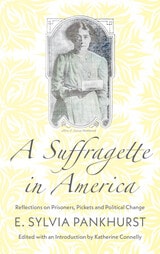
A Suffragette in America
Reflections on Prisoners, Pickets and Political ChangeSylvia Pankhurst
Pluto Press, 2019
This book gathers Pankhurst’s writings from the year-long visit, in which she reveals her shock at the darkness hidden in American life, and draws parallels to her experiences of imprisonment and misogyny in her own country. Never before published, these writings mark an important stage in the development of the suffragette's thought, which she brought back to Britain to inform the burgeoning suffrage campaign there.
African Art Reframed
Reflections and Dialogues on Museum CultureBennetta Jules-Rosette and J. R. Osborn; Foreword by Simon Njami
University of Illinois Press, 2020
The authors take a three-pronged approach. Part One ranges from curiosity cabinets to virtual websites to offer a history of ethnographic and art museums and look at their organization and methods of reaching out to the public. In the second part, the authors examine museums as ecosystems and communities within communities, and they use semiotic methods to analyze images, signs, and symbols drawn from the experiences of curators and artists. The third part introduces innovative strategies for displaying, disseminating, and reclaiming African art. The authors also propose how to reinterpret the art inside and outside the museum and show ways of remixing the results.
Drawing on extensive conversations with curators, collectors, and artists, African Art Reframed is an essential guide to building new exchanges and connections in the dynamic worlds of African and global art.
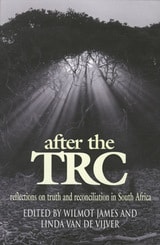
After the TRC
Reflections on Truth and ReconciliationWilmot James
Ohio University Press, 2001
Has South Africa dealt effectively with the past, and is the country ready to face the future? What are the challenges facing both government and civil society in the years ahead? These and other questions are explored in this collection of essays by international and local commentators on the Truth and Reconciliation Commission.
A range of perspectives on whether the TRC met its objectives of truth and reconciliation is presented. The areas of particular contention-the payment of reparation, the granting of amnesty, and memorialization-are also examined.
Finally, the major challenges facing South Africa are identified, and ways of meeting these challenges and developing the assets of the nation are explored.
Contributors: Haribert Adam, Kanya Adam, Alex Boraine, Colin Bundy, Mary Burton, John de Gruchy, Richard Goldstone, Willem Heath, Wilmot James, Jeffrey Lever, Mahmood Mamdani, Gary Minkley, Njabulo Ndebele, Dumisa Ntsebeza, Kaizer Nyatsumba, Grace Naledi Pandor, Mamphela Ramphele, Ciraj Rassool, Albie Sachs, Patricia Valdez, Linda van de Vijver, Jan van Eck, Frederik Van Zyl Slabbert, Charles Villa-Vicencio, Francis Wilson, and Leslie Witz
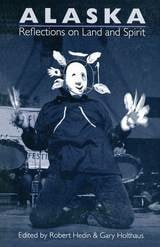
Alaska
Reflections on Land and SpiritEdited by Robert Hedin and Gary Holthaus
University of Arizona Press, 1989
Alien
Reflections on Being an ImmigrantSandro Galea
University of Chicago Press, 2026
A personal treatise from distinguished social scientist Sandro Galea on the indelible effects of being an immigrant—and what it means for the greater good.
“I am one of the lucky ones,” writes Sandro Galea. Galea left home in Malta at fourteen with his parents and sister as the island was rocked by political turmoil. The family made their way to Canada and Galea, in turn, eventually made his way to the United States. This is the story of Galea’s long, surreal journey of forging a life in a series of new and unfamiliar places.
With spare and deeply affecting prose, Alien is a poignant exploration of what it means to build a life across borders—and why it’s important for all of us. Galea’s intimate and personal story frames the experience of being an immigrant in terms of its indelible lessons on adaptation, identity, belonging, and shared generosity. Galea also captures at once the joys and the uncertainties that define the process of uprooting one life to begin another abroad. His is a reflection on empathy, on precarity, and on the effect of immigrating, in which one becomes keenly aware of how quickly life—and the world—can change.
Blending philosophical inquiry and personal story, Alien bridges the gap between storytelling and scholarship and, in doing so, gifts us an essential aperture on the world not everyone experiences—and the value of having those who do.
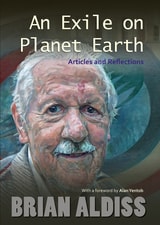
An Exile on Planet Earth
Articles and ReflectionsBrian Aldiss
Bodleian Library Publishing, 2012
Brian Aldiss is one of the great figures in science fiction. Classics in the genre, his books serve as portals to other worlds, captivating readers with strange and shocking narratives that have been a force for further experimentation within the genre. In addition to a highly successful career as a writer of both fiction and science fiction, Aldiss is also an accomplished artist and literary critic.
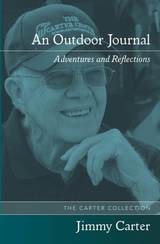
An Outdoor Journal
Adventures and ReflectionsJimmy Carter
University of Arkansas Press, 1994
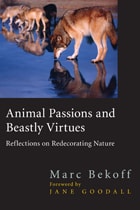
Animal Passions and Beastly Virtues
Reflections on Redecorating NatureMarc Bekoff, foreword by Jane Goodall
Temple University Press, 2005

Artist Scholar
Reflections on Writing and ResearchG. James Daichendt
Intellect Books, 2012
Artist Scholar: Reflections on Writing and Research is part history, introduction, and discussion for artists and designers entering, graduating, and employed by the contemporary art academy in the United States. The evolution of art education in the university continues to expand in the 21st century as the variables of craft, skill, technique, theory, history and criticism shift and expand as the perspective of arts-based research is introduced into this professionalized environment. Given this context: what can M.F.A. students do to improve their understanding of writing and research without sacrificing their commitment to their studio art process?
Through a series of essays, the text argues for better writing at the M.F.A. level with the purpose of becoming better artists. By contextualizing art practice in the university and providing a foundation for future artist scholarship, it serves as an invitation to artist scholars to push their work further and develop the confidence to situate their art in the university context.
Asset Accumulation and Economic Activity
Reflections on Contemporary Macroeconomic TheoryJames Tobin
University of Chicago Press, 1982