Results by title
6 books match the query 'Reggae'
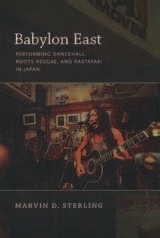
Babylon East
Performing Dancehall, Roots Reggae, and Rastafari in JapanMarvin D. Sterling
Duke University Press, 2010
Sterling provides a nuanced ethnographic analysis of the ways that many Japanese involved in reggae as musicians and dancers, and those deeply engaged with Rastafari as a spiritual practice, seek to reimagine their lives through Jamaican culture. He considers Japanese performances and representations of Jamaican culture in clubs, competitions, and festivals; on websites; and in song lyrics, music videos, reggae magazines, travel writing, and fiction. He illuminates issues of race, ethnicity, gender, sexuality, and class as he discusses topics ranging from the cultural capital that Japanese dancehall artists amass by immersing themselves in dancehall culture in Jamaica, New York, and England, to the use of Rastafari as a means of critiquing class difference, consumerism, and the colonial pasts of the West and Japan. Encompassing the reactions of Jamaica’s artists to Japanese appropriations of Jamaican culture, as well as the relative positions of Jamaica and Japan in the world economy, Babylon East is a rare ethnographic account of Afro-Asian cultural exchange and global discourses of blackness beyond the African diaspora.
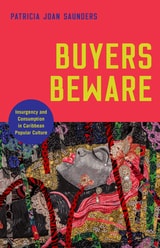
Buyers Beware
Insurgency and Consumption in Caribbean Popular CulturePatricia Joan Saunders
Rutgers University Press, 2022
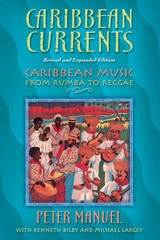
Caribbean Currents
Caribbean Music from Rumba to ReggaePeter Manuel
Temple University Press, 2006
This revised and expanded version features:
* Twenty-seven new illustrations
* Recent developments in the region's music, such as the emergence of reggaetón and timba
* A new and extensive study of Jamaican dancehall
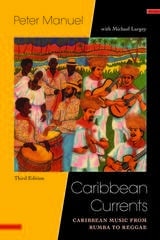
Caribbean Currents
Caribbean Music from Rumba to ReggaePeter Manuel
Temple University Press, 2016
The authors succinctly and perceptively situate the musical styles and developments in the context of themes of gender and racial dynamics, sociopolitical background, and diasporic dimensions. Caribbean Currents showcases the rich and diverse musics of Cuba, Puerto Rico, the Dominican Republic, Jamaica, Trinidad, the French Caribbean, the lesser Antilles, and their transnational communities in the United States and elsewhere to provide an engaging panorama of this most dynamic aspect of Caribbean culture.

Distillation of Sound
Dub and the Creation of CultureEric Abbey
Intellect Books, 2022
Jamaican music has always been about creating with what is at hand. Taking what is around you and making it into something great is the key to dub and Jamaican culture. Dub music in Jamaica started in the early 1970s and by the end of the decade had influenced an entire population. The music began to use the rhythm track of a song as a song itself and spread quickly throughout the sound systems of the island. This book reflects on the importance of dub music and its influence on the music world with the rise and spread of dub in New York, England, and Japan. Eric Abbey discusses the separation between dub as a product and dub as an act of the engineer. Distillation of Sound focuses on the original music of Jamaica and how dub reggae expanded and shifted Jamaican culture. It will further the discussion on dub music, its importance to Jamaican culture, and its creative influence on the music world.
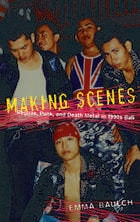
Making Scenes
Reggae, Punk, and Death Metal in 1990s BaliEmma Baulch
Duke University Press, 2007
Making Scenes is an exploration of the subtle politics of identity that took place within and among these scenes throughout the course of the 1990s. Participants in the different scenes often explained their interest in death metal, punk, or reggae in relation to broader ideas about what it meant to be Balinese, which reflected views about Bali’s tourism industry and the cultural dominance of Jakarta, Indonesia’s capital and largest city. Through dance, dress, claims to public spaces, and onstage performances, participants and enthusiasts reworked “Balinese-ness” by synthesizing global media, ideas of national belonging, and local identity politics. Making Scenes chronicles the creation of subcultures at a historical moment when media globalization and the gradual demise of the authoritarian Suharto regime coincided with revitalized, essentialist formulations of the Balinese self.