Results by title
3 books match the query 'Reggae music'

Inside Tenement Time
Suss, Spirit, and SurveillanceKezia Page
Rutgers University Press, 2025
Inside Tenement Time is the first comprehensive treatment of literary and cultural texts on surveillance in the Caribbean. Covering the long historical arc of the twentieth to the twenty-first centuries, Inside Tenement Time uses Jamaica as a case study to examine moments of crisis and particular spaces, especially urban yard enclaves and their environs, in the Caribbean encounter with surveillance. Making the argument that the Caribbean situation reveals flexible hegemonies rather than provinces of exclusive control, the book demonstrates the countervailing force of sussveillance and spiritveillance, Afro-Indigenous variations on surveillance. Sussveillance and spiritveillance are exemplars of vernacular arts and sciences that operate at and within the frangible borders of state power, exposing the unique dynamics of surveillance in the region and marshalling the acts of imagination with which it contends. For example, the Smile Jamaica concert of 1976, headlined by reggae Superstar Bob Marley, and the reputedly US government-backed 2010 Tivoli Gardens incursion in West Kingston, both moments that have dramatic, even mythic residue in Caribbean and global memory, are among the real-life events brought into conversation with literary representations of this history.
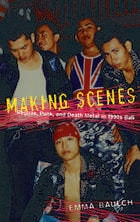
Making Scenes
Reggae, Punk, and Death Metal in 1990s BaliEmma Baulch
Duke University Press, 2007
Making Scenes is an exploration of the subtle politics of identity that took place within and among these scenes throughout the course of the 1990s. Participants in the different scenes often explained their interest in death metal, punk, or reggae in relation to broader ideas about what it meant to be Balinese, which reflected views about Bali’s tourism industry and the cultural dominance of Jakarta, Indonesia’s capital and largest city. Through dance, dress, claims to public spaces, and onstage performances, participants and enthusiasts reworked “Balinese-ness” by synthesizing global media, ideas of national belonging, and local identity politics. Making Scenes chronicles the creation of subcultures at a historical moment when media globalization and the gradual demise of the authoritarian Suharto regime coincided with revitalized, essentialist formulations of the Balinese self.
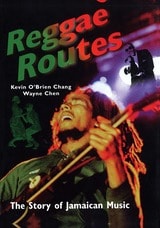
Reggae Routes
The Story of Jamaican MusicKevin Chang
Temple University Press, 1997
Jamaican music can be roughly divided into four eras, each with a distinctive beat - ska, rocksteady, reggae, and dancehall. Ska dates from about 1960 to mid-1966 and rocksteady from 1966 to 1968, while from 1969 to 1983 reggae was the popular beat. The reggae era had two phases, "early reggae" up to 1974 and "roots reggae" up to 1983. Since 1983 dancehall has been the prevalent the prevalent sound.
The authors describe each stage in the development of the music, identifying the most popular songs and artists, highlighting the significant social, political, and economic issues as they affected the music scene. While they write from a Jamaican perspective, the intended audience is "any person, local or foreign, interested in an intelligent discussion of reggae music and Jamaica." Featuring some four hundred illustrations that range from album covers to rare photos, Reggae Routes profiles the innumerable artists, producers, and recordings that secured an international audience for Jamaican music.
Artists discussed: Toots and the Maytals, the Wailers, Gaylads, Desmond Dekker, Delroy Wilson, Alton Ellis, Burning Spear, Itals, Wailing Souls, Skatalites, Heptones, and hundreds more.