Results by title
3 books match the query 'Regime change'
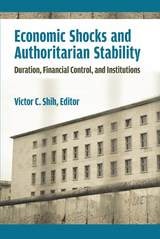
Economic Shocks and Authoritarian Stability
Duration, Financial Control, and InstitutionsVictor C. Shih, Editor
University of Michigan Press, 2020
Over two billion people still live under authoritarian rule. Moreover, authoritarian regimes around the world command enormous financial and economic resources, rivaling those controlled by advanced democracies. Yet authoritarian regimes as a whole are facing their greatest challenges in the recent two decades due to rebellions and economic stress. Extended periods of hardship have the potential of introducing instability to regimes because members of the existing ruling coalition suffer welfare losses that force them to consider alternatives, while previously quiescent masses may consider collective uprisings a worthwhile gamble in the face of declining standards of living.
Economic Shocks and Authoritarian Stability homes in on the economic challenges facing authoritarian regimes through a set of comparative case studies that include Iran, Iraq under Saddam Hussein, Malaysia, Indonesia, Jordan, Russia, the Eastern bloc countries, China, and Taiwan—authored by the top experts in these countries. Through these comparative case studies, this volume provides readers with the analytical tools for assessing whether the current round of economic shocks will lead to political instability or even regime change among the world’s autocracies. This volume identifies the duration of economic shocks, the regime’s control over the financial system, and the strength of the ruling party as key variables to explain whether authoritarian regimes would maintain the status quo, adjust their support coalitions, or fall from power after economic shocks.
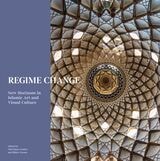
Regime Change
New Horizons in Islamic Art and Visual CultureEdited by Christiane Gruber and Bihter Esener
Gingko, 2024
The essays collected in this volume highlight some of the regimes of thought and changing trends that structure the field of Islamic art history. The authors present new research exploring the intentions of patrons, the agency of craftsmen, and their responses to previous artistic production, thereby allowing artifacts and monuments to be set within their historical, social, and artistic contexts.
In their contributions, Annabel Teh Gallop, Dmitry Bondarev, and Umberto Bongianino discuss significant changes to Qur’an production due to dynastic and political regime changes in Sumatra and the Malay Peninsula, as well as in Borno and Morocco in Africa. Corinne Mühlemann looks at changes in the role and status of designers and weavers making silk in Khurasan in the post-Mongol period. Lisa Golombek, Michael Chagnon, and Farshid Emami explore Safavid art and architecture, focusing on the material and sensorial qualities of a group of tiled arch panels tiles with narrative scenes, a delicately painted vase, and the clocks of the main square of seventeenth-century Isfahan. Regime change also comes about through technological shifts, and Ulrich Marzolph and Yasemin Gencer ask how the rise of photography and new printing techniques shaped the production, exchange, and transmission of images in Iran and Turkey.
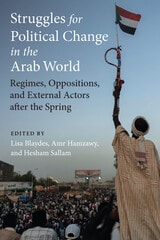
Struggles for Political Change in the Arab World
Regimes, Oppositions, and External Actors after the SpringEdited by Lisa Blaydes, Amr Hamzawy, and Hesham Sallam
University of Michigan Press, 2022
The advent of the Arab Spring in late 2010 was a hopeful moment for partisans of progressive change throughout the Arab world. Authoritarian leaders who had long stood in the way of meaningful political reform in the countries of the region were either ousted or faced the possibility of political if not physical demise. The downfall of long-standing dictators as they faced off with strong-willed protesters was a clear sign that democratic change was within reach. Throughout the last ten years, however, the Arab world has witnessed authoritarian regimes regaining resilience, pro-democracy movements losing momentum, and struggles between the first and the latter involving regional and international powers.
This volume explains how relevant political players in Arab countries among regimes, opposition movements, and external actors have adapted ten years after the onset of the Arab Spring. It includes contributions on Egypt, Morocco, Kuwait, Saudi Arabia, Syria, Algeria, Sudan, Lebanon, Iraq, Jordan, Yemen, and Tunisia. It also features studies on the respective roles of the United States, China, Iran, and Turkey vis-à-vis questions of political change and stability in the Arab region, and includes a study analyzing the role of Saudi Arabia and its allies in subverting revolutionary movements in other countries.