Results by title

20 books match the query 'Regulation'
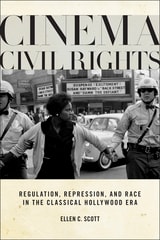
cover of Cinema Civil Rights: Regulation, Repression, and Race in the Classical Hollywood Era

Cinema Civil Rights

Regulation, Repression, and Race in the Classical Hollywood Era

Scott, Ellen C

Rutgers University Press, 2015

From Al Jolson in blackface to Song of the South, there is a long history of racism in Hollywood film. Yet as early as the 1930s, movie studios carefully vetted their releases, removing racially offensive language like the “N-word.” This censorship did not stem from purely humanitarian concerns, but rather from worries about boycotts from civil rights groups and loss of revenue from African American filmgoers.

Cinema Civil Rights presents the untold history of how Black audiences, activists, and lobbyists influenced the representation of race in Hollywood in the decades before the 1960s civil rights era. Employing a nuanced analysis of power, Ellen C. Scott reveals how these representations were shaped by a complex set of negotiations between various individuals and organizations. Rather than simply recounting the perspective of film studios, she calls our attention to a variety of other influential institutions, from protest groups to state censorship boards.

Scott demonstrates not only how civil rights debates helped shaped the movies, but also how the movies themselves provided a vital public forum for addressing taboo subjects like interracial sexuality, segregation, and lynching. Emotionally gripping, theoretically sophisticated, and meticulously researched, Cinema Civil Rights presents us with an in-depth look at the film industry’s role in both articulating and censoring the national conversation on race.
[more]
cover of Comparative Media Policy, Regulation and Governance in Europe: Unpacking the Policy Cycle

Comparative Media Policy, Regulation and Governance in Europe

Unpacking the Policy Cycle

Edited by Leen d’Haenens, Helena Sousa, and Josef Trappel

Intellect Books, 2018

This book offers a comprehensive overview of the current European media in a period of disruptive transformation. It maps the full scope of contemporary media policy and industry activities while also assessing the impact of new technologies and radical changes in distribution and consumption on media practices, organizations, and strategies. Combining a critical assessment of media systems with a thematic approach, it can serve as a resource for scholars or as a textbook, as well as a source of good practices for steering media policy, international communication, and the media landscape across Europe.
[more]
cover of Controlling Hollywood: Censorship and Regulation in the Studio Era

Controlling Hollywood

Censorship and Regulation in the Studio Era

Bernstein, Matthew

Rutgers University Press, 1999

For every movie shown on the big screen, there exists a behind-the-scene story of regulation and control. What social factors determine which movies get made and shown? What is censored? And how have the standards of what is considered taboo changed over time?

Controlling Hollywood features ten innovative and accessible essays that examine some of the major turning points, crises, and contradictions affecting the making and showing of Hollywood movies from the 1910s through the early 1970s. The articles included here examine landmark legal cases; various self-regulating agencies and systems in the film industry (from the National Board of Review to the ratings system); and, external to Hollywood, the religious and social interest groups and government bodies that took a strong interest in film entertainment over the decades.

[more]
cover of Deflecting Immigration: Networks, Markets, and Regulation in Los Angeles

Deflecting Immigration

Networks, Markets, and Regulation in Los Angeles

Ivan Light

Russell Sage Foundation, 2006

As international travel became cheaper and national economies grew more connected over the past thirty years, millions of people from the Third World emigrated to richer countries. A tenth of the population of Mexico relocated to the United States between 1980 and 2000. Globalization theorists claimed that reception cities could do nothing about this trend, since nations make immigration policy, not cities. In Deflecting Immigration, sociologist Ivan Light shows how Los Angeles reduced the sustained, high-volume influx of poor Latinos who settled there by deflecting a portion of the migration to other cities in the United States. In this manner, Los Angeles tamed globalization's local impact, and helped to nationalize what had been a regional immigration issue. Los Angeles deflected immigration elsewhere in two ways. First, the protracted network-driven settlement of Mexicans naturally drove up rents in Mexican neighborhoods while reducing immigrants' wages, rendering Los Angeles a less attractive place to settle. Second, as migration outstripped the city's capacity to absorb newcomers, Los Angeles gradually became poverty-intolerant. By enforcing existing industrial, occupational, and housing ordinances, Los Angeles shut down some unwanted sweatshops and reduced slums. Their loss reduced the metropolitan region's accessibility to poor immigrants without reducing its attractiveness to wealthier immigrants. Additionally, ordinances mandating that homes be built on minimum-sized plots of land with attached garages made home ownership in L.A.'s suburbs unaffordable for poor immigrants and prevented low-cost rental housing from being built. Local rules concerning home occupancy and yard maintenance also prevented poor immigrants from crowding together to share housing costs. Unable to find affordable housing or low-wage jobs, approximately one million Latinos were deflected from Los Angeles between 1980 and 2000. The realities of a new global economy are still unfolding, with uncertain consequences for the future of advanced societies, but mass migration from the Third World is unlikely to stop in the next generation. Deflecting Immigration offers a shrewd analysis of how America's largest immigrant destination independently managed the challenges posed by millions of poor immigrants and, in the process, helped focus attention on immigration as an issue of national importance.
[more]
cover of Democracy and Regulation: How the Public Can Govern Essential Services

Democracy and Regulation

How the Public Can Govern Essential Services

Greg Palast, Theo MacGregor, and Jerrold Oppenheim

Pluto Press, 2002

[more]
cover of Diving Seals and Meditating Yogis: Strategic Metabolic Retreats

Diving Seals and Meditating Yogis

Strategic Metabolic Retreats

Robert Elsner

University of Chicago Press, 2015

The comparative physiology of seemingly disparate organisms often serves as a surprising pathway to biological enlightenment. How appropriate, then, that Robert Elsner sheds new light on the remarkable physiology of diving seals through comparison with members of our own species on quests toward enlightenment: meditating yogis.

As Elsner reveals, survival in extreme conditions such as those faced by seals is often not about running for cover or coming up for air, but rather about working within the confines of an environment and suppressing normal bodily function. Animals in this withdrawn state display reduced resting metabolic rates and are temporarily less dependent upon customary levels of oxygen. For diving seals—creatures especially well-adapted to prolonged submergence in the ocean’s cold depths—such periods of rest lengthen dive endurance. But while human divers share modest, brief adjustments of suppressed metabolism with diving seals, it is the practiced response achieved during deep meditation that is characterized by metabolic rates well below normal levels, sometimes even approaching those of non-exercising diving seals. And the comparison does not end here: hibernating animals, infants during birth, near-drowning victims, and clams at low tide all also display similarly reduced metabolisms.

By investigating these states—and the regulatory functions that help maintain them—across a range of species, Elsner offers suggestive insight into the linked biology of survival and well-being.

[more]
cover of Extreme Measures: The Ecological Energetics of Birds and Mammals

Extreme Measures

The Ecological Energetics of Birds and Mammals

Brian K. McNab

University of Chicago Press, 2012

Along with reproduction, balancing energy expenditure with the limits of resource acquisition is essential for both a species and a population to survive. But energy is a limited resource, as we know well, so birds and mammals—the most energy-intensive fauna on the planet—must reduce energy expenditures to maintain this balance, some taking small steps, and others extreme measures.

Here Brian K. McNab draws on his over sixty years in the field to provide a comprehensive account of the energetics of birds and mammals, one fully integrated with their natural history. McNab begins with an overview of thermal rates—much of our own energy is spent maintaining our 98.6?F temperature—and explains how the basal rate of metabolism drives energy use, especially in extreme environments. He then explores those variables that interact with the basal rate of metabolism, like body size and scale and environments, highlighting their influence on behavior, distribution, and even reproductive output. Successive chapters take up energy and population dynamics and evolution. A critical central theme that runs through the book is how the energetic needs of birds and mammals come up against rapid environmental change and how this is hastening the pace of extinction.

[more]
cover of Forbidden History: The State, Society, and the Regulation of Sexuality in Modern Europe

Forbidden History

The State, Society, and the Regulation of Sexuality in Modern Europe

Edited by John C. Fout

University of Chicago Press, 1992

How have society's values and attitudes toward sexuality and morality changed over the centuries? Why and how has the state sought to criminalize certain forms of sexual behavior and to control reproduction? How have churches tried to influence the state in its regulation of sexuality?

This anthology encompasses a broad range of essays on sexuality spanning European history from the fifteenth century to the present. The topics in this collection of fifteen essays have both historic importance and current relevance. All crucial issues in the regulation of sexuality are addressed, from incest to infanticide, from breast-feeding and women's sexuality to female prostitution, from pornography to reproductive politics, and from the first homosexual rights movement to AIDS.

Contributions from a diverse group of prominent scholars representing a variety of disciplines are included in this anthology. Essays by Randolph Trumbach on "Sex, Gender, and Identity in Modern Culture: Male Sodomy and Female Prostitution in Enlightenment London"; Ruth Perry on "Colonizing the Breast: Sexuality and Maternity in Eighteenth Century England"; Theo van der Meer on "Female Same-Sex Offenders in Late Eighteenth Century Amsterdam"; Robin Ann Sheets on "Pornography, Fairy Tales, and Feminism: Angela Carter's 'The Bloody Chamber'"; and James W. Jones on "Discourses on and of AIDS in West Germany, 1986-1990."

Offering the most up-to-date scholarship from a significant and growing field, this collection is essential for both students and faculty in social history, family history, women's and gender studies, gay studies, sociology and literature.
[more]
cover of Governance, Regulation, and Privatization in the Asia-Pacific Region

Governance, Regulation, and Privatization in the Asia-Pacific Region

Edited by Takatoshi Ito and Anne O. Krueger

University of Chicago Press, 2004

Over the last twenty-five years, there has been an acceleration in the move from government regulation towards privatization. Governance, Regulation, and Privatization in the Asia-Pacific Region is the first thoroughgoing account of the relative success of the different approaches to privatization as undertaken in Korea, China, Australia, and Japan.

In most contexts, privatization is expected to yield greater efficiency and cost effectiveness while avoiding the corruption and bloated budgets of government regulation or monopoly control. But broad-scale privatization, if ill designed, has also yielded its share of difficulties in East Asia. Privatization sometimes has created a vacuum in corporate governance for some of the region's most important industries and in some cases merely reinstated the monopoly-like configurations. The papers presented in this book discuss the experiences of privatization in several industries, including railroad and telecom, corporate governance problems, accounting issues, and challenges for the future in East Asian countries.

The first section is theoretical in nature and proposes boundaries among government protection, market freedom, and shareholder expectations. The second part is constituted by country case studies, beginning with an analysis of both the Korean financial crisis that followed its 1997 law to privatize large, public sector corporations and the new ways Korean corporations finance themselves. Following is an evaluation of China's approach to privatization, with an in-depth look at the financial transitions of companies slated for initial public offering.

Providing provocative examples of the methods of privatization in the Asia-Pacific region specifically, these papers will be of huge import to any economist or policymaker interested in transposing those successes for their own region.
[more]
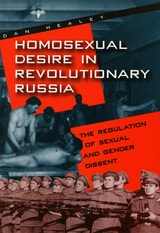
cover of Homosexual Desire in Revolutionary Russia: The Regulation of Sexual and Gender Dissent

Homosexual Desire in Revolutionary Russia

The Regulation of Sexual and Gender Dissent

Dan Healey

University of Chicago Press, 2001

The first full-length study of same-sex love in any period of Russian or Soviet history, Homosexual Desire in Revolutionary Russia investigates the private worlds of sexual dissidents during the pivotal decades before and after the 1917 Bolshevik Revolution. Using records and archives available to researchers only since the fall of Communism, Dan Healey revisits the rich homosexual subcultures of St. Petersburg and Moscow, illustrating the ambiguous attitude of the late Tsarist regime and revolutionary rulers toward gay men and lesbians. Homosexual Desire in Revolutionary Russia reveals a world of ordinary Russians who lived extraordinary lives and records the voices of a long-silenced minority.
[more]
cover of Indie Porn: Revolution, Regulation, and Resistance

Indie Porn

Revolution, Regulation, and Resistance

Zahra Stardust

Duke University Press, 2024

In Indie Porn, Zahra Stardust examines the motivations and interventions of independent porn producers as they navigate criminal laws, risk-averse platforms, discriminatory algorithms, and rampant piracy. Herself a porn performer and participant, Stardust takes readers behind the scenes, offering intimate insights into this sociopolitical movement. She finds politicians who watch porn in parliament, protesters leading face-sitting demonstrations, sex workers making COVID-safe pornography, and artists reverse-engineering porn detection software. Against the backdrop of a global gig economy, Stardust documents the promises of indie porn to democratize content, revolutionize production, and redistribute wealth while outlining the fantasies of regulators, whose illusions of what porn is and does foreclose possibilities for transformation. Inevitably, as these paradigms collide, porn producers engage in creative tactics to hustle for survival and visibility, from ethical certification to law reform, sometimes reproducing hierarchies of stigma themselves. By highlighting how porn stigma is bound up with intersecting oppressions, Stardust identifies these junctions as coalitional opportunities for changing social relationships to sex, work, and capitalism.
[more]
cover of Interracial Intimacy: The Regulation of Race and Romance

Interracial Intimacy

The Regulation of Race and Romance

Rachel F. Moran

University of Chicago Press, 2003

As late as the 1960s, states could legally punish minorities who either had sex with or married persons outside of their racial groups. In this first comprehensive study of the legal regulation of interracial relationships, Rachel Moran grapples with the consequences of that history, candidly confronting its profound effects on not only conceptions of race and identity, but on ideas about sex, marriage, and family.

"A good introduction to an issue too often overlooked. . . . The writing is clear and accessible, the evidence is evocative, and the ideas are challenging."—Beth Kiyoko Jamieson, Law and Politics Book Review

"U. S. government bodies have tried to regulate interracial intimacy from the day Pocahontas married John Rolfe up through Loving v. Virginia, which found antimiscegentation laws unconstitutional in 1967. . . . The weirder anecdotes from our racial history enliven this study, which is likely to become a classic in its field."—Publishers Weekly

"Moran examines the history of U. S. regulation of cross-racial romance, considering the impact of that regulation on the autonomy of individuals and families as well as on racial identity and equality. . . . She is attuned to the nuances of race in this polyglot nation, and supplies thoughtful analysis of these nuances."—Booklist

[more]
cover of Liberty, Equality, and Justice: Civil Rights, Women’s Rights, and the Regulation of Business, 1865–1932

Liberty, Equality, and Justice

Civil Rights, Women’s Rights, and the Regulation of Business, 1865–1932

Ross Evans Paulson

Duke University Press, 1997

Liberty, equality, and justice have long been treasured in American culture as core values. In Liberty, Equality, and Justice, Ross Evans Paulson studies social and intellectual changes in a critical period of American history—from the end of the Civil War to the early days of the Depression—and argues that attempts to achieve civil rights, women’s rights, and the regulation of business faltered because so many Americans ranked liberty for themselves higher than equality with others and justice for all.
Surveying a crucial period in the formation of the modern state and society, Paulson examines the prevailing conflicts of the time and the limitations of various attempts to institute reform, radical change, or ritualistic renewal of American society. His reading of existing scholarship highlights contested social constructs, clashing priorities, changing meanings of key terms, and shifting institutional dynamics in light of their contributions to a complex tragedy in which all parties fell short of the demands for democratic mutuality. Along with discussions of the movements and manipulations of presidential, congressional, and judicial politics, he integrates the experiences of diverse populations—including African Americans, women, Asian immigrants, Native Americans, and working people—and offers a new interpretation of the ways in which social change and political events interact to reframe the many possibilities of American society.

[more]
cover of Media Hot and Cold

Media Hot and Cold

Nicole Starosielski

Duke University Press, 2021

In Media Hot and Cold Nicole Starosielski examines the cultural dimensions of temperature to theorize the ways heat and cold can be used as a means of communication, subjugation, and control. Diving into the history of thermal media, from infrared cameras to thermostats to torture sweatboxes, Starosielski explores the many meanings and messages of temperature. During the twentieth century, heat and cold were broadcast through mass thermal media. Today, digital thermal media such as bodily air conditioners offer personalized forms of thermal communication and comfort. Although these new media promise to help mitigate the uneven effects of climate change, Starosielski shows how they can operate as a form of biopower by determining who has the ability to control their own thermal environment. In this way, thermal media can enact thermal violence in ways that reinforce racialized, colonial, gendered, and sexualized hierarchies. By outlining how the control of temperature reveals power relations, Starosielski offers a framework to better understand the dramatic transformations of hot and cold media in the twenty-first century.
[more]
cover of Mining in Africa: Regulation and Development

Mining in Africa

Regulation and Development

Bonnie Campbell

Pluto Press, 2009

The continent of Africa is rich in minerals needed by Western economies, but rather than forming the basis for economic growth the mining industry contributes very little to African development

Investigating the impact of the 2003 Extractive Industries Review on a number of African countries, the contributors find that a key dimension of the problem lies in the regulatory frameworks imposed on the African countries by the IMF and World Bank. They aim to convince academics, governments and industry that regulation needs to be reformed to create a mining industry favourable to social and economic development and environmental protection.

The book takes a multidisciplinary approach and provides a historical perspective of each country, making it ideal for students of development studies and development organisations.
[more]
cover of Regulation in the White House: The Johnson Presidency

Regulation in the White House

The Johnson Presidency

By David M. Welborn

University of Texas Press, 1993

Regulation in the White House is an examination of regulatory policy and its development in the Johnson administration and the first comprehensive study of any presidency and regulation. Based upon a thorough analysis of presidential papers in the Lyndon B. Johnson Library, the book investigates the working relationships linking the presidency, regulatory commissions, and executive agencies with regulatory responsibilities in both the economic and social spheres.

David Welborn finds that the president's business included regulation as a major component. Johnson's concerns in regulation were varied and complex. He and his aides worked assiduously and successfully to establish effective, cooperative relationships with regulators and to avoid the exercise of undue influence on particular regulatory determinations. In Welborn's view, Johnson traversed the treacherous ground of regulatory politics with adeptness and achieved his major purposes in regulation.
[more]
cover of Regulation, Organizations, and Politics: Motor Freight Policy at the Interstate Commerce Commission

Regulation, Organizations, and Politics

Motor Freight Policy at the Interstate Commerce Commission

Lawrence S. Rothenberg

University of Michigan Press, 1994
Regulation, Organizations, and Politics examines the evolution of regulation at the Interstate Commerce Commission (ICC). The ICC has probably had the most profound impact on any federal agency on the way social scientists view politics. From a perspective based in modern political economy, the author develops an analysis that improves our understanding of the determinants of bureaucratic performance and clarifies the conditions under which organizations are likely to have a substantial influence.   Employing a variety of techniques, Regulation, Organizations, and Politics explains how motor carriers, particularly the larger truckers who controlled the American Trucking Association, were unable to control public policy once the chief executive decided to expand substantial political resources on reforming the motor carrier system. The author shows that this failure was rooted in the carriers' inability to offer the requisite rewards and sanctions required to influence those with power over the outcome. This work thus demonstrates that an integrated approach to the intersections of rational, if often incompletely informed, actors can help us to understand phenomena that seem puzzling at first consideration.
[more]
cover of The Industrial Organization and Regulation of the Securities Industry

The Industrial Organization and Regulation of the Securities Industry

Edited by Andrew W. Lo

University of Chicago Press, 1995

The regulation of financial markets has for years been the domain of lawyers, legislators, and lobbyists. In this unique volume, experts in industrial organization, finance, and law, as well as members of regulatory agencies and the securities industry, examine the securities industry from an economic viewpoint.

Ten original essays address topics including electronic trading and the "virtual"stock exchange; trading costs and liquidity on the London and Tokyo Stock Exchanges and in the German and Japanese government bond markets; international coordination among regulatory agencies; and the impact of changing margin requirements on stock prices, volatility, and liquidity.

This clear presentation of groundbreaking research will appeal to economists, lawyers, and legislators who seek a refreshingly new perspective on policy issues in the securities industry.
[more]
cover of The Regulation of Sexuality: Experiences of Family Planning Workers

The Regulation of Sexuality

Experiences of Family Planning Workers

Carole Joffe

Temple University Press, 1987
"Joffe takes us from the most private aspects of sexuality into the arena of public policy and state regulation." --Carroll Smith-Rosenberg "The author convincingly argues that the Federal Government, the feminist movement and the New Right fail to adequately address the often wrenching conflicts faced daily by birth control and abortion workers. [These conflicts] have spurred many family planning workers to construct and implement a wholly unauthorized vision of family planning policy, one that melds pure ideology with the complicated truths of individuals' social and sexual lives.... [Joffe] makes a cogent and finely nuanced case for the wisdom-indeed, the necessity- of this vision." --Marian Sandmaier, New York Times Book Review "A psychosocial presentation at its best, the book probes and illuminates the workers' whole environment, documenting their need for status and engagement to offset meager pay and enervating routine and their need to balance sexual liberalism with concern for immature, vulnerable women. A valuable resource that clarifies human service programs as a whole." --Library Journal "A wonderfully alive and readable ethnographic study." --The Women's Review of Books
[more]
cover of Women and Regulation: Challenging the Status Quo

Women and Regulation

Challenging the Status Quo

Edited by Sara R. Rinfret and Michelle C. Pautz

Temple University Press, 2026

Are female food safety inspectors treated differently than men? What do women contribute to the creation and implementation of public policy in the United States? The editors of and contributors to Women in Regulation, all experts in public policy and public administration, analyze the role women (and stakeholders) play in bureaucracies in environmental, budgetary, and other sectors of the U.S. federal, state, and local governments, plus relevant examples from around the world.

Women in Regulation examines the impact of regulatory policy delegation, as well as the actors and processes involved in administrative rulemaking, compliance, and implementation. The book considers representative bureaucracy, organizational stereotypes, emotional labor, and advancement barriers to argue why studying women and regulation is of value. Regulatory case studies focus on topics ranging from water and energy to executive leadership. Chapters also include reflective exercises and prompts for classroom engagement that challenge readers to consider implications for regulatory policy in the future.

Amplifying the underheard voices in policy and implementation, Women in Regulation provides a more holistic picture of regulatory practices.

Contributors: Saman Afshan, Ashley English, Katherine Hoener, Nicole Humphrey, Ekaterina Levintova, Li-Yin Liu, Sean McCandless, Bruce D. McDonald III, Denise Scheberle, Natalie L. Smith, Manuel P. Teodoro, and the editors

[more]