Results by title
2 books match the query 'Regulators'

Attitudes, Innuendo, and Regulators
Challenges of InterpretationMelanie Metzger
Gallaudet University Press, 2005
The second volume in the Studies in Interpretation series delves further into the intricacies of sign language interpreting in five distinctive chapters. In the first chapter, Lawrence Forestal investigates the shifting attitudes of Deaf leaders toward sign language interpreters. Forestal notes how older leaders think of interpreters as their friends in exchanges, whereas Deaf individuals who attended mainstream schools possessed different feelings about interpreting.
Frank J. Harrington observes in his chapter on British Sign Language-English interpreters in higher education that they cannot be viewed in isolation since all participants and the environment have a real impact on the way events unfold. In Chapter Three, Maree Madden explores the prevalence of chronic occupational physical injury among Australian Sign Language interpreters due to the stress created by constant demand and the lack of recognition of their professional rights.
Susan M. Mather assesses and identifies regulators used by teachers and interpreters in mainstreaming classrooms. Her study supports other findings, including the success of ethnographic methods in providing insights into human interaction and intercultural communication within classroom settings. The fifth chapter views how interpreters convey innuendo, a complicated undertaking at best. Author Shaun Tray conducts a thorough examination of innuendo in American Sign Language, then points the way toward future research based upon ethnography, gender, and other key factors.
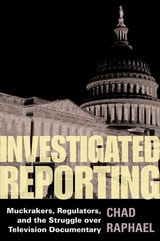
Investigated Reporting
Muckrakers, Regulators, and the Struggle over Television DocumentaryChad Raphael
University of Illinois Press, 2005
2006 History Division Book Award of the Association for Education in Journalism and Mass Communication,
2006 Frank Luther Mott/Kappa Tau Alpha Communications Award, and
2005 Donald McGannon Award for Social and Ethical Relevance in Communications Policy Research
The public often views television investigative reporting as a watchdog on the government. In fact, some of the centerpiece moments of TV muckraking relied heavily on official sources for inspiration, information, and regulatory protection from critics. At the same time, criticism by government officials and overt threats to regulate the television industry influenced the decision-making and content that went into some of broadcast news's iconic moments.
Chad Raphael's looks at the relationship between journalism and regulation during the celebrated period of muckraking that took place on American television between 1960 and 1975. Raphael offers new insights into the economic, political, and industrial forces that shaped documentaries like Harvest of Shame, Hunger in America, and Banks and the Poor while placing the investigative television documentary into its institutional, regulatory, and cultural context. Throughout, Raphael exposes the complex strands of influence used by government officials to shape--and attack--investigative reporting, and highlights how these tactics created a troubling legacy for the regulation of television news today.