Results by title
14 books match the query 'Reimagining'
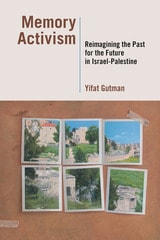
Memory Activism
Reimagining the Past for the Future in Israel-PalestineYifat Gutman
Vanderbilt University Press, 2017
Set in Israel in the first decade of the twenty-first century and based on long-term fieldwork, this rich ethnographic study offers an innovative analysis of the Israeli-Palestinian conflict. It explores practices of "memory activism" by three groups of Jewish-Israeli and Arab-Palestinian citizens--Zochrot, Autobiography of a City, and Baladna--showing how they appropriated the global model of truth and reconciliation while utilizing local cultural practices such as tours and testimonies.
These activist efforts gave visibility to a silenced Palestinian history in order to come to terms with the conflict's origins and envision a new resolution for the future. This unique focus on memory as a weapon of the weak reveals a surprising shift in awareness of Palestinian suffering among the Jewish majority of Israeli society in a decade of escalating violence and polarization--albeit not without a backlash.
Contested memories saturate this society. The 1948 war is remembered as both Independence Day by Israelis and al-Nakba ("the catastrophe") by Palestinians. The walking tour and survivor testimonies originally deployed by the state for national Zionist education that marginalized Palestinian citizens are now being appropriated by activists for tours of pre-state Palestinian villages and testimonies by refugees.
Modern Chinese Literary and Cultural Studies in the Age of Theory
Reimagining a FieldRey Chow, ed.
Duke University Press, 2000
One of the volume’s provocative suggestions is that the old model of area studies—an offshoot of U.S. Cold War strategy that found its anchorage in higher education—is no longer feasible for the diverse and multifaceted experiences that are articulated under the rubric of “Chineseness.” As Rey Chow argues in her introduction, the notion of a monolithic Chineseness bound ultimately to mainland China is, in itself, highly problematic because it recognizes neither the material realities of ethnic minorities within China nor those of populations in places such as Tibet, Taiwan, and post–British Hong Kong. Above all, this book demonstrates that, as the terms of a chauvinistic sinocentrism become obsolete, the critical use of theory—particularly by younger China scholars whose enthusiasm for critical theory coincides with changes in China’s political economy in recent years—will enable the emergence of fresh connections and insights that may have been at odds with previous interpretive convention.
Originally published as a special issue of the journal boundary 2, this collection includes two new essays and an afterword by Paul Bové that places its arguments in the context of contemporary cultural politics. It will have far-reaching implications for the study of modern China and will be of interest to scholars of theory and culture in general.
Contributors. Stanley K. Abe, Ien Ang, Chris Berry, Paul Bové, Sung-cheng Yvonne Chang, Rey Chow, Dorothy Ko, Charles Laughlin, Leung Ping-kwan, Kwai-cheung Lo, Christopher Lupke, David Der-wei Wang, Michelle Yeh
Our Planetary Mirror
Earth Science and the Reimagining of HumanityBoris Shoshitaishvili
University of Chicago Press, 2026
A philosophical analysis of three scientific visions of humanity: the noosphere, the Anthropocene, and Gaia theory.
How can we explain humanity’s unique relationship to the Earth? In Our Planetary Mirror, cultural theorist Boris Shoshitaishvili considers the three major forms of thought Earth scientists have posited in recent years: the noosphere (humans as a layer of thought and culture covering the Earth), the Anthropocene (humans as a geological force), and Gaia theory (humans as part of a superorganism comprising life on Earth).
To explore how these concepts extend beyond contemporary science, Shoshitaishvili traces the metaphors at the heart of each framework through their ancient predecessors, including Babylonian myth, Greek philosophy, Aztec metaphysics, and medieval European theology. Using this approach, Shoshitaishvili develops fresh responses to pressing global issues such as geoengineering, artificial intelligence, and the balance between cosmopolitanism and a world of intensified nationalism.
Reflection-in-Motion
Reimagining Reflection in the Writing ClassroomJaclyn Fiscus-Cannaday
Utah State University Press, 2024
underrepresented viewpoints about how reflection works in the writing classroom. Jaclyn Fiscus-Cannaday examines how its availability is subject to teacher/student power dynamics, the literacies welcomed (or not) in the class, the past and present pedagogies that students are engaging with and attending to, and the interactions among humans, materials, and emotions within the rhetorical context. She adopts an intersectional feminist perspective for an inclusive view of how practitioners name, identify, and practice reflection in the everyday moments of writing classrooms.
Fiscus-Cannaday invokes a Black feminist qualitative research method that Venus Evans-Winters calls a “mosaic.” When researchers collect both traditional and nontraditional texts to create a full view of students’ and teachers’ interviews at three institutions (a Hispanic Serving Institution, a Historically Black College and University, and an Asian American Native American Pacific Islander Serving Institution), she finds that practitioners often build definitions from past experiences with reflection—and then use those definitions as terministic screens to decide if an activity can be named, identified, and practiced as reflection. These definitions hold different rhetorical effects: reflection-for-introspection, reflection-for-learning, reflection-for-mindfulness, and reflection-for-awareness.
Reflection is used for these different rhetorical effects, but because classrooms so often focus on the Westernized view and its emphasis on growth, reflection has the underused and undertheorized potential rhetorical effect of helping students investigate their identities and positionalities, acknowledge deep-rooted ideologies, and consider new perspectives so they can better work across difference. Reflection-in-Motion will inspire teachers and writing program administrators to listen to how students define and practice reflection and why—thus making room for more capacious definitions of reflection and student-centered practices of what reflection can do and be.
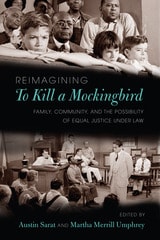
Reimagining "To Kill a Mockingbird"
Family, Community, and the Possibility of Equal Justice under LawAustin Sarat
University of Massachusetts Press, 2013
The readings in this volume peel back the film's visual representation of the many-layered social world of Maycomb, Alabama, offering sometimes counterintuitive insights through the prism of a number of provocative contemporary theoretical and interpretive questions. What, they ask, is the relationship between the subversion of social norms and the doing of justice or injustice? Through what narrative and visual devices are some social hierarchies destabilized while others remain hegemonic? How should we understand the sacrifices characters make in the name of justice, and comprehend their failures in achieving it?
Asking such questions casts light on the film's eccentricities and internal contradictions and suggests the possibility of new interpretations of a culturally iconic text. The book examines the context that gave meaning to the film's representation of race and how debates about family, community, and race are played out and reframed in law.
Contributors include Colin Dayan, Thomas L. Dumm, Susan Sage Heinzelman, Linda Ross Meyer, Naomi Mezey, Imani Perry, and Ravit Reichman.
Reimagining A Raisin in the Sun
Four New PlaysRebecca Ann Rugg
Northwestern University Press, 2012
Winner, 2011 Pulitzer Prize for Drama
Winner, 2012 Tony Award for Best Play
Winner, 1974 National Book Award for Philosophy and Religion
In 1959, Lorraine Hansberry’s A Raisin in the Sun energized the conversation about how Americans live together across lines of race and difference. In Reimagining “A Raisin in the Sun,” Rebecca Ann Rugg and Harvey Young bring together four contemporary plays—including 2011 Pulitzer Prize for Drama winner Clybourne Park—that, in their engagement with Hansberry’s play, illuminate the tensions and anxieties that still surround neighborhood integration.
Although the plays—Robert O’Hara’s Etiquette of Vigilance, Gloria Bond Clunie’s Living Green, Branden Jacobs-Jenkins’s Neighbors, and Bruce Norris’s Clybourne Park—are distinct from one another in terms of style and perspective on their predecessor, they commonly feature characters who are forced to closely examine, and sometimes revise or abandon, their ideas concerning race and their notions of social and economic justice. Above all, the plays use the lenses of neighborliness, privacy, and community to engage the large question of America’s common purpose. Each play is accompanied by an interview with the playwright about the influence of Hansberry’s landmark work. The afterword includes an interview with George C. Wolfe, whose play The Colored Museum laid the groundwork for the titles in this collection.
The conversation around A Raisin in the Sun has continued unabated since its premiere fifty years ago. Rugg and Young’s book will serve as a valuable resource to fans, scholars, and students alike.
Reimagining a Place for the Wild
Leslie Miller, Louise Excell, and Christopher Smart
University of Utah Press, 2018
Reimagining a Place for the Wild contains a diverse collection of personal stories that describe encounters with the remaining wild creatures of the American West and critical essays that reveal wildlife’s essential place in western landscapes. Gleaned from historians, journalists, biologists, ranchers, artists, philosophers, teachers, and conservationists, these narratives expose the complex challenges faced by wild animals and those devoted to understanding them. Whether discussing keystone species like grizzly bears and gray wolves or microfauna swimming the thermal depths of geysers, these accounts reflect the authors’ expertise as well as their wonder and respect for wild nature. The writers do more than inform our sensibilities; their narratives examine both humanity’s conduct and its capacity for empathy toward other life. A selection of photos and paintings punctuates the volume.
This collection sprang from the Reimagine Western Landscapes Symposium held at the University of Utah’s Taft-Nicholson Environmental Humanities Education Center in Centennial Valley, Montana. These testaments join a chorus of voices seeking improved relations with the western wild in the twenty-first century.
Reimagining the American Pacific
From South Pacific to Bamboo Ridge and BeyondRob Wilson
Duke University Press, 2000
Wilson begins by tracing the arrival of American commerce and culture in the Pacific through missionary and imperial forces in the nineteenth century and the parallel development of Asia/Pacific as an idea. Using an impressive range of texts—from works by Herman Melville, James Michener, Maori and Western Samoan novelists, and Bamboo Ridge poets to Baywatch, films and musicals such as South Pacific and Blue Hawaii, and native Hawaiian shark god poetry—Wilson illustrates what it means for a space to be “regionalized.” Claiming that such places become more open to transnational flows of information, labor, finance, media, and global commodities, he explains how they then become isolated, their borders simultaneously crossed and fixed. In the case of Hawai’i, Wilson argues that culturally innovative, risky forms of symbol making and a broader—more global—vision of local plight are needed to counterbalance the racism and increasing imbalance of cultural capital and goods in the emerging postplantation and tourist-centered economy.
Reimagining the American Pacific leaves the reader with a new understanding of the complex interactions of global and local economies and cultures in a region that, since the 1970s, has been a leading trading partner of the United States. It is an engaging and provocative contribution to the fields of Asian and American studies, as well as those of cultural studies and theory, literary criticism, and popular culture.
Reimagining the Educated Citizen
Creole Pedagogies in the Transatlantic World, 1685-1896Petra Munro Hendry
University of Michigan Press, 2023
Winner of the 2023 American Educational Research Association (AERA) Division B: Curriculum Studies Outstanding Book Award
Reimagining the Educated Citizen contends that the constructs of public education and citizenship in the struggle to constitute a U.S. national identity are inseparable from the simultaneous emergence of transatlantic constructs of an educated citizen along transnational and transracial lines. The nineteenth century is commonly understood as the age of nationalism and nation formation in which the Anglo-Protestant Common School movement takes center stage in the production of the American democratic citizen. Ironically, the argument for public, Common Schools privileged whiteness instead of equality. This book suggests that an alternative vision of the relationship between education and citizenship emerged from a larger transatlantic history. Given shape by the movement of people, ideas, commodities, and practices across the Caribbean, Africa, Europe, the Gulf of Mexico and the Mississippi Valley, this radical egalitarian vision emerged at the crossroads of the Atlantic-colonial and antebellum Louisiana.
Reimagining the Middle Passage
Black Resistance in Literature, Television, and SongTara T. Green
The Ohio State University Press, 2018
Exploring the presence of water and its impact on African descendants,Reimagining the Middle Passageoffers fresh analyses of Alex Haley’sRootsand the television adaptations; the history of flooding in Black communities in literature such as Jesmyn Ward’sSalvage the Bonesand Paule Marshall’sPraisesong for the Widow, in blues songs, and in television shows such asTreme; and stories of resistance found in myths associated with Marie Laveau and flying Africans.

Reimagining the Nation-State
The Contested Terrains of Nation-BuildingJim MacLaughlin
Pluto Press, 2001
Mac Laughlin offers a theoretical and empirical analysis of nation building, taking as a case study the historical connections between Ireland and Great Britain in the clash between 'big nation' historic British nationalism on the one hand, and minority Irish nationalism on the other. Locating the origins of the historic nation in the seventeenth and eighteenth centuries, Mac Laughlin emphasises the difficulties, and specifities, of minority nationalisms in the nineteenth century. In so doing he calls for a place-centred approach which recognises the symbolic and socio-economic significance of territory to the different scales of nation-building. Exploring the evolution of Irish Nationalism, Reimaging the Nation State also shows how minority nations can challenge the hegemony of dominant states and threaten the territorial integrity of historic nations.
Sherlock's World
Fan Fiction and the Reimagining of BBC's SherlockAnn K. McClellan
University of Iowa Press, 2018
Sherlock Holmes remains more popular than ever some 130 years after the detective first appeared in print. These days, the iconic character’s staying power is due in large part to the success of the recent BBC series Sherlock, which brings the famous sleuth into the twenty-first century.
One of the most-watched television series in BBC history, Sherlock is set in contemporary London, where thirtysomething Sherlock and John (no longer fussy old Holmes and Watson), alongside New Scotland Yard, solve crimes with the help of smartphones, texting, online forums, and the internet. In their modernization of Sir Arthur Conan Doyle’s nineteenth-century world, Sherlock creators Stephen Moffatt and Mark Gatiss make London as much a character of their show as the actors themselves. The highly stylized series has inspired an impassioned fan community in Britain, the U.S., and beyond. Fans create and share their writings, which reimagine the characters in even more dramatic ways than the series can.
Interweaving fan fiction studies, world-building, and genre studies, Ann McClellan examines the hit series and the fan fiction it inspires. Using Sherlock to trace the changing face of fan fiction studies, McClellan’s book explores how far fans are willing to go to change the Sherlockian canon while still reinforcing its power and status as the source text. What makes Sherlock fanfic Sherlockian? How does it stay within the canon even while engaging in the wildest reimaginings? Sherlock’s World explores the boundaries between canon, genre, character, and reality through the lenses of fan fiction and world-building. This book promises to be a valuable resource for fan studies scholars, those who write fan fiction, and Sherlock fans alike.
Silent Medievalisms
Reimagining the Middle Ages During Film’s Foundational EraEdited by Tison Pugh and Angela Jane Weisl
The Ohio State University Press, 2026
Contributors:
Kimberly Ball, Elizabeth Coggeshall, John Haines, Kevin J. Harty, Valerie B. Johnson, Tison Pugh, Sabina Rahman, Carol L. Robinson, Robert Squillace, Alexandra Sterling-Hellenbrand, Alfred Thomas, Laura E. Wangerin, Angela Jane Weisl
The Extraordinary Image
Orson Welles, Alfred Hitchcock, Stanley Kubrick, and the Reimagining of CinemaKolker, Robert P
Rutgers University Press, 2016