Results by title
14 books match the query 'Reinvention'
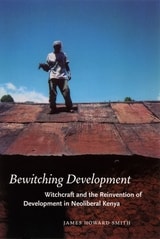
Bewitching Development
Witchcraft and the Reinvention of Development in Neoliberal KenyaJames Howard Smith
University of Chicago Press, 2008
Similar to magic, development’s promise of a better world elicits both hope and suspicion from Wataita. Smith shows that the unforeseen changes wrought by development—greater wealth for some, dashed hopes for many more—foster moral debates that Taita people express in occult terms. By carefully chronicling the beliefs and actions of this diverse community—from frustrated youths to nostalgic seniors, duplicitous preachers to thought-provoking witch doctors—BewitchingDevelopment vividly depicts the social life of formerly foreign ideas and practices in postcolonial Africa.
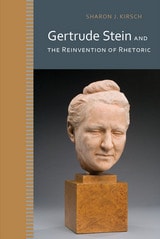
Gertrude Stein and the Reinvention of Rhetoric
Sharon J. Kirsch
University of Alabama Press, 2014
For humanities scholars as well as popular audiences, the relationship between rhetoric and literature remains vexed, in part due to rhetoric’s contemporary affiliation with composition, which makes it separate from, if not subordinate to, the study of literature. Gertrude Stein recognized no such separation, and this disciplinary policing of the study of English has diminished our understanding of her work, Kirsch argues. Stein’s career unfolded at the crossroads of literary composition and rhetorical theory, a site where she alternately challenged, satirized, and reinvented the five classical canons of rhetoric—invention, arrangement, style, memory, and delivery—even as she invented new trajectories of literary experimentation.
Kirsch follows Stein from her days studying composition and philosophy at Harvard through her expatriate years in France, fame in the 1930s, and experience of the Second World War. She frames Stein’s explorations of language as an inventive poetics that reconceived practices and theories of rhetorical invention during a period that saw the rise of literary studies and the decline of rhetorical studies. Through careful readings of canonical and lesser-known works, Kirsch offers a convincing critical portrait of Stein as a Sophistic provocateur who reinvented the canons by making a productive mess of canonical rhetoric and modernist categories of thought.
Readers will find much of interest in Gertrude Stein and the Reinvention of Rhetoric. Kirsch offers myriad insights to scholars of Stein, to those interested in the interdisciplinary intersections of literature, rhetoric, and philosophy, as well as to scholars and students in the field of rhetoric and communication studies. Positioning Stein as a major twentieth-century rhetorical theorist is particularly timely given increasing interest in historical and theoretical resonances between rhetoric and poetics and given the continued lack of recognition for women theorists in rhetorical studies.
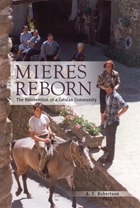
Mieres Reborn
The Reinvention of a Catalan CommunityA. F. Robertson
University of Alabama Press, 2012
Mieres Reborn reveals how patient observation and an analysis of one small community have much to tell us about human progress more generally.
Not long ago Mieres, a village in the eastern foothills of the Pyrenees, seemed destined to die. As in countless thousands of rural communities around the world, young people in Mieres over the years have moved to the towns and cities, leaving behind abandoned fields and meadows, derelict houses, and their aging and disconsolate parents and grandparents.
Close observation of this social microcosm over two decades reveals the capacity of ordinary people in a locality to reinvent themselves, reconstruct relationships with the wider world, and confront new threats to their collective survival. A. F. Robertson describes how the determination that Mieres should survive is most evident in a vigorous round of fiestas, fairs, and other public events in which natives, exiles, and newcomers work to create a lively sense of belonging. Since the 1980s, Mieres has been enlivened by a reverse flow of migrants from the cities, new settlers who have brought an infusion of youth to the community, devised new livelihoods, revitalized the village school, energized the native ”Mierencs,” and provided the impetus for a rediscovery of historical roots and political identity.
The regeneration of life in the countryside, in part a reaction to urban expansion and decay, is a global phenomenon of increasing political, economic, and social significance.

Pop Modernism
Noise and the Reinvention of the EverydayJuan A. Suarez
University of Illinois Press, 2007
Post-Crisis Leadership
Resilience, Renewal, and Reinvention in the Aftermath of DisruptionRalph A. Gigliotti
Rutgers University Press, 2025
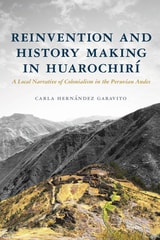
Reinvention and History Making in Huarochirí
A Local Narrative of Colonialism in the Peruvian AndesCarla Hernández Garavito
University of Arizona Press, 2026
Using archaeological and historical datasets and spatial modeling, this book centers on local memory and experience throughout colonized landscapes as the thread that connects the long history of Indigenous engagement with expanding colonial empires and the emergent Peruvian nation. The author builds on Andean epistemological frameworks to argue that in the face of drastic sociopolitical changes, the people of Huarochirí turned to their own history. They created analogies and shared spaces between local and Inka landscapes and materiality and incorporated written representations and ideas of settled lives to validate their claims.
This exciting new work moves the field of Andean archaeology into conversations with decolonial and decolonizing methodologies and shows how Indigenous communities captured and made sense of their long history, reframing colonialism as a local experience.

Roman Propertius and the Reinvention of Elegy
Jeri Blair DeBrohun
University of Michigan Press, 2003
DeBrohun finds the most striking element of Book 4 to be the apparent polarity of the poems, whose themes are split between new, aetiological subjects of Roman national significance and amatory affairs that evoke the themes of Propertius' first three books. In her compelling reassessment of Propertius' aspirations in Book 4, DeBrohun identifies the conflict between his new ambitions to produce Roman aetiological elegy and his traditional, exclusive devotion to erotic concerns as the central dynamic of his collection. Roman Propertius and the Reinvention of Elegy reveals how the poet came to find in the subcodes of the elegiac genre a medium of interaction between the opposing values of the two themes.
Roman Propertius will interest not only scholars and students of Greek and Roman Poetry but also students of later traditions who are interested in the questions of genre and the relationship between poetry and wider cultural discourses.
Jeri Blair DeBrohun is Associate Professor of Classics, Brown University.
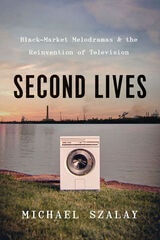
Second Lives
Black-Market Melodramas and the Reinvention of TelevisionMichael Szalay
University of Chicago Press, 2023
In Second Lives, Michael Szalay defines a new television genre that has driven the breathtaking ascent of TV as a cultural force over the last two decades: the black-market melodrama. Exemplified by the likes of The Sopranos and Breaking Bad, the genre moves between a family’s everyday life and its secret second life, which may involve illegal business, espionage, or even an alternate reality. Second lives allow characters (and audiences) to escape what feels like endless work into a revanchist vision of the white middle class family. But there is for this grimly resigned genre no meaningful way back to the Fordist family wage for which it longs. In fact, Szalay argues, black-market melodramas lament the very economic transformations that untethered TV viewing from the daily rhythms of the nine-to-five job and led, ultimately, to prestige TV.
The Reinvention of Mexico in Contemporary Spanish Travel Writing
Jane Hanley
Vanderbilt University Press, 2021
To frame the analysis of contemporary travel writing, author Jane Hanley examines key moments in the history of Mexican-Spanish relations, including the origins of narratives regarding Spaniards' sense of Mexico's similarity to and difference from Spain. This history underpins the discussion of the role of Spanish travelers in their encounters with Mexican peoples and places and their reflection on their own role as communicators of cultural meaning and participants in the tourist economy with its impact—both negative and positive—on places.
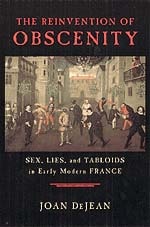
The Reinvention of Obscenity
Sex, Lies, and Tabloids in Early Modern FranceJoan DeJean
University of Chicago Press, 2002
The Reinvention of Obscenity casts a fresh light on the mythical link between sexual impropriety and things French. Exploring the complicity between censorship, print culture, and obscenity, DeJean argues that mass market printing and the first modern censorial machinery came into being at the very moment that obscenity was being reinvented—that is, transformed from a minor literary phenomenon into a threat to society. DeJean's principal case in this study is the career of Moliére, who cannily exploited the new link between indecency and female genitalia to found his career as a print author; the enormous scandal which followed his play L'école des femmes made him the first modern writer to have his sex life dissected in the press.
Keenly alert to parallels with the currency of obscenity in contemporary America, The Reinvention of Obscenity will concern not only scholars of French history, but anyone interested in the intertwined histories of sex, publishing, and censorship.
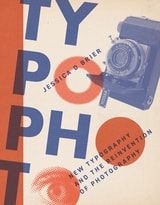
Typophoto
New Typography and the Reinvention of Photographybrier
University of Minnesota Press, 2025
Unveiling the avant-garde fusion of photography and modern graphic design
The concept Typophoto, the synthesis of photography and typography, was coined by renowned Bauhaus artist and theorist László Moholy-Nagy and played a foundational role in the modernist graphic design movement known as the New Typography. Jessica D. Brier examines how Typophoto was embraced by early graphic designers—a group who ultimately reinvented photography as a tool of modern consumerism.
Typophoto embodied designers’ belief in photography as an efficient form of visual communication, merging the material and the visual by abstracting both typographic and photographic form and transmuting photography into graphic material through the halftone process. Uniquely situating 1920s advertising discourse alongside avant-garde theory and significant interwar photographic concepts, Brier positions Typophoto as an analytical framework for considering how photography—as process, image, material, and metaphor—was effectively reconceived through the professionalization of graphic design in Europe and the United States. This was particularly true in Germany, where the capitalist ethos driving the country’s economic recovery bolstered the belief that graphics could create ideal reader-consumers.
Tracing Typophoto from its inception through New Typography’s experiments with the medium, Brier demonstrates how photography was used as a tool for manipulating perception as it became a visual language of modern life.
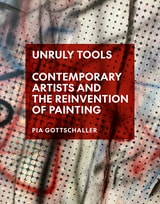
Unruly Tools
Contemporary Artists and the Reinvention of PaintingPia Gottschaller
J. Paul Getty Trust, The, 0
The first book to examine the role of unconventional tools in contemporary painting is required reading for anyone interested in painting’s recent past and future.
Painting, often regarded as the oldest of art forms, has been repeatedly declared “dead.” In this original and compelling study, technical art historian Pia Gottschaller thoroughly dismantles that notion, revealing how painters radically reimagined the medium in the years following World War II. No longer confined to the paintbrush, artists began to experiment with new methods, employing found, fabricated, and repurposed objects—as varied as an Afro comb, the human body, and a robotic airbrush—to create paintings unlike any seen before, revolutionizing the course of art history.
- Begins in 1945 with Jackson Pollock and the Gutai Art Association in Japan and traces the transformation of painting across the globe from the post-war period to the present.
- Explores the work of thirty-eight contemporary painters, including Amoako Boafo, Helen Frankenthaler, Yves Klein, Julie Mehretu, Beatriz Milhazes, Howardena Pindell, Kazuo Shiraga, and Andy Warhol.
- Richly illustrated with over 240 images of artists and their creations.
Unruly Tools is the first study of this kind and offers essential testimony to painting’s continued vitality and reinvention.
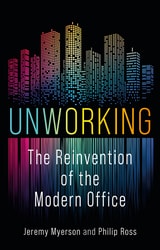
Unworking
The Reinvention of the Modern OfficeJeremy Myserson and Phillip Ross
Reaktion Books, 2022
Over the past one hundred years, the office has been integral to the development of modern society. It has shaped the architecture of our cities, the behavior of our organizations, and the everyday movements of millions of people. In 2020, however, the global pandemic brought our attendance in the office to an abrupt halt and triggered a complete reevaluation of the purpose of the workplace. This book offers a panoramic view of the office and explores what happens next. The authors advance a manifesto for “unworking”—unlearning old habits and rituals established for an outdated office and crafting and creating new ones fit for an age of digital technology, design innovation, and diverse workforces.

You're with Stupid
kranky, Chicago, and the Reinvention of Indie MusicBruce Adams
University of Texas Press, 2022
2023 ARSC Awards for Excellence in Historical Recorded Sound Research, Association for Recorded Sound Collections
An insider’s look at how Chicago’s underground music industry transformed indie rock in the 1990s.
In the 1990s, Chicago was at the center of indie rock, propelling bands like the Smashing Pumpkins and Liz Phair to the national stage. The musical ecosystem from which these bands emerged, though, was expansive and diverse. Grunge players comingled with the electronic, jazz, psychedelic, and ambient music communities, and an inventive, collaborative group of local labels—kranky, Drag City, and Thrill Jockey, among others—embraced the new, evolving sound of indie “rock.” Bruce Adams, co-founder of kranky records, was there to bear witness.
In You’re with Stupid, Adams offers an insider’s look at the role Chicago’s underground music industry played in the transformation of indie rock. Chicago labels, as Adams explains, used the attention brought by national acts to launch bands that drew on influences outside the Nirvana-inspired sound then dominating pop. The bands themselves—Labradford, Godspeed You! Black Emperor, Low—were not necessarily based in Chicago, but it was Chicago labels like kranky that had the ears and the infrastructure to do something with this new music. In this way, Chicago-shaped sounds reached the wider world, presaging the genre-blending music of the twenty-first century. From an author who helped create the scene and launched some of its best music, You’re with Stupid is a fascinating and entertaining read.