Results by title
8 books match the query 'Religion and civil society'
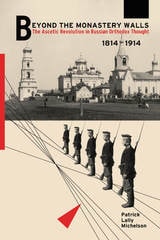
Beyond the Monastery Walls
The Ascetic Revolution in Russian Orthodox Thought, 1814–1914Patrick Lally Michelson
University of Wisconsin Press, 2017
Patrick Lally Michelson's intellectual history of asceticism in Russian Orthodox thought traces the development of these competing arguments from the early nineteenth century to the early months of World War I. He demonstrates that this discourse was an imaginative interpretation of lived Orthodoxy, primarily meant to satisfy the ideological needs of Russian thinkers and Orthodox intellectuals as they responded to the socioeconomic, political, and cultural challenges of modernity.
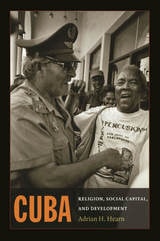
Cuba
Religion, Social Capital, and DevelopmentAdrian H. Hearn
Duke University Press, 2008
While conducting research, Hearn lived for one year each in two Santería temple-houses: one located in Old Havana and the other in Santiago de Cuba. During those stays he conducted numerous interviews: with the historian of Havana and the conservationist of Santiago de Cuba (officials roughly equivalent to mayors in the United States), acclaimed writers, influential leaders of Afro-Cuban religions, and many citizens involved in community development initiatives. Hearn draws on those interviews, his participant observation in the temple-houses, case studies, and archival research to convey the daily life experiences and motivations of religious practitioners, development workers, and politicians. Using the concept of social capital, he explains the state’s desire to incorporate tightly knit religious groups into its community development projects, and he illuminates a fundamental challenge facing Cuba’s religious communities: how to maintain their spiritual integrity and internal solidarity while participating in state-directed projects.
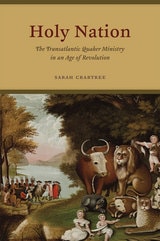
Holy Nation
The Transatlantic Quaker Ministry in an Age of RevolutionSarah Crabtree
University of Chicago Press, 2015
Holy Nation convincingly shows that ideals and actions were inseparable for the Society of Friends, yielding an account of Quakerism that is simultaneously a history of the faith and its adherents and a history of its confrontations with the wider world. Ultimately, Crabtree argues, the conflicts experienced between obligations of church and state that Quakers faced can illuminate similar contemporary struggles.

Politics and Partnerships
The Role of Voluntary Associations in America's Political Past and PresentEdited by Elisabeth S. Clemens and Doug Guthrie
University of Chicago Press, 2011
But despite the ubiquity of the idea of volunteerism in public policy debates, analysis of its role in American governance has been fragmented. Bringing together a diverse set of disciplinary approaches, Politics and Partnerships is a thorough examination of the place of voluntary associations in political history and an astute investigation into contemporary experiments in reshaping that role. The essays here reveal the key role nonprofits have played in the evolution of both the workplace and welfare and illuminate the way that government’s retreat from welfare has radically altered the relationship between nonprofits and corporations.
Religion and Poverty
Pan-African PerspectivesPeter J. Paris, ed.
Duke University Press, 2009
Contributors from Africa and North America explore poverty’s roots and effects, the ways that experiences and understandings of deprivation are shaped by religion, and the capacity and limitations of religion as a means of alleviating poverty. As part of a collaborative project, the contributors visited Ghana, Kenya, and South Africa, as well as Jamaica and the United States. In each location, they met with clergy, scholars, government representatives, and NGO workers, and they examined how religious groups and community organizations address poverty. Their essays complement one another. Some focus on poverty, some on religion, others on their intersection, and still others on social change. A Jamaican scholar of gender studies decries the feminization of poverty, while a Nigerian ethicist and lawyer argues that the protection of human rights must factor into efforts to overcome poverty. A church historian from Togo examines the idea of poverty as a moral virtue and its repercussions in Africa, and a Tanzanian theologian and priest analyzes ujamaa, an African philosophy of community and social change. Taken together, the volume’s essays create a discourse of mutual understanding across linguistic, religious, ethnic, and national boundaries.
Contributors. Elizabeth Amoah, Kossi A. Ayedze, Barbara Bailey, Katie G. Cannon, Noel Erskine, Dwight N. Hopkins, Simeon O. Ilesanmi, Laurenti Magesa, Madipoane Masenya, Takatso A. Mofokeng, Esther M. Mombo, Nyambura J. Njoroge, Jacob Olupona, Peter J. Paris, Anthony B. Pinn, Linda E. Thomas, Lewin L. Williams
Religious Crisis and Civic Transformation
How Conflicts over Gender and Sexuality Changed the West German Catholic ChurchKimba Allie Tichenor
Brandeis University Press, 2016
The Aware Saga
Civil Society and Public Morality in SingaporeEdited by Terence Chong
National University of Singapore Press, 2011
In this book, academics and public intellectuals examine the AWARE saga within the context of Singapore's civil society, considering the political and historical background and how the issues it raised relate to contemporary societal trends. In addition to documenting a milestone event for Singapore's civil society, the authors offer provocative interpretations that will interest a broad range of readers.
Thinking Orthodox in Modern Russia
Culture, History, ContextEdited by Patrick Lally Michelson and Judith Deutsch Kornblatt
University of Wisconsin Press, 2014
Volume editors Patrick Lally Michelson and Judith Deutsch Kornblatt provide a historical overview of Russian Orthodox thought and a critical essay on the current state of scholarship about religious thought in modern Russia. The contributors explore a wide range of topics, including Orthodox claims to a unique religious Enlightenment, contests over authority within the Russian Church, tensions between faith and reason in academic Orthodoxy, the relationship between sacraments and the self, the religious foundations of philosophical and legal categories, and the effect of Orthodox categories in the formation of Russian literature.