Results by title
598 books match the query 'Religious' and 59 start with a

A Book of Consolation
Seeing Our Quests for Love, Success, and Meaning in a New LightAndrew Stark
University of Chicago Press, 2027
An invitation to rest in the mystery that there is no single route to fulfillment, but many—often contradictory, unpredictable, endlessly available.
Our lives are restless. Though we strive for meaning, we are often unfulfilled: our loves fail, our careers stall, and our purpose eludes us. We may temporarily ease our frustration by blaming our methods or embracing our limitations, and we may even embrace the self-defeating lie that we must discover the one, linear path for success in love, work, or life. In A Book of Consolation, Andrew Stark offers a liberating third way between self-abandonment and complacency, revealed through a simple mystery: for each road where someone found fulfillment, someone else walked the opposite path to the same end.
Drawing on literature, popular culture, philosophy, and more, A Book of Consolation invites us to appreciate, even marvel at, the possibility that the routes to love, success, and meaning are so various that even inverse lives can satisfy us. Stark holds up a series of opposing journeys for consideration—from the contradictory loves in modern romantic comedies, to the regrets of Dolly Parton and Ernest Hemingway, to the mindsets behind Tiger Woods and Richard Nixon’s success. In juxtaposing these lives, Stark expands our sense of what counts as fulfillment and what alternatives may be available when our own paths falter. Rich in possibility but without prescription, A Book of Consolation encourages us to navigate the frustrations of our finitude by cultivating a faith that the paths to fulfillment are far more pluralized—and often more contradictory—than we know.
A Brief Apology for a Catholic Moment
Jean-Luc Marion
University of Chicago Press, 2021
A Case for All-Girls' Catholic Schools
A Feminist Theological PerspectiveCynthia L. Cameron
Catholic University of America Press, 2026
A Catholic Approach to Literacy for Struggling Students
Connecting Philosophy and PracticeMargaret G. Walsh
Catholic University of America Press, 2025
A Change Is Gonna Come
Music, Race & the Soul of AmericaCraig Werner
University of Michigan Press, 2006
—Notes
"No one has written this way about music in a long, long time. Lucid, insightful, with real spiritual, political, intellectual, and emotional grasp of the whole picture. A book about why music matters, and how, and to whom."
—Dave Marsh, author of Louie, Louie and Born to Run: The Bruce Springsteen Story
"This book is urgently needed: a comprehensive look at the various forms of black popular music, both as music and as seen in a larger social context. No one can do this better than Craig Werner."
—Henry Louis Gates, Jr., W.E.B. Du Bois Professor of the Humanities, Harvard University
"[Werner has] mastered the extremely difficult art of writing about music as both an aesthetic and social force that conveys, implies, symbolizes, and represents ideas as well as emotion, but without reducing its complexities and ambiguities to merely didactic categories."
—African American Review
A Change Is Gonna Come is the story of more than four decades of enormously influential black music, from the hopeful, angry refrains of the Freedom movement, to the slick pop of Motown; from the disco inferno to the Million Man March; from Woodstock's "Summer of Love" to the war in Vietnam and the race riots that inspired Marvin Gaye to write "What's Going On."
Originally published in 1998, A Change Is Gonna Come drew the attention of scholars and general readers alike. This new edition, featuring four new and updated chapters, will reintroduce Werner's seminal study of black music to a new generation of readers.
Craig Werner is Professor of Afro-American Studies at the University of Wisconsin, and author of many books, including Playing the Changes: From Afro-Modernism to the Jazz Impulse and Up Around the Bend: An Oral History of Creedence Clearwater Revival. His most recent book is Higher Ground: Stevie Wonder, Aretha Franklin, Curtis Mayfield, and the Rise and Fall of American Soul.
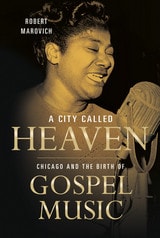
A City Called Heaven
Chicago and the Birth of Gospel MusicRobert Marovich
University of Illinois Press, 2015
A City Called Heaven celebrates a sound too mighty and too joyous for even church walls to hold.
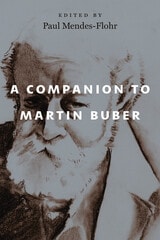
A Companion to Martin Buber
Edited by Paul Mendes-Flohr
University of Chicago Press, 2025
In his 1923 essay, I and Thou, the philosopher, theologian, and activist Martin Buber introduced a philosophy of dialogue that achieved a global, interdisciplinary resonance. For Buber, dialogue was more than a conversation; dialogue discloses something essential about our orientation and our lives with one another. This companion assembles twenty-six scholars from a dozen countries to explore Buber’s international reputation and legacy in education, interfaith relations, Judaism, philosophy, politics, and psychology. The result is an essential guide to one of the most influential Jewish thinkers of the twentieth century.
A Contemporary Introduction to Thomistic Metaphysics
Michael Gorman
Catholic University of America Press, 2023
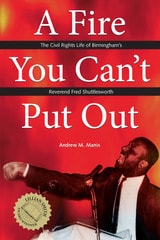
A Fire You Can't Put Out
The Civil Rights Life of Birmingham's Reverend Fred ShuttlesworthAndrew M. Manis
University of Alabama Press, 2001
WINNER, LILLIAN SMITH AWARD
WINNER, JAMES F. SULZBY, JR. AWARD
The fire of freedom that changed Birmingham—and America.
When Fred Shuttlesworth suffered only a bump on the head in the 1956 bombing of his home, members of his church called it a miracle. Shuttlesworth took it as a sign that God would protect him on the mission that had made him a target that night. Standing in front of his demolished home, Shuttlesworth vigorously renewed his commitment to integrate Birmingham's buses, lunch counters, police force, and parks. The incident transformed him, in the eyes of Birmingham's blacks, from an up-and-coming young minister to a virtual folk hero and, in the view of white Birmingham, from obscurity to rabble-rouser extraordinaire.
From his 1956 founding of the Alabama Christian Movement for Human Rights through the historic demonstrations of 1963, driven by a sense of divine mission, Shuttlesworth pressured Jim Crow restrictions in Birmingham with radically confrontational acts of courage. His intensive campaign pitted him against the staunchly segregationist police commissioner Eugene "Bull" Connor and ultimately brought him to the side of Martin Luther King Jr. and to the inner chambers of the Kennedy White House.
First published in 1999, Andrew Manis's award-winning biography of "one of the nation's most courageous freedom fighters" demonstrates compellingly that Shuttleworth's brand of fiery, outspoken confrontation derived from his prophetic understanding of the pastoral role. Civil rights activism was tantamount to salvation in his understanding of the role of Christian minister.
A Fragile Life
Accepting Our VulnerabilityTodd May
University of Chicago Press, 2017
It is perhaps our noblest cause, and certainly one of our oldest: to end suffering. Think of the Buddha, Chuang Tzu, or Marcus Aurelius: stoically composed figures impervious to the torments of the wider world, living their lives in complete serenity—and teaching us how to do the same. After all, isn’t a life free from suffering the ideal? Isn’t it what so many of us seek? Absolutely not, argues Todd May in this provocative but compassionate book. In a moving examination of life and the trials that beset it, he shows that our fragility, our ability to suffer, is actually one of the most important aspects of our humanity.
May starts with a simple but hard truth: suffering is inevitable. At the most basic level, we suffer physically—a sprained ankle or a bad back. But we also suffer insults and indifference. We suffer from overburdened schedules and unforeseen circumstances, from moral dilemmas and emotional heartaches. Even just thinking about our own mortality—the fact that we only live one life—can lead us to tremendous suffering. No wonder philosophies such as Buddhism, Taosim, Stoicism, and even Epicureanism—all of which counsel us to rise above these plights—have had appeal over the centuries. May highlights the tremendous value of these philosophies and the ways they can guide us toward better lives, but he also exposes a major drawback to their tenets: such invulnerability is too emotionally disengaged from the world, leading us to place too great a distance between ourselves and our experience. Rather than seeking absolute immunity, he argues most of us just want to hurt less and learn how to embrace and accept what suffering we do endure in a meaningful way.
A Fragile Life
Accepting Our VulnerabilityTodd May
University of Chicago Press, 2017
This is an auto-narrated audiobook edition of this book.
May starts with a simple but hard truth: suffering is inevitable. At the most basic level, we suffer physically—a sprained ankle or a bad back. But we also suffer insults and indifference. We suffer from overburdened schedules and unforeseen circumstances, from moral dilemmas and emotional heartaches. Even just thinking about our own mortality—the fact that we only live one life—can lead us to tremendous suffering. No wonder philosophies such as Buddhism, Taosim, Stoicism, and even Epicureanism—all of which counsel us to rise above these plights—have had appeal over the centuries. May highlights the tremendous value of these philosophies and the ways they can guide us toward better lives, but he also exposes a major drawback to their tenets: such invulnerability is too emotionally disengaged from the world, leading us to place too great a distance between ourselves and our experience. Rather than seeking absolute immunity, he argues most of us just want to hurt less and learn how to embrace and accept what suffering we do endure in a meaningful way.
Offering a guide on how to positively engage suffering, May ultimately lays out a new way of thinking about how we exist in the world, one that reassures us that our suffering, rather than a failure of physical or psychological resilience, is a powerful and essential part of life itself.
A Gift of Angels
The Art of Mission San Xavier del BacBernard L. Fontana; photographs by Edward McCain
University of Arizona Press, 2010
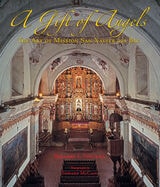
Mission San Xavier del Bac is a two-century-old Spanish church in southern Arizona located just a few miles from downtown Tucson, a metropolis of more than half a million people in the American Southwest. A National Historic Landmark since 1963, the mission’s graceful baroque art and architecture have drawn visitors from all over the world.
Now Bernard Fontana—the leading expert on San Xavier—and award-winning photographer Edward McCain team up to bring us a comprehensive view of the mission as we’ve never seen it before. With 200 stunning full-color photographs and incisive text illuminating the religious, historical, and motivational context of these images, A Gift of Angels is a must-have for tourists, scholars, and other visitors to San Xavier.
From its glorious architecture all the way down to the finest details of its art, Mission San Xavier del Bac is indeed a gift of angels.

A God in the House
Poets Talk About FaithEdited by Ilya Kaminsky and Katherine Towler
Tupelo Press, 2012

A Historian and His World
A Life of Christopher Dawson, 1889-1970Christina Scott
Catholic University of America Press, 2023
A More Beautiful Question
The Spiritual in Poetry and ArtGlenn Hughes
University of Missouri Press, 2011
Hughes offers the idea that the modern “crisis of faith” is not a matter of vanishing spiritual concerns and energy but rather of their disorientation, even as they remain pervasive forces in human affairs. And because art is the most effective medium for spiritually evocation, it is our most significant touchstone for examining this spiritual disorientation, just as it remains a primary source of inspiration for spiritual experience.
A More Beautiful Question is concerned with how art, and especially poetry, functions as a vehicle of spiritual expression in today’s modern cultures. The book considers the meeting points of art, poetry, religion, and philosophy, in part through examining the treatments of consciousness, transcendence, and art in the writings of twentieth-century philosophers Eric Voegelin and Bernard Lonergan. A major portion of A More Beautiful Question is devoted to detailed “case studies” of three influential modern poets: Gerard Manley Hopkins, Emily Dickinson, and T. S. Eliot. In these and its other chapters, the book examines the human need for artistic symbols that evoke the mystery of transcendence, the ways in which poetry and art illuminate the spiritual meanings of freedom, and the benefits of an individual’s loving study of great literature and art.
A More Beautiful Question has a distinctive aim—to clarify the spiritual functions of art and poetry in relation to contemporary confusion about transcendent reality—and it meets that goal in a manner accessible by the layperson as well as the scholar. By examining how the best art and poetry address our need for spiritual orientation, this book makes a valuable contribution to the philosophies of art, literature, and religion, and brings deserved attention to the significance of the “spiritual” in the study of these disciplines.
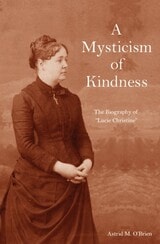
A Mysticism of Kindness
The Lucie Christine StoryAstrid M. O’Brien
University of Scranton Press, 2010
On the surface, Lucie Christine—the pseudonym given to a nineteenth-century Frenchwoman named Mathilde Boutle—was a very ordinary upper-middle-class woman, fulfilling her daily responsibilities to her husband and children. But underneath, Lucie Christine was an extraordinary human being. In A Mysticism of Kindness, Astrid M. O’Brien tells the life story of this remarkable woman, revealing how her experiences as a mystic allowed her to persevere as a wife and mother in the midst of constant verbal and physical abuse from her alcoholic husband. Her story will inspire all those who struggle to find a way to live a strong spiritual life in an often difficult and troubling world.
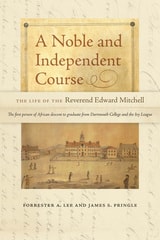
A Noble and Independent Course
The Life of the Reverend Edward MitchellForrester A. Lee and James S. Pringle
Dartmouth College Press, 2018
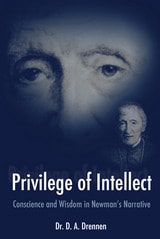
A Privilege of Intellect
Conscience and Wisdom in Newman’s NarrativeD. A. Drennen
University of Scranton Press, 2010
Based on decades of research, A Privilege of Intellect is D. A. Drennen’s portrait of the English cardinal John Henry Newman (1801–90), whose conversion to the Roman Catholic Church in 1845 significantly boosted the presence of the Catholic Church in England and caused many Anglicans to follow his example. Newman—who will be beatified this fall—devoted his life both to the Church and to the university, demonstrating that religious faith and intellectual pursuits could exist in harmony. Drennen’s biography combines theology with psychology and philosophy and will appeal to anyone interested in the history of the Church of England and the Roman Catholic Church.
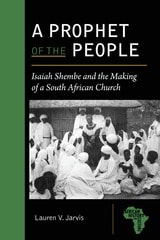
A Prophet of the People
Isaiah Shembe and the Making of a South African ChurchLauren V. Jarvis
Michigan State University Press, 2024
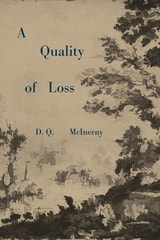
A Quality of Loss
Mcinerny
St. Augustine's Press, 2025
The world in the 1970s was a cultural upheaval in many respects. This novel is a story of the deepest disruption but in the quietest and most hidden of places––namely, a monk living in isolation who is turned upside down by recent developments in the Catholic Church motivated by post-modern plans.
Brother Martin journals what he doesn't identify as confusion in D.Q. McInerny's debut novel that paints the portrait of a period in history that many are only now taking more seriously. What happened before the turn into the new millennium, and why are the effects of Vatican Council II more obvious and influential now than they were in the immediate wake of this council? The story of Brother Martin is a time capsule for many readers, but for others it is an insight into life that was stubbornly resistant to modern thinking in favor of the transcendent and eternal with respect to spirituality. McInerny shows through story-telling how much the institution was anything but a hinderance to the human soul and how much we may have lost by rejecting old forms on the sole basis of not having come up with them ourselves. This story is a generational bridge and reveals religious life in a truthful and still generous light.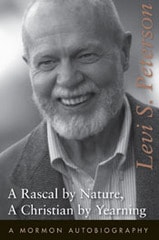
A Rascal by Nature, A Christian by Yearning
A Mormon AutobiographyPeterson, Levi S
University of Utah Press, 2006
Peterson has won a wide readership for his novels and short stories, his prize-winning biography of historian Juanita Brooks, and the essays that have appeared with regularity in western and Mormon literary and historical journals. In his autobiography, Peterson describes growing up on the Mormon frontier of rural Arizona, his growing skepticism with his Mormon faith, his teaching career at Weber State University, and his struggle to understand and master personal crises of confidence that kept him in therapy for almost two decades. Of particular interest to readers familiar with Peterson’s fiction are the many pages devoted to the creative process.
Winner of the Mormon History Association Turner-Bergera Best Biography Award.
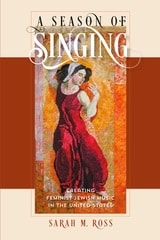
A Season of Singing
Creating Feminist Jewish Music in the United StatesSarah M. Ross
Brandeis University Press, 2016
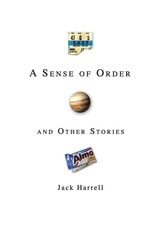
A Sense of Order
And Other StoriesJack Harrell
Signature Books, 2010
In another story, the LDS prophet is drawn to s simpler time when he could wander out unnoticed and buy a candy bar. Church Security won’t let him outside on his own and Public Relations won’t let him wear anything but a suit and tie. Still, the impulse to be a regular guy for an afternoon is compelling. Can’t he make his own decisions? He can, but what are the consequences?
And then there’s Jerry, who passes three men in suits who are talking and laughing at the loading dock behind an LDS temple. One of them looks up, drops a cigarette and crushes it, then slips into a nearby car. Another man—someone who has made Jerry’s life miserable—taunts him, saying: “Jerry, your goodness is your enemy …and tell all your friends.” Who is responsible? Maybe it’s the author’s reverie that’s to blame, but his stories have a way of getting deep inside the psyche and haunting us.
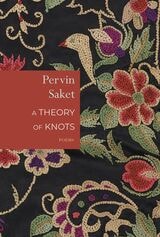
A Theory of Knots
Pervin Saket
Seagull Books, 2026
These lyric, unsparing poems stitch together a story of identity, belonging, and dissolution.
A Theory of Knots explores the loops of how identity and belonging are constructed, broken, resurrected, and dissolved. In sections, knots weave DNA and cords, memory and mythology, home and tongue; they draw on desire, Zoroastrian rituals, tradition and transgression, and the legacies of womanhood, asking what connects us, and at what cost.
As layers of identity are examined, Pervin Saket's poems return to language: heirloom, hazard, half-truth. Soon enough, language is both subject and suspect; having exposed the artificial nature of our truths, the poems confront the artificial nature of language itself. At the end, poetry reaches the wilderness of earth, collapses upon itself, dissolving on the page—untangling the final knot.
A Thomistic Introduction to Modern Psychology
Leslie Kelley
Catholic University of America Press, 2026
A cosmopolitan hermit
modernity and tradition in the philosophy of Josef PieperBernard N Schumacher
Catholic University of America Press, 2009
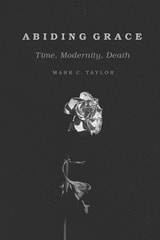
Abiding Grace
Time, Modernity, DeathMark C. Taylor
University of Chicago Press, 2018
Abiding Grace navigates the competing Hegelian and Kierkegaardian trajectories born out of the Reformation and finds Taylor arguing from spaces in between, showing how both narratives have shaped recent philosophy and culture. For Hegel, Luther’s internalization of faith anticipated the modern principle of autonomy, which reached its fullest expression in speculative philosophy. The closure of the Hegelian system still endures in the twenty-first century in consumer society, financial capitalism, and virtual culture. For Kierkegaard, by contrast, Luther’s God remains radically transcendent, while finite human beings and their world remain fully dependent. From this insight, Heidegger and Derrida developed an alternative view of time in which a radically open future breaks into the present to transform the past, demonstrating that, far from autonomous, life is a gift from an Other that can never be known.
Offering an alternative genealogy of deconstruction that traces its pedigree back to readings of Paul by way of Luther, Abiding Grace presents a thoroughgoing critique of modernity and postmodernity’s will to power and mastery. In this new philosophical and theological vision, history is not over and the future remains endlessly open.
About Religion
Economies of Faith in Virtual CultureMark C. Taylor
University of Chicago Press, 1999
Traveling from high culture to pop culture and back again, About Religion approaches cyberspace and Las Vegas through Hegel and Kant and reads Melville's The Confidence-Man through the film Wall Street. As astonishing juxtapositions and associations proliferate, formerly uncharted territories of virtual culture disclose theological vestiges, showing that faith in contemporary culture is as unavoidable as it is elusive.
The most accessible presentation of Taylor's revolutionary ideas to date, About Religion gives us a dazzling and disturbing vision of life at the end of the old and beginning of the new millennium.
Action and Character According to Aristotle
Kevin L. Flannery, SJ
Catholic University of America Press, 2013

African Apocalypse
The Story of Nontetha Nkwenkwe, a Twentieth-Century South African ProphetRobert R. Edgar; Hilary SapireRobert R.
Ohio University Press, 1999
After God
Mark C. Taylor
University of Chicago Press, 2007
Religion, Mark C. Taylor argues in After God, is more complicated than either its defenders or critics think and, indeed, is much more influential than any of us realize. Our world, Taylor maintains, is shaped by religion even when it is least obvious. Faith and value, he insists, are unavoidable and inextricably interrelated for believers and nonbelievers alike.
The first comprehensive theology of culture since the pioneering work of Paul Tillich, After God redefines religion for our contemporary age. This volumeis a radical reconceptualization of religion and Taylor’s most pathbreaking work yet, bringing together various strands of theological argument and cultural analysis four decades in the making.
Praise for Mark C. Taylor
“The distinguishing feature of Taylor’s career is a fearless, or perhaps reckless, orientation to the new and to whatever challenges orthodoxy. . . . Taylor’s work is playful, perverse, rarefied, ingenious, and often brilliant.”—New York Times Magazine
After the Death of God
Secularization as a Philosophical Challenge from Kant to NietzscheEspen Hammer
University of Chicago Press, 2025
The secularization thesis, which held that religious belief would gradually yield to rationality, has been thoroughly debunked. What, then, can we learn from philosophers for whom the death of God seemed so imminent? In this book, Espen Hammer offers a sweeping analysis of secularization in nineteenth-century German philosophy, arguing that the persistence of religion (rather than its absence) animated this tradition. Hammer shows that Kant, Hegel, Feuerbach, Marx, and Nietzsche, each in their own way, sought to preserve and transform religion’s ethical and communal aspirations for modern life. A renewed appreciation for this tradition’s generous thought, Hammer argues, can help us chart a path through needlessly destructive conflicts between secularists and fundamentalists today.
Afterlight
Caleb Nolen
University of Utah Press, 2026
Winner of the Agha Shahid Ali Prize in Poetry
“When I wake I’m in ninth grade again,” begins “Reunion,” the first poem in Caleb Nolen’s debut collection Afterlight. These haunting, tender poems revisit the fraught adolescence of a group of boys growing up in the late 1990s and early 2000s.
Told through the voice of one of the boys who left and is later looking back, Afterlight navigates the silences left by absent fathers, early deaths, and a God who doesn't speak. Interwoven throughout are letters to saints and biblical figures: pleas for intercession and understanding that echo the speaker’s search for grace amid violence and loss. By the book’s end, the lost boys and the saints share the same hallowed space, their stories entwined. Written in plain, unsparing language, these poems reveal the tenderness within troubled masculinity and the ache of trying to love what has already vanished.
Against Dogmatism
Dwelling in Faith and DoubtMadhuri Yadlapati
University of Illinois Press, 2013
Yadlapati traces religious perspectives on trust, humility, belonging, commitment, and lively skepticism as they relate to faith and doubt. Drawing on various doctrines, scriptures, and the writings of great religious thinkers such as C. S. Lewis, Søren Kierkegaard, Karl Barth, and Raimon Panikkar, Yadlapati demonstrates how doubt can serve to enhance faith, not hinder it. Defending the rich tapestry of faith and doubt against polarization, Against Dogmatism reveals an ecumenical middle way, a spiritual approach native to traditions in which faith and doubt are interwoven in constructive and dynamic ways.
Al-Ghazali's "Moderation in Belief"
Al-Ghazali
University of Chicago Press, 2013
The first complete English-language edition of Moderation in Belief, this new annotated translation by Aladdin M. Yaqub draws on the most esteemed critical editions of the Arabic texts and offers detailed commentary that analyzes and reconstructs the arguments found in the work’s four treatises. Explanations of the historical and intellectual background of the texts also enable readers with a limited knowledge of classical Arabic to fully explore al-Ghazali and this foundational text for the first time.
With the recent resurgence of interest in Islamic philosophy and the conflict between philosophy and religion, this new translation will be a welcome addition to the scholarship.
All Great Art is Praise
Aidan Nichols
Catholic University of America Press, 2016
All Things Human
Henry Codman Potter and the Social Gospel in the Episcopal ChurchMichael Bourgeois
University of Illinois Press, 2004
In addition to being the sixth bishop of the Diocese of New York, Henry Codman Potter (1835-1908) was a prominent voice in the Social Gospel movement of the late nineteenth and early twentieth centuries. This book, the first in-depth study of Potter's life and work, examines his career in the Episcopal church as well as the origins and legacy of his progressive social views.
As industrialization and urbanization spread in the nineteenth century, the Social Gospel movement sought to apply Christian teachings to effect improvements in the lives of the less fortunate. Potter was firmly in this tradition, concerning himself especially with issues of race, the place of women in society, questions of labor and capital, and what he called "political righteousness." Placing Potter against the wider backdrop of nineteenth-century American Protestantism, Bourgeois explores the experiences and influences that led him to espouse these socially conscious beliefs, to work for social reform, and to write such works as Sermons of the City (1881) and The Citizen in His Relation to the Industrial Situation (1902).
In telling Potter's remarkable story, All Things Human stands as a valuable contribution to intellectual and religious history as well as an exploration of the ways in which religion and society interact.
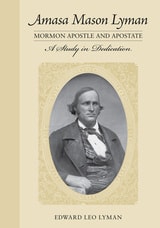
Amasa Mason Lyman, Mormon Apostle and Apostate
A Study in DedicationEdward Leo Lyman
University of Utah Press, 2009
Having spent more than thirty years in the service of his church, Lyman began to move away from its teachings after a series of conflicts with its second leader, Brigham Young. Lyman was one of the first Mormons to criticize the Mountain Meadows Massacre, which led to his dismissal as an apostle. He was excommunicated in 1870 and became one of the foremost spokesmen of the Godbeite Church of Zion movement before his death in 1877. Author Edward Leo Lyman chronicles Amasa Lyman’s life and interactions with Mormon history with an honesty true to his ancestor’s freethinking spirit.
Winner of the Francis Armstrong Madsen Best Utah History Book Award from the Utah Division of State History.
Ambient Sufism
Ritual Niches and the Social Work of Musical FormRichard C. Jankowsky
University of Chicago Press, 2021
America's Theologian
Father Richard McBride of Notre DameTodd Hartch
Catholic University of America Press, 2027
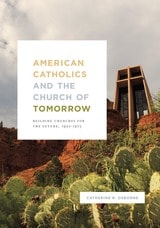
American Catholics and the Church of Tomorrow
Building Churches for the Future, 1925–1975Catherine R. Osborne
University of Chicago Press, 2018
Catherine R. Osborne’s innovative new book finds the answer: the alignment between postwar advancements in technology and design and evolutionary thought within the burgeoning American Catholic community. A new, visibly contemporary approach to design, church leaders thought, could lead to the rebirth of the church community of the future. As Osborne explains, the engineering breakthroughs that made modernist churches feasible themselves raised questions that were, for many Catholics, fundamentally theological. Couldn’t technological improvements engender worship spaces that better reflected God's presence in the contemporary world? Detailing the social, architectural, and theological movements that made modern churches possible, American Catholics and the Churches of Tomorrow breaks important new ground in the history of American Catholicism, and also presents new lines of thought for scholars attracted to modern architectural and urban history.
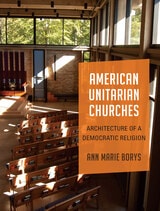
American Unitarian Churches
Architecture of a Democratic ReligionAnn Marie Borys
University of Massachusetts Press, 2021
In American Unitarian Churches, Ann Marie Borys argues that the progressive values and identity of the Unitarian religion are intimately intertwined with ideals of American democracy and visibly expressed in the architecture of its churches. Over time, church architecture has continued to evolve in response to developments within the faith, and many contemporary projects are built to serve religious, practical, and civic functions simultaneously. Focusing primarily on churches of the nineteenth and twentieth centuries, including Frank Lloyd Wright's Unity Temple and Louis Kahn's First Unitarian Church, Borys explores building histories, biographies of leaders, and broader sociohistorical contexts. As this essential study makes clear, to examine Unitarianism through its churches is to see American architecture anew, and to find an authentic architectural expression of American democratic identity.
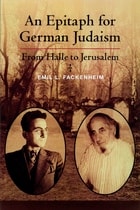
An Epitaph for German Judaism
From Halle to JerusalemEmil Fackenheim
University of Wisconsin Press, 2007
“An ‘epoch-making’ autobiography.”—Arnold Ages, Jewish Tribune
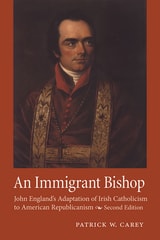
An Immigrant Bishop
John England's Adaptation of Irish Catholicism to American Republicanism, Second EditionPatrick W. Carey
Catholic University of America Press, 2022
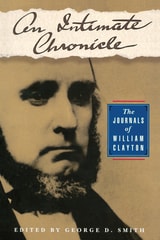
An Intimate Chronicle
The Journals of William ClaytonGeorge D. Smith
Signature Books, 1995
In ministering to the sick, for instance, Clayton anointed with perfumed oil and rum. He performed baptisms to heal the sick. Church services, held irregularly, were referred to as “going to meeting” and seemed to be elective. He testifies of people speaking in tongues and of others “almost speaking in tongues.” When introduced to plural marriage, he was reluctant but eventually became one of its most enthusiastic proponents, marrying ten women and fathering forty-two children.
Since polygamy was initially secret, Clayton spent much of his time putting out the fires of innuendo and discontent. He caught his first plural wife rendezvousing with her former fiancé; later, when she became pregnant, her mother–his unaware mother-in-law–was so overwrought that she attempted suicide. Joseph Smith reassured him: “Just keep her at home and brook it and if they raise trouble about it and bring you before me I will give you an awful scourging and probably cut you off from the church and then I will set you ahead as good as ever.” Clayton was also the object of Emma Smith’s attentions, allegedly part of a jealous wife’s plan to make a cuckold of her errant husband.
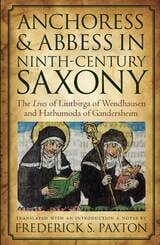
Anchoress and Abbess in Ninth-Century Saxony
The Lives of Liutbirga of Wendhausen and Hathumoda of GandersheimFrederick S. Paxton
Catholic University of America Press, 2009
Apocalypse of Truth
Heideggerian MeditationsJean Vioulac
University of Chicago Press, 2021
In his first book to be translated into English, Vioulac radicalizes Heidegger’s understanding of truth as disclosure through the notion of truth as apocalypse. This “apocalypse of truth” works as an unveiling that reveals both the finitude and mystery of truth, allowing a full confrontation with truth-as-absence. Engaging with Heidegger, Marx, and St. Paul, as well as contemporary figures including Giorgio Agamben, Alain Badiou, and Slavoj Žižek, Vioulac’s book presents a subtle, masterful exposition of his analysis before culminating in a powerful vision of “the abyss of the deity.” Here, Vioulac articulates a portrait of Christianity as a religion of mourning, waiting for a god who has already passed by, a form of ever-present eschatology whose end has always already taken place. With a preface by Jean-Luc Marion, Apocalypse of Truth presents a major contemporary French thinker to English-speaking audiences for the first time.
Aquinas and the Cry of Rachel
John F.X. Knasas
Catholic University of America Press, 2013
Generally speaking, possible philosophical accounts for evil are two kinds: cosmological or personal. The cosmological account has evils rebounding to the perfection of creation. The personal account would have evils suffered rebounding to the good of the sufferer. Knasas argues that for Aquinas no philosophical resolution of these two kinds of accounts
is possible. This argument is based upon Aquinas's understanding of the human as an intellector of analogical being. Such an understanding establishes two truths. First, the human is by nature only a principal part of the created whole. Second, there is the philosophically discernible possibility of supernatural elevation by the creator.
Hence, as far as philosophy can discern, evil may have a natural explanation or it may have a supernatural one. The Thomistic philosopher has no answer as to why evil exists because that philosopher discerns too many possible ones. In that respect, Aquinas's thinking on evil is similar to his thinking about the philosophical knowledge of the biblical
truth of the world's creation in time. Such a creation is one metaphysical possibility among others. Some authors that Aquinas and the Cry of Rachel considers are: Anthony Flew and Albert Camus, Jacques Maritain and Charles Journet, William Rowe, Marily McCord Adams, William Hasker, John Hick, David Ray Griffin, David Hume, Diogenes Allen, J. L. Mackie, Alvin Plantinga, Richard Swinburne, Bruce Reichenbach,
Brian Davies, and Eleonore Stump.
Aquinas and the Platonist Tradition
Fran O'Rourke
Catholic University of America Press, 2026
Aquinas, Wittgenstein, and the Riddle of Spiritual Pedagogy
Matthew Dunch
Catholic University of America Press, 2027