Results by title
18 books match the query 'Renewable energy sources'

After Oil
Imre Szeman
West Virginia University Press, 2016
Energy plays a critical role in determining the shape, form and character of our daily existence, which is why a genuine shift in our energy usage demands a wholesale transformation of the petrocultures in which we live. After Oil provides readers with the resources to make this happen.
Buying Time
Environmental Collapse and the Future of EnergyKaz Makabe
University Press of New England, 2017

Clean Energy
Past to futurePeter Tavner
The Institution of Engineering and Technology, 2024

Ecologics
Wind and Power in the AnthropoceneCymene Howe
Duke University Press, 2019
In her volume, Ecologics, Howe narrates how an antidote to the Anthropocene became both failure and success. Tracking the development of what would have been Latin America's largest wind park, Howe documents indigenous people's resistance to the project and the political and corporate climate that derailed its renewable energy potential. Using feminist and more-than-human theories, Howe demonstrates how the dynamics of energy and environment cannot be captured without understanding how human aspirations for energy articulate with nonhuman beings, technomaterial objects, and the geophysical forces that are at the heart of wind and power.
Electric Mountains
Climate, Power, and Justice in an Energy TransitionShaun A. Golding
Rutgers University Press, 2021
Committed environmentalists in one of North America’s most progressive regions desperately wanted energy policies that address the climate crisis. For many of them, wind turbines on Northern New England’s iconic ridgelines symbolize the energy transition that they have long hoped to see. For others, however, ridgeline wind takes on a very different meaning. When weighing its costs and benefits locally and globally, some wind opponents now see the graceful structures as symbols of corrupted energy politics.
This book derives from several years of research to make sense of how wind turbines have so starkly split a community of environmentalists, as well as several communities. In doing so, it casts a critical light on the roadmap for energy transition that Northern New England’s ridgeline wind projects demarcate. It outlines how ridgeline wind conforms to antiquated social structures propping up corporate energy interests, to the detriment of the swift de-carbonizing and equitable transformation that climate predictions warrant. It suggests, therefore, that the energy transition of which most of us are a part, is probably not the transition we would have designed ourselves, if we had been asked.
Energopolitics
Wind and Power in the AnthropoceneDominic Boyer
Duke University Press, 2019
In his volume, Energopolitics, Boyer examines the politics of wind power and how it is shaped by myriad factors, from the legacies of settler colonialism and indigenous resistance to state bureaucracy and corporate investment. Drawing on interviews with activists, campesinos, engineers, bureaucrats, politicians, and bankers, Boyer outlines the fundamental impact of energy and fuel on political power. Boyer also demonstrates how large conceptual frameworks cannot adequately explain the fraught and uniquely complicated conditions on the isthmus, illustrating the need to resist narratives of anthropocenic universalism and to attend to local particularities.

Energy Culture
Art and Theory on Oil and BeyondImre Szeman
West Virginia University Press, 2019
Energy Culture is a provocative book about oil’s firm grip on our politics and everyday lives. It brings together essays and artwork produced in a collaborative environment to stimulate new ways of thinking and to achieve a more just and sustainable world.
The original work collected in Energy Culture creatively engages energy as a social form through lively arguments and artistic research organized around three vectors of inquiry. The first maps how fossil fuels became, and continue to be, embedded in North American society, from the ideology of tar sands reclamation projects to dreams of fiber optic cables running through the Northwest Passage. The second comprises creative and artistic responses to the dominance of fossil fuels in everyday life and to the challenge of realizing new energy cultures. The final section addresses the conceptual and political challenges posed by energy transition and calls into question established views on energy. Its contributions caution against solar capitalism, explore the politics of sabotage, and imagine an energy efficient transportation system called “the switch.” Imbued with a sense of urgency and hope, Energy Culture exposes the deep imbrications of energy and culture while pointing provocatively to ways of thinking and living otherwise.

Floating Power
Energy, Infrastructure, and South-South RelationsGökçe Günel
Duke University Press, 2026
Large Scale Grid Integration of Renewable Energy Sources
Antonio Moreno-Munoz
The Institution of Engineering and Technology, 2017
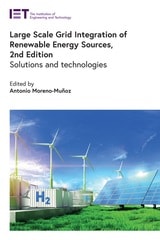
Large Scale Grid Integration of Renewable Energy Sources
Solutions and technologiesAntonio Moreno-Muñoz
The Institution of Engineering and Technology, 2024
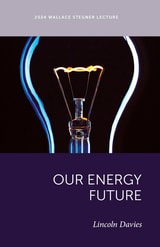
Our Energy Future
Lincoln Davies
University of Utah Press, 2025
In Our Energy Future, Lincoln Davies shines a bright light on the challenges the transition presents, including energy equity, political partisanship, the need for holistic solutions, and adaptability in the face of change. Our Energy Future makes the case for why the United States’ current transition to clean energy provides our world with something we so desperately need today: hope.
Power Shift
Keywords for a New Politics of EnergyImre Szeman
West Virginia University Press, 2025
Featuring brief essays on 101 key terms by scholars, artists, and activists from around the world and across disciplines, Power Shift offers an expansive, kaleidoscopic guide to the history of petromodernity, recent technological and social developments, and pathways to new energy futures. The book offers new insights into the emergent politics of energy, contrasting today’s environmental and climate movements with the geopolitical contests of the Cold War era. It explores the still unfolding story of energy transition by focusing on the ongoing struggles of communities and individuals against decisions made by corporations, governments, and international organizations.

Scenarios for a Future Electricity Supply
Cost-optimised variations on supplying Europe and its neighbours with electricity from renewable energiesGregor Czisch
The Institution of Engineering and Technology, 2011
Thank You Fossil Fuels and Good Night
The 21st Century's Energy TransitionGregory Meehan
University of Utah Press, 2017
Everything is subject to a lifecycle. In the field of energy, the obvious question is, “Where are we in the lifecycle of fossil fuels?” Competitive technology for sourcing renewable energy, marketplace readiness, and pressures from climate change all signal that the fossil fuel era is coming to an end. This book explains the alternatives and suggests when and how change will occur. Employing a global perspective and detailed analysis, it provides recommendations on policies and strategies to make a smooth and wholesale transition to renewables before the continued use of fossil fuels becomes economically and socially disruptive.
Gregory Meehan’s overview eschews politics in favor of comprehensive coverage and logical explanation. He addresses economic, environmental, and security concerns and does not shy away from illuminating limitations and problems with various energy sources. Meehan’s dogged pursuit of the current state of knowledge and energy practices around the world shows that different answers are proving viable for different social and environmental contexts. This is the most wide-ranging and thorough introduction to the world’s energy issues and choices to date.
Lecture and exercise guides available upon request.
Click here to hear the Friends of the Marriott Library event with Gregory Meehan. https://youtu.be/YqmNhEN09_c
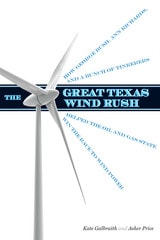
The Great Texas Wind Rush
How George Bush, Ann Richards, and a Bunch of Tinkerers Helped the Oil and Gas State Win the Race to Wind PowerBy Kate Galbraith and Asher Price
University of Texas Press, 2013
In the late 1990s, West Texas was full of rundown towns and pumpjacks, aging reminders of the oil rush of an earlier era. Today, the towns are thriving as 300-foot-tall wind turbines tower above those pumpjacks. Wind energy has become Texas’s latest boom, with the Lone Star State now leading the nation. How did this dramatic transformation happen in a place that fights federal environmental policies at every turn? In The Great Texas Wind Rush, environmental reporters Kate Galbraith and Asher Price tell the compelling story of a group of unlikely dreamers and innovators, politicos and profiteers.
The tale spans a generation and more, and it begins with the early wind pioneers, precocious idealists who saw opportunity after the 1970s oil crisis. Operating in an economy accustomed to exploiting natural resources and always looking for the next big thing, their ideas eventually led to surprising partnerships between entrepreneurs and environmentalists, as everyone from Enron executives to T. Boone Pickens, as well as Ann Richards, George W. Bush and Rick Perry, ended up backing the new technology. In this down-to-earth account, the authors explain the policies and science that propelled the “windcatters” to reap the great harvest of Texas wind. They also explore what the future holds for this relentless resource that is changing the face of Texas energy.

The Renewable Energy Alternative
How the United States and the World Can Prosper without Nuclear Energy or CoalJohn O. Blackburn
Duke University Press, 1987
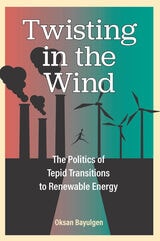
Twisting in the Wind
The Politics of Tepid Transitions to Renewable EnergyOksan Bayulgen
University of Michigan Press, 2022
Why do governments insist on fossil fuels? Why do renewables face uncertain and inconsistent legal and regulatory circumstances that slow their market-share growth against fossil fuels? Oksan Bayulgen studies the political determinants of partial energy reforms that result in tepid energy transitions and shifts the geographical focus from front-runner countries of energy innovation to developing countries, which have become the largest carbon emitters in the world. Her in-depth case study of energy policies in Turkey over the past two decades demonstrates that energy transitions are neither inevitable nor linear and that they are often initiated if and only when promoting renewables is in the interests of governing elites and stall when political dividends associated with energy rents change. This book contributes to the debates on the nature and pace of energy transitions by analyzing the power dynamics and political institutions under which energy reforms are initiated and implemented over time. This timely topic will be of interest to scholars, policymakers, energy investors, and anyone interested in environmental studies.

Walking to the Sun
A Journey through America's Energy LandscapesTom Haines
University Press of New England, 2018