Results by title
6 books match the query 'Rental housing'
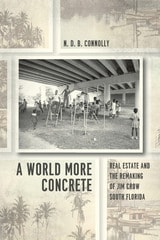
A World More Concrete
Real Estate and the Remaking of Jim Crow South FloridaN. D. B. Connolly
University of Chicago Press, 2014
A World More Concrete argues that black and white landlords, entrepreneurs, and even liberal community leaders used tenements and repeated land dispossession to take advantage of the poor and generate remarkable wealth. Through a political culture built on real estate, South Florida’s landlords and homeowners advanced property rights and white property rights, especially, at the expense of more inclusive visions of equality. For black people and many of their white allies, uses of eminent domain helped to harden class and color lines. Yet, for many reformers, confiscating certain kinds of real estate through eminent domain also promised to help improve housing conditions, to undermine the neighborhood influence of powerful slumlords, and to open new opportunities for suburban life for black Floridians.
Concerned more with winners and losers than with heroes and villains, A World More Concrete offers a sober assessment of money and power in Jim Crow America. It shows how negotiations between powerful real estate interests on both sides of the color line gave racial segregation a remarkable capacity to evolve, revealing property owners’ power to reshape American cities in ways that can still be seen and felt today.
Collateral Damages
Landlords and the Urban Housing CrisisMeredith Greif
Russell Sage Foundation, 2022
For three years, Greif followed sixty private landlords serving low- and moderate-income residents in the Cleveland, Ohio, metropolitan area to better understand how local regulations, such as criminal activity nuisance ordinances (CANOs) and local water billing regulations, affect their landlording practices. CANOs are intended to protect communities by discouraging criminal activity on private properties. Property owners can face financial and criminal sanctions if they do not abate nuisance activities, which can include littering, noise, drug use, and calls for police assistance, including calls for domestic violence. Local water billing regulations hold landlords responsible for delinquent water bills, even in cases where the account is registered in the tenant’s name. Greif finds that such laws often increase landlords’ sense of “financial precarity” – the real or perceived uncertainty that their business is financially unsustainable – by holding them responsible for behavior they feel is out of their control. Feelings of financial uncertainty led some landlords to use illegitimate business practices against their tenants, including harassment, oversurveillance, poor property upkeep, and illegal evictions. And to avoid to financial penalties associated with CANOs and delinquent water bills, some landlords engage in discriminatory screening of vulnerable potential tenants who are unemployed or have histories of domestic violence or drug use. In this sense, by promoting a sense of financial insecurity among landlords, laws meant to protect renters ultimately had the opposite effect.
While some landlords, particularly those who rented a larger number of units, were able to operate their businesses both lawfully and profitably, the majority could not. Greif offers practical recommendations to address the concerns of small- and mid-sized landlords, such as regular meetings that bring landlords and local authorities together to engage in constructive dialogue about local housing policy, issues, and concerns. She also proposes policy recommendations to protect renters, such as establishing the right to counsel for lower-income tenants in eviction hearings and enacting a federal renter’s tax credit.
Collateral Damages is an enlightening investigation on how local laws and practices perpetuate disadvantage among marginalized populations and communities, in ways that are hidden and often unintended.
For Rent
Understanding Landlords, Rental Housing, and Evictions in PhiladelphiaJohn Balzarini and Melody L. Boyd
Temple University Press, 2027
Landlords are often painted as “rich, indifferent, and miserly.” For Rent humanizes small-scale landlords who are highly involved in their property management and tenant interaction. John Balzarini and Melanie Boyd interview small-scale landlords in Philadelphia to understand how they think, why they invest in rental housing, and how their experiences as housing providers shape both their supportive and detrimental behaviors toward renters. They reveal an earnest desire to provide decent rental housing and resolve rent issues through communication, flexibility, and compromise rather than eviction.
For Rent describes these landlords’ challenges, from social problems connected to high poverty rates, to the increasing consolidation of rental housing by large-scale corporate landlords, which can push small-scale landlords out of the rental housing market. The authors argue that the decline of small-scale landlords could reduce housing affordability and increase evictions. Instead, collectively valuing rental housing and implementing policies that support small-scale landlords can strengthen housing stability and improve outcomes for renters.
Providing a regional focus that is indicative of national trends, For Rent shows the many advantages small-scale landlords have over their corporate competitors, while also critically analyzing the broader housing system that places them on the front lines of managing market contradictions.
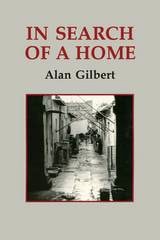
In Search of a Home
Rental and Shared Housing in Latin AmericaAlan Gilbert
University of Arizona Press, 1993
Rethinking Rental Housing
John Gilderbloom
Temple University Press, 1987
In recent years, almost daily media attention has been focused on the plight of the homeless in cities across the United States. Drawing upon experiences in the U.S. and Europe, John Gilderbloom and Richard Appelbaum challenge conventional assumptions concerning the operation of housing markets and provide policy alternatives directed at the needs of low- and moderate-income families. Rethinking Rental Housing is a ground-breaking analysis that shows the value of applying a broad sociological approach to urban problems, one that takes into account the basic economic, social, and political dimensions of the urban housing crisis.
Gilderbloom and Appelbaum predict that this crisis will worsen in the 1990s and argue that a "supply and demand" approach will not work in this case because housing markets are not competitive. They propose that the most effective approach to affordable housing is to provide non-market alternatives fashioned after European housing programs, particularly the Swedish model.
An important feature of this book is the discussion of tenant movements that have tried to implement community values in opposition to values of development and landlord capital. One of the very few publications on rental housing, it is unique in applying a sociological framework to the study of this topic.
The Rent Trap
How We Fell into It and How We Get Out of ItSamir Jeraj and Rosie Walker
Pluto Press, 2016
Samir Jeraj and Rosie Walker offer the first in-depth case study of the private rental sector in the United Kingdom, exploring the rent-trap injustices in a first-world economy and exposing the powers that conspire to oppose regulation. A quarter of British MPs are landlords; rent strike is almost impossible; and sudden evictions are growing. Nevertheless, drawing on inspiration from movements in the United Kingdom, continental Europe, and elsewhere, The Rent Trap shows how people are starting to fight back against the financial burdens, health risks, and vicious behavior of landlords, working to create a world of fairer, safer housing for all—lessons that extend well beyond the borders of the UK.