Results by title
5 books match the query 'Renunciation'
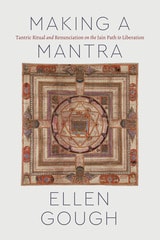
Making a Mantra
Tantric Ritual and Renunciation on the Jain Path to LiberationEllen Gough
University of Chicago Press, 2021
Typically, Jainism is characterized as a celibate, ascetic path to liberation in which one destroys karma through austerities, while the tantric path to liberation is characterized as embracing the pleasures of the material world, requiring the ritual use of mantras to destroy karma. Gough, however, argues that asceticism and Tantra should not be viewed in opposition to one another. She does so by showing that Jains perform “tantric” rituals of initiation and meditation on mantras and maṇḍalas. Jainism includes kinds of tantric practices, Gough provocatively argues, because tantric practices are a logical extension of the ascetic path to liberation.
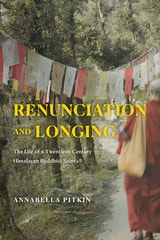
Renunciation and Longing
The Life of a Twentieth-Century Himalayan Buddhist SaintAnnabella Pitkin
University of Chicago Press, 2022
In the early twentieth century, Khunu Lama journeyed across Tibet and India, meeting Buddhist masters while sometimes living, so his students say, on cold porridge and water. Yet this elusive wandering renunciant became a revered teacher of the Fourteenth Dalai Lama. At Khunu Lama’s death in 1977, he was mourned by Himalayan nuns, Tibetan lamas, and American meditators alike. The many surviving stories about him reveal significant dimensions of Tibetan Buddhism, shedding new light on questions of religious affect and memory that reimagines cultural continuity beyond the binary of traditional and modern.
In Renunciation and Longing, Annabella Pitkin explores devotion, renunciation, and the teacher-student lineage relationship as resources for understanding Tibetan Buddhist approaches to modernity. By examining narrative accounts of the life of a remarkable twentieth-century Himalayan Buddhist and focusing on his remembered identity as a renunciant bodhisattva, Pitkin illuminates Tibetan and Himalayan practices of memory, affective connection, and mourning. Refuting long-standing caricatures of Tibetan Buddhist communities as unable to be modern because of their religious commitments, Pitkin shows instead how twentieth- and twenty-first-century Tibetan and Himalayan Buddhist narrators have used themes of renunciation, devotion, and lineage as touchstones for negotiating loss and vitalizing continuity.

Renunciation as a Tragic Focus
A Study of Five PlaysEugene H. Falk
University of Minnesota Press, 1954
Renunciation as a Tragic Focus was first published in 1954. Minnesota Archive Editions uses digital technology to make long-unavailable books once again accessible, and are published unaltered from the original University of Minnesota Press editions.
Norman J. DeWitt explains, in an introduction to this volume, that these essays are written in terms of a personal humanism.
"Personal humanism," Mr. DeWitt says, "comes from an awareness of a world in which pain is real, and it leads to the traditional virtues of wisdom and justice, terms that are seldom heard in academic circles today."
Traditionalist though he may be in the basic virtues, Professor Falk, in these studies, challenges a traditional concept. By analyzing the conflicting values in five plays, he demonstrates why the traditional definition of tragedy should be broadened. He shows that martyrdom and self-sacrifice, when they involve an act of renunciation, should be included in the realm of tragedy. The older concept ruled out these elements by its insistence that the death of a martyr is not the defeat but the victory of an individual.
The five plays studied here are Sophocles' Oedipus the King and Antigone,Corneille's Polyeucte,Maeterlinck's Aglavaine and Selysette,and Samain's Polypheme.In all of them, the tragic experience of man's defeat in an unequal struggle against destiny is examined in the light of the conflict between his worldly and his spiritual aspirations. The plays illustrate the tenet that renunciation becomes a tragic experience only if the character's devotion to both worldly and spiritual values is genuine. In succession, the five plays represent a progression from authentic to seeming renunciation.
The studies are pertinent to many interests in the broad academic field of the humanities as well as to such specific disciplines as comparative literature, drama, French literature, and the classics.
Renunciation
POEMSCorey Marks
University of Illinois Press, 2000
The sculptor Gislebertus, Doubting Thomas, Theseus, and John Keats share space in the pages of Renunciation with a survivor of the bomb in Hiroshima, a blind girl in the South American jungle, and DeSoto's thirteen swine in the hold of a ship bound for America. Rich with almost palpable nuances of light and sound, Marks's lyric meditations unravel a constant play of loss and continuation, "mending sense from spare threads" and hovering over connections undone even as they are made.
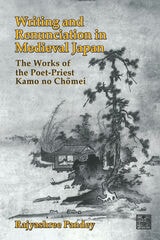
Writing and Renunciation in Medieval Japan
The Works of the Poet-Priest Kamo no ChomeiRajyashree Pandey
University of Michigan Press, 1998