Results by title
32 books match the query 'Representations'

After The End
Representations Of Post-ApocalypseJames Berger
University of Minnesota Press, 1999
Explores the cultural function of the concept of “the end.”
Apocalyptic thought is hardly unique to the end of the twentieth century; it’s been a fixture of American culture for decades. Currently, the media are rife with omens and signs, and we’re bombarded with warnings that “the end is near.” But as James Berger argues here, the end never comes. There is always something left.
In this study of the cultural pursuit of the end and what follows, Berger contends that every apocalyptic depiction leaves something behind, some mixture of paradise and wasteland. Combining literary, psychoanalytic, and historical methods, Berger mines these depictions for their weight and influence on current culture. He applies wide-ranging evidence-from science fiction to Holocaust literature, from Thomas Pynchon to talk shows, from American politics to the fiction of Toni Morrison-to reveal how representations of apocalyptic endings are indelibly marked by catastrophic histories. These post-apocalyptic visions reveal as much about our perception of the past as they do about conceptions of the future. Berger examines the role of such historical crises as slavery, the Holocaust, and the Vietnam War and describes how these traumas continue to generate cultural symptoms. The shadow of impending apocalypse darkens today’s vision of the future, but it’s a familiar shadow: traumas we have already experienced as a culture are recycled into visions of new endings. Our “endings” are already after the end. Berger demonstrates that post-apocalyptic representations are both symptoms and therapies. Contemporary culture continually draws on these traumatic histories, trying to forget, remember, deny, and recover. After the End puts these visions in context, revealing them in some cases as dangerous evasions, in others as crucial tools for cultural survival. ISBN 0-8166-2932-3 Cloth £00.00 $47.95xxISBN 0-8166-2933-1 Paper £00.00 $18.95x248 Pages 5 7/8 x 9 MarchTranslation Inquiries: University of Minnesota Press
Agrarian Environments
Resources, Representations, and Rule in IndiaArun Agrawal, ed.
Duke University Press, 2000
Editors Arun Agrawal and K. Sivaramakrishnan claim that rural social change in India cannot be understood without exploring how environmental changes articulate major aspects of agrarian transformations—technological, cultural, and political—in the last two centuries. In order to examine these issues, they have reached beyond the confines of single disciplinary allegiances or methodological loyalties to bring together anthropologists, historians, political scientists, geographers, and environmental scientists who are significantly informed by interdisciplinary research. Drawing on extensive field and archival research, the contributors demonstrate the powerful political implications of blurring the boundaries between dichotomous cultural representations, combine conceptual analyses with specific case studies, and look at why competing powers chose to emphasize particular representations of land use or social relations. By providing a more textured analysis of how categories emerge and change, this work offers the possibility of creating crucial alliances across populations that have historically been assumed to lack mutual goals.
Agrarian Environments will be valuable to those in political science, Asian studies, and environmental studies.
Contributors. Arun Agrawal, Mark Baker, Molly Chattopadhyaya, Vinay Gidwani, Sumit Guha, Shubhra Gururani, Cecile Jackson, David Ludden, Haripriya Rangan, Paul Robbins, Vasant Saberwal, James C. Scott, K. Sivaramakrishnan, Ajay Skaria, Jennifer Springer, Darren Zook

Are the Kids All Right?
Representations of LGBTQ Characters in Children's and Young Adult LiteratureB.J. Epstein
Intellect Books, 2013
Uses ideas from queer theory and other research to interrogate the ways LGBTQ characters are portrayed in books for children and young people, and to analyse what messages readers of such books might receive.
Includes detailed analysis of over 60 picture books, middle-grade books and young adult novels by authors such as Nancy Garden, Julie Ann Peters, Alex Sanchez, David Levithan, Lesléa Newman, Marcus Ewart, Cris Beam and many others.
This book brings together literary studies, sociology, queer studies and other academic fields in an accessible manner, where the research supports the detailed analyses of over 50 books for children and young adults. Epstein looks at a range of topics, such as the lack of diversity in many of these works, how same-sex marriage is portrayed, the relative absence of bisexual and transgender characters, the way that many of these books are marketed and intended as 'issue books', and more.
A practical and informative book to inspire writers and publishers to produce better LGBTQ literature for young readers.

Breaking the Banks
Representations and Realities in New England Fisheries, 1866-1966Matthew McKenzie
University of Massachusetts Press, 2018
Books, films, and the media have long portrayed the Yankee fisherman's hard-scrabble existence, as he faced brutal weather on the open seas and unnecessary governmental restrictions. As McKenzie contends, this simplistic view has long betrayed commercial fisheries' sophisticated legislative campaigns in Washington, DC, as they sought federal subsidies and relief and, eventually, fewer constricting regulations. This clash between fisheries' representation and their reality still grips fishing communities today as they struggle to navigate age-old trends of fleet consolidation, stock decline, and intense competition.
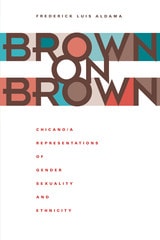
Brown on Brown
Chicano/a Representations of Gender, Sexuality, and EthnicityBy Frederick Luis Aldama
University of Texas Press, 2005
Common conceptions permeating U.S. ethnic queer theory tend to confuse aesthetics with real-world acts and politics. Often Chicano/a representations of gay and lesbian experiences in literature and film are analyzed simply as propaganda. The cognitive, emotional, and narrational ingredients (that is, the subject matter and the formal traits) of those representations are frequently reduced to a priori agendas that emphasize a politics of difference.
In this book, Frederick Luis Aldama follows an entirely different approach. He investigates the ways in which race and gay/lesbian sexuality intersect and operate in Chicano/a literature and film while taking into full account their imaginative nature and therefore the specific kind of work invested in them. Also, Aldama frames his analyses within today's larger (globalized) context of postcolonial literary and filmic canons that seek to normalize heterosexual identity and experience. Throughout the book, Aldama applies his innovative approach to throw new light on the work of authors Arturo Islas, Richard Rodriguez, John Rechy, Ana Castillo, and Sheila Ortiz Taylor, as well as that of film director Edward James Olmos. In doing so, Aldama aims to integrate and deepen Chicano literary and filmic studies within a comparative perspective. Aldama's unusual juxtapositions of narrative materials and cultural personae, and his premise that literature and film produce fictional examples of a social and historical reality concerned with ethnic and sexual issues largely unresolved, make this book relevant to a wide range of readers.

Crip Love Onscreen
Representations of Love, Sex, and DisabilitySarah Rainey-Smithback
The Ohio State University Press, 2026
As disability representation increases, though, new possibilities are emerging. Crip Love Onscreen also draws attention to the exceptional through a close reading of screen narratives (such as 50 First Dates,Love and Other Drugs,American Horror Story: Freak Show, and more) that push against neoliberal, heteronormative, and ableist values. Drawing on the work of queer/crip scholars and activists, Rainey-Smithback uncovers glimpses of what Tobin Siebers calls a “sexual culture for disabled people”—a space and way of being that expands sexual access and sexual experience.
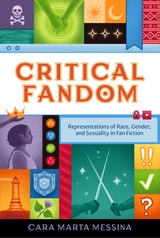
Critical Fandom
Representations of Race, Gender, and Sexuality in Fan FictionCara Marta Messina
University of Iowa Press, 2026
Critical Fandom positions fan authors as rhetoricians and fan fiction as an action. Every fan author navigates—implicitly or explicitly—the politics of their fandom, the media they love, their lived experiences, digital technologies, reader expectations, and a larger culture. To better understand critical fans, Cara Marta Messina analyzes Archive of Our Own tagging practices, fan fictions, and interviews from four different fandoms.
Fans of The Legend of Korra celebrate queer relationships while understanding representation is just the first step in the face of systemic homophobia. Game of Thrones fan authors challenge racism and heteronormativity in both the community and the show. In online forums for Black Panther, fans make space for sapphic romances and explore the humanity of Erik Killmonger, ultimately contending with harmful stereotypes of radical Black men. And the Our Flag Means Death fandom demonstrates how a show can flourish when it centers queerness, especially for trans fans. Even in these moments of joy, there’s conflict. Critical Fandom seeks to answer what comes next.
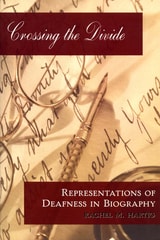
Crossing the Divide
Representations of Deafness in BiographyRachel M. Hartig
Gallaudet University Press, 2006
This remarkable volume examines the process by which three deaf, French biographers from the 19th and 20th centuries attempted to cross the cultural divide between deaf and hearing worlds through their work. The very different approach taken by each writer sheds light on determining at what point an individual’s assimilation into society endanger his or her sense of personal identity.
Author Hartig begins by assessing the publications of Jean-Ferdinand Berthier (1803-1886). Berthier wrote about Auguste Bébian, Abbé de l’Epée, and Abbé Sicard, all of whom taught at the National Institute for the Deaf in Paris. Although Berthier presented compelling portraits of their entire lives, he paid special attention to their political and social activism, his main interest.
Yvonne Pitrois (1880-1937) pursued her particular interest in the lives of deaf-blind people. Her biography of Helen Keller focused on her subject’s destiny in conjunction with her unique relationship with Anne Sullivan. Corinne Rocheleau-Rouleau (1881-1963) recounted the historical circumstances that led French-Canadian pioneer women to leave France. The true value of her work resides in her portraits of these pioneer women: maternal women, warriors, religious women, with an emphasis on their lives and the choices they made.
Crossing the Divide reveals clearly the passion these biographers shared for narrating the lives of those they viewed as heroes of an emerging French deaf community. All three used the genre of biography not only as a means of external exploration but also as a way to plumb their innermost selves and to resolve ambivalence about their own deafness.
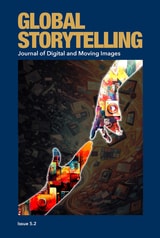
Global Storytelling, vol. 5, no. 2
Visual Storytelling and Entrepreneurship: The Representations of Daily LifeSpecial Issue Editors: Erick Behar-Villegas and Víctor Manuel Jiménez-Rodríguez
Michigan Publishing Services, 2026
Global Storytelling: Journal of Digital and Moving Images, housed at the Academy of Film and published by Michigan Publishing, is an open access, peer-reviewed international and interdisciplinary journal for intellectual debates concerning the politics, economics, culture, media, and technology of the moving image.
In the Master's Eye
Representations of Women, Blacks, and Poor Whites in Antebellum Southern LiteratureSusan J. Tracy
University of Massachusetts Press, 1995
This book explores the way in which literature can be used to reinforce social power. Through rigorous readings of a series of antebellum plantation novels, Susan J. Tracy shows how the narrative strategies employed by proslavery Southern writers served to justify and perpetuate the oppression of women, blacks, and poor whites.
Tracy focuses on the historical romances of six authors: George Tucker, James Ewell Heath, William Alexander Caruthers, John Pendleton Kennedy, Nathaniel Beverley Tucker, and William Gilmore Simms. Using variations on a recurring plot—in which a young planter/hero rescues a planter's daughter from an “enemy” of her class—each of these novelists reinforced an idealized vision of a Southern civilization based on male superiority, white supremacy, and class inequality. It is a world in which white men are represented as the natural leaders of loyal and dependent women, grateful and docile slaves, and inferior poor whites. According to Tracy, the interweaving of these themes reveals the extent to which the Southern defense of slavery in the years leading up to the Civil War was an argument not only about race relations but about gender and class relations as well.
Language and Power Reader
Representations of Race in a "Post-Racist" EraRobert Eddy
Utah State University Press, 2014
A Language and Power Reader organizes reading and writing activities for undergraduate students, guiding them in the exploration of racism and cross-racial rhetorics.
Introducing texts written from and about versions of English often disrespected by mainstream Americans, A Language and Power Reader highlights English dialects and discourses to provoke discussions of racialized relations in contemporary America. Thirty selected readings in a range of genres and from writers who work in ?alternative? voices (e.g., Pidgin, African American Language, discourse of international and transnational English speakers) focus on disparate power relations based on varieties of racism in America and how those relations might be displayed, imposed, or resisted across multiple rhetorics. The book also directs student participation and discourse. Each reading is followed by comments and guides to help focus conversation.
Research has long shown that increasing a student?s metalinguistic awareness improves a student?s writing. No other reader available at this time explores the idea of multiple rhetorics or encourages their use, making A Language and Power Reader a welcome addition to writing classrooms.
Legible Sovereignties
Rhetoric, Representations, and Native American MuseumsLisa King
Oregon State University Press, 2017
King tracks the exhibit spaces at the Saginaw Chippewa Indian Tribe of Michigan’s Ziibiwing Center, Haskell Indian Nation University’s Cultural Center and Museum, and the Smithsonian’s Washington, DC branch of the National Museum of the American Indian over their first ten years, from their opening until the summer of 2014. Far from formulaic, each site has developed its own rhetorical approaches to reaching its public, revealing multiple challenges and successes in making Native self-representation legible and accessible.
Through documentation and analysis of the inaugural exhibits and recent installations, interviews with curators and staff, and investigation into audience reception of these spaces, Legible Sovereignties argues that there can be no single blanket solution for effective Indigenous self-representation. Instead, Legible Sovereignties demonstrates the nuanced ways in which each site must balance its rhetorical goals and its audience's needs, as well as its material constraints and opportunities, in order to reach its visitors and have Indigenous voices heard.
Marianne Meets the Mormons
Representations of Mormonism in Nineteenth-Century FranceHeather Belnap, Corry Cropper, and Daryl Lee
University of Illinois Press, 2022
Surprising and innovative, Marianne Meets the Mormons looks at how nineteenth-century French observers engaged with the idea of Mormonism in order to reframe their own cultural preoccupations.
Mediating the South Korean Other
Representations and Discourses of Difference in the Post/Neocolonial Nation-StateDavid C. Oh, Editor
University of Michigan Press, 2022
This collection brings together leading and emerging scholars of multiculturalism in Korean media culture to examine mediated constructions of the “other,” taking into account the nation’s postcolonial and neocolonial relationships and its mediated construction of self. “Anthrocategorism ,” a more nuanced translation of injongchabyeol, is proffered as a new framework for understanding difference in ways that are locally meaningful in a society and media system in which racial or even ethnic differences are not the most salient. The collection points to the construction of racial others that elevates, tolerates, and incorporates difference; the construction of valued and devalued ethnic others, and the ambivalent construction of co-ethnic others as sympathetic victims or marginalized threats.
Mirabile Dictu
Representations of the Marvelous in Medieval and Renaissance EpicDouglas Biow
University of Michigan Press, 1996
Modernism
Representations of National CultureAhmet Ersoy
Central European University Press, 2010
Monstrous Nature and Representations of Environmental Harms
A Green Cultural Criminological PerspectiveAvi Brisman and Nigel South
Temple University Press, 2025
The authors use examples from popular culture, including Disney and Marvel Cinematic Universe films, to consider ideas about how the environment responds to people who cause it harm. Brisman and South identify and discuss three dominant and interrelated depictions of the relationship between humans and the environment: first, nature as monstrous or fear inducing; second, nature and the Earth (or parts of it) as abject; and third, the entanglement of nature and the apocalypse, wherein nature is contributing to the end of the world, with an end point sometimes conceptualized as one without humans.
Monstrous Nature and Representations of Environmental Harms argues that such representations have material consequences. The authors make the case for challenging them so that we neither perpetuate them nor retreat into cynicism and defeatism about the future of our planet.
Morrissey
Fandom, Representations and IdentitiesEdited by Eoin Devereux, Aileen Dillane, and Martin Power
Intellect Books, 2011
An influential star of British pop for more than three decades, Morrissey is known for his outspoken and often controversial views on class, ethnicity, and sexuality. Among critics and his many fans, he has long been seen as an anti-establishment figure who continues to provoke devotion, argument, and spirited debate.
This is the first collection of academic essays to focus exclusively on Morrissey’s solo career, and this important book offers a nuanced and rich reading of his highly influential creative and cultural output. Covering a broad range of academic disciplines and approaches, including musicology, ethnography, sociology, and cultural studies, these essays will be a must for fans of Morrissey or the Smiths, or those seeking to make sense of the many fascinating complexities of this global icon and controversial figure.

National Myths in the Middle East
Representations, Revisions, and Critiques, Volume 2003Adina Back , Magnus T. Bernhardsson, Mansour Bonakdarian, and Sally Charnow, eds.
Duke University Press, 0
Negotiating the Disabled Body
Representations of Disability in Early Christian TextsAnna Rebecca Solevåg
SBL Press, 2018
An intersectional study of New Testament and noncanonical literature
Anna Rebecca Solevåg explores how nonnormative bodies are presented in early Christian literature through the lens of disability studies. In a number of case studies, Solevåg shows how early Christians struggled to come to terms with issues relating to body, health, and dis/ability in the gospel stories, apocryphal narratives, Pauline letters, and patristic expositions. Solevåg uses the concepts of narrative prosthesis, gaze and stare, stigma, monster theory, and crip theory to examine early Christian material to reveal the multiple, polyphonous, contradictory ways in which nonnormative bodies appear.
Features:
- Case studies that reveal a variety of understandings, attitudes, medical frameworks, and taxonomies for how disabled bodies were interpreted
- A methodology that uses disability as an analytical tool that contributes insights about cultural categories, ideas of otherness, and social groups’ access to or lack of power
- An intersectional perspective drawing on feminist, gender, queer, race, class, and postcolonial studies
Phonology in the Twentieth Century
Theories of Rules and Theories of RepresentationsStephen R. Anderson
University of Chicago Press, 1985
Representations of Working in Arts Education
Stories of Learning and TeachingNarelle Lemon, Susanne Garvis, and Christopher Klopper
Intellect Books, 2014
Representations of the Post/Human
Monsters, Aliens, and Others in Popular CultureGraham, Elaine L.
Rutgers University Press, 2002
Microchips. Genetic modification of plants. Cloning. Advances in technology promise to shape our lives more profoundly than ever before. Exciting new discoveries in reproductive, genetic, and information technologies all serve to call into question the immutability of the boundaries between humans, animals, and machines. The category of the “posthuman” reflects the implications of such new technologies on contemporary culture, especially in their capacity to reconfigure the human body and to challenge our most fundamental understandings of human nature.
Elaine L. Graham explores these issues as they are expressed within popular culture and the creative arts. From the myth of Prometheus and the Gothic horror of Frankenstein’s monster to contemporary postmodern science fiction, a gallery of fantastic creatures haunts Western myth, religion, and literature. They serve to connect contemporary debates with enduring concerns about the potential—and the limits—of human creativity.
This book breaks new ground in drawing together a wide range of literature on new technologies and their ethical implications. In her explorations of the monstrous and the cyborg, Graham covers the Jewish legend of the golem, the Human Genome Project, Star Trek: Next Generation, Star Trek: Voyager, Fritz Lang’s Metropolis, Donna Haraway’s cyborg writing, andmany other related topics. This book will interest students in cultural studies, literature, ethics, religion, information technology, and the life sciences.

Representations on the Margins of Europe
Politics and Identities in the Baltic and South Caucasian StatesEdited by Tsypylma Darieva and Wolfgang Kaschuba
Campus Verlag, 2007
Representations
Doing Asian American RhetoricLuMing Mao and Morris Young
Utah State University Press, 2008
Mao, Young, and their contributors propose that Asian American discourse should be seen as a spacious form, one that deliberately and selectively incorporates Asian “foreign-ness” into the English of Asian Americans. These authors offer the concept of a dynamic “togetherness-in-difference” as a way to theorize the contact and mutual influence. Chapters here explore a rich diversity of histories, theories, literary texts, and rhetorical practices. Collectively, they move the scholarly discussion toward a more nuanced, better balanced, critically informed representation of the forms of Asian American rhetorics and the cultural work that they do.
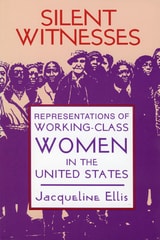
Silent Witnesses
Representations of Working-Class Women in the United StatesJacqueline Ellis
University of Wisconsin Press, 1998
Through detailed analyses of documentary photography and radical literature, Silent Witnesses explores how working-class identity has been repressed and manipulated to fit the expectations of liberal politicians, radical authors, Marxist historians, feminist academics, and contemporary cultural theorists.
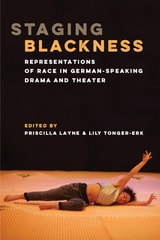
Staging Blackness
Representations of Race in German-Speaking Drama and TheaterPriscilla Dionne Layne and Lily Tonger-Erk, Editors
University of Michigan Press, 2024
Written by scholars and theater professionals with a wide variety of historical and theoretical expertise, the chapters seek to explore the connections between the German discourse on national theater and emerging ideas about race, analyze how dramaturges deal with older representations of Blackness in current productions, and discuss the contributions Black German playwrights and dramaturges have made to this discourse. Historians question how these plays were staged in their time, while cultural studies scholars contemplate how to interpret the function of race in these plays and how they can continue to be staged today.

Terrorism, Italian Style
Representations of Political Violence in Contemporary Italian CinemaRuth Glynn
University of London Press, 2012
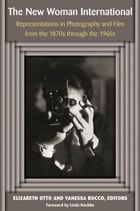
The New Woman International
Representations in Photography and Film from the 1870s through the 1960sElizabeth Otto and Vanessa Rocco, editors
University of Michigan Press, 2012
"In The New Woman International, editors Elizabeth Otto and Vanessa Rocco have gathered a group of intellectually stimulating and provocative essays that present the emergence, both tentative and triumphant, of this new global icon and her increasingly multicultural image. Written largely by historians of art and film, these essays emphasize visual analysis of the photographic and film media that carried the new woman's influential message."
---Norma Broude, American University
"The New Woman International focuses on the New Woman not simply as an image to be analyzed but also as a producer of images and text. This groundbreaking anthology represents a theoretically sophisticated set of essays that thoroughly examine the phenomenon of the New Woman in previously unexplored ways."
---Sarah E. Chinn, Hunter College, CUNY
Images of flappers, garçonnes, Modern Girls, neue Frauen, and trampky---all embodiments of the dashing New Woman---symbolized an expanded public role for women from the suffragist era through the dawn of 1960s feminism. Chronicling nearly a century of global challenges to gender norms, The New Woman International: Representations in Photography and Film from the 1870s through the 1960s is the first book to examine modern femininity's ongoing relationship with the nineteenth and twentieth centuries' most influential new media: photography and film. This volume examines the ways in which novel ideas about women's roles in society and politics were disseminated through these technological media, and it probes the significance of radical changes in female fashion, appearance, and sexual identity. Additionally, these original essays explore the manner in which New Women artists used photography and film to respond creatively to gendered stereotypes and to reconceive of ways of being a woman in a rapidly modernizing world.
The New Woman International brings together different generations of scholars and curators who are experts in gender, photography, literature, mass media, and film to analyze the New Woman from her inception in the later nineteenth century through her full development in the interwar period, and the expansion of her forms in subsequent decades. Arranged both chronologically and thematically, these essays show how controversial female ideals figured in discourses including those on gender norms, race, technology, sexuality, female agency, science, media representation, modernism, commercial culture, internationalism, colonialism, and transnational modernity. In exploring these topics through images that range from montages to newspapers' halftone prints to film stills, this book investigates the terms of gendered representation as a process in which women were as much agents as allegories. Inaugurating a new chapter in the scholarship of representation and New Womanhood and spanning North America, Western and Eastern Europe, Asia, and the colonial contexts of Africa and the Pacific, this volume reveals the ways in which a feminine ideal circled the globe to be translated into numerous visual languages.
With a foreword from the eminent feminist art historian Linda Nochlin, this collection includes contributions by Jan Bardsley, Matthew Biro, Gianna Carotenuto, Melody Davis, Kristine Harris, Karla Huebner, Kristen Lubben, Maria Makela, Elizabeth Otto, Martha H. Patterson, Vanessa Rocco, Clare I. Rogan, Despina Stratigakos, Brett M. Van Hoesen, Kathleen M. Vernon, and Lisa Jaye Young.
DIGITALCULTUREBOOKS: a collaborative imprint of the University of Michigan Press and the University of Michigan Library
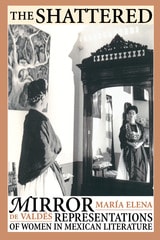
The Shattered Mirror
Representations of Women in Mexican LiteratureBy María Elena de Valdés
University of Texas Press, 1998
Popular images of women in Mexico—conveyed through literature and, more recently, film and television—were long restricted to either the stereotypically submissive wife and mother or the demonized fallen woman. But new representations of women and their roles in Mexican society have shattered the ideological mirrors that reflected these images. This book explores this major change in the literary representation of women in Mexico.
María Elena de Valdés enters into a selective and hard-hitting examination of literary representation in its social context and a contestatory engagement of both the literary text and its place in the social reality of Mexico. Some of the topics she considers are Carlos Fuentes and the subversion of the social codes for women; the poetic ties between Sor Juana Inés de la Cruz and Octavio Paz; questions of female identity in the writings of Rosario Castellanos, Luisa Josefina Hernández, María Luisa Puga, and Elena Poniatowska; the Chicana writing of Sandra Cisneros; and the postmodern celebration—without reprobation—of being a woman in Laura Esquivel's Like Water for Chocolate.

The Viet Nam War/The American War
Images and Representations in Euro-American and Vietnamese Exile NarrativesRenny Christopher
University of Massachusetts Press, 1995
This book seeks to reformulate the canon of writings on what is called “the Viet Nam War” in America and “the American War” in Viet Nam. Until recently, the accepted canon has consisted almost exclusively of American white male combat narratives, which often reflect and perpetuate Asian stereotypes. Renny Christopher introduces material that displays a bicultural perspective, including works by Vietnamese exile writers and by lesser-known Euro-Americans who attempt to bridge the cultural gap.
Christopher traces the history of American stereotyping of Asians and shows how Euro-American ethnocentricity has limited most American authors' ability to represent fairly the Vietnamese in their stories. By giving us access to Vietnamese representations of the war, she creates a context for understanding the way the war was experienced from the “other” side, and she offers perceptive, well-documented analyses of how and why Americans have so emphatically excised the Vietnamese from narratives about a war fought in their own country.
Writing and Muslim Identity
Representations of Islam in German and English Transcultural Literature, 1990-2006Frauke Matthes
University of London Press, 2012