Results by title
6 books match the query 'Representing'
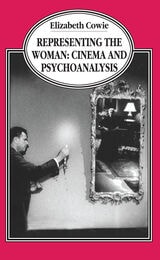
Representing The Woman
Cinema and PsychoanalysisElizabeth Cowie
University of Minnesota Press, 1996

Representing the French Revolution
Literature, Historiography, and ArtEdited by James A. W. Heffernan
Brandeis University Press, 1992
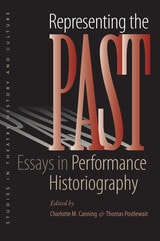
Representing the Past
Essays in Performance HistoriographyCharlotte M. Canning
University of Iowa Press, 2010
How do historians represent the past? How do theatre historians represent performance events? The fifteen challenging essays in Representing the Past: Essays in Performance Historiography focus on the fundamental epistemological conditions and procedures that serve as the foundational ideas that guide all historians in their endeavors. Unified by their investigations into how best to understand and then represent the past, this diverse group of scholars in the field of theatre history and performance studies offers insights into the abiding issues that all historians face in the task of representing human events and actions.
Five primary ideas provide the topics as well as the intellectual parameters for this book: archive, time, space, identity, and narrative. Taking these as the conceptual framework for historical research and analysis, the essayists cover an expansive range of case studies and problems in the historical study of performance from the Americas to Africa and from Europe to India and China. Considering not only how historians think about these concepts in their research and writing but more pointedly—and historiographically—how they think with them, the essayists demonstrate the power and centrality of each of these five ideas in historical scholarship from initial research to the writing of essays and books.
Performance history has a diversity of identities, locations, sources, and narratives. This compelling engagement with the concepts essential to historical understanding is a valuable contribution to the historiography of performance—for students, teachers, and the future of the discipline itself. Expanding upon its classic predecessor, Interpreting the Theatrical Past: Essays in the Historiography of Performance, this exciting new collection illustrates the contemporary richness of historical thinking and writing in the field of performance history.
Representing the Troubles in Irish Short Fiction
Michael L. Storey
Catholic University of America Press, 2004
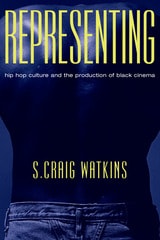
Representing
Hip Hop Culture and the Production of Black CinemaS. Craig Watkins
University of Chicago Press, 1998
"Watkins is at his most sophisticated and persuasive when he explains the surprising success of hyper-talented, entrepreneurial, and energetic black artists."—Archon Fung, Boston Book Review

Territory of Desire
Representing the Valley of KashmirAnanya Jahanara Kabir
University of Minnesota Press, 2009
Moves beyond traditional analysis to understand the conflict over Kashmir
A result of territorial disputes between India and Pakistan since 1947, exacerbated by armed freedom movements since 1989, the ongoing conflict over Kashmir is consistently in the news. Taking a unique multidisciplinary approach, Territory of Desire asks how, and why, Kashmir came to be so intensely desired within Indian, Pakistani, and Kashmiri nationalistic imaginations. Literary historian Ananya Jahanara Kabir finds an answer to this question in the Valley of Kashmir’s repeated portrayal as a “special” place and the missing piece of Pakistan and India.
Analyzing the conversion of natural beauty into collective desire—through photography, literature, cinema, art, and souvenir production—Kabir exposes the links between colonialism, modernity, and conflict within the postcolonial nation. Representations of Kashmir as a space of desire emerge in contemporary film, colonial “taming” of the valley through nineteenth-century colonialist travelogues, the fetishization of traditional Kashmiri handicrafts like papier maché, and Pandit and Muslim religious revivalisms in the region. Linking a violent modernity to the fantasies of nationhood, Kabir proposes nonmilitaristic ways in which such desire may be overcome. In doing so she offers an innovative approach to complex and protracted conflict and, ultimately, its resolution.