Results by title
17 books match the query 'Repression'
A Century of Repression
The Espionage Act and Freedom of the PressRalph Engelman and Carey Shenkman
University of Illinois Press, 2022

Activists and the Surveillance State
Learning from RepressionEdited by Aziz Choudry
Pluto Press, 2018
Drawing on the knowledge of activists and academics from the United States, the United Kingdom, Canada, New Zealand, Australia, South Africa, and Chile, Activists and the Surveillance State delves into the harassment, infiltration, and disruption that has colored state responses to those deemed threats to national security. The book shows that, ultimately, movements can learn from their own repression, developing a critical and complex understanding of the nature of states and capital today that can crucially inform the struggles of tomorrow.
Cinema Civil Rights
Regulation, Repression, and Race in the Classical Hollywood EraScott, Ellen C
Rutgers University Press, 2015
Denial and Repression of Anti-Semitism
Post-Communist Rehabilitation of the Serbian Bishop Nikolaj VelimirovicJovan Byford
Central European University Press, 2008
Disturbing the Universe
Power and Repression in Adolescent LiteratureRoberta S. Trites
University of Iowa Press, 2004
The Young Adult novel is ordinarily characterized as a coming-of-age story, in which the narrative revolves around the individual growth and maturation of a character, but Roberta Trites expands this notion by chronicling the dynamics of power and repression that weave their way through YA books. Characters in these novels must learn to negotiate the levels of power that exist in the myriad social institutions within which they function, including family, church, government, and school.
Trites argues that the development of the genre over the past thirty years is an outgrowth of postmodernism, since YA novels are, by definition, texts that interrogate the social construction of individuals. Drawing on such nineteenth-century precursors as Little Women and Adventures of Huckleberry Finn, Disturbing the Universe demonstrates how important it is to employ poststructuralist methodologies in analyzing adolescent literature, both in critical studies and in the classroom. Among the twentieth-century authors discussed are Blume, Hamilton, Hinton, Le Guin, L'Engle, and Zindel.
Trites' work has applications for a broad range of readers, including scholars of children's literature and theorists of post-modernity as well as librarians and secondary-school teachers.
Disturbing the Universe: Power and Repression in Adolescent Literature by Roberta Seelinger Trites is the winner of the 2002 Children's Literature Association's Book Award. The award is given annually in order to promote and recognize outstanding contributions to children's literature, history, scholarship, and criticisim; it is one of the highest academic honors that can accrue to an author of children's literary criticism.
Freedom of Expression
Resistance and Repression in the Age of Intellectual PropertyKembrew McLeod
University of Minnesota Press, 2007
Freedom of Expression® covers the ways in which intellectual property laws have been used to privatize all forms of expression—from guitar riffs and Donald Trump’s “you’re fired” gesture to human genes and public space—and in the process stifle creative expression. Kembrew McLeod challenges the blind embrace of privatization as it clashes against our right to free speech and shared resources.
Kembrew McLeod is professor of communication studies at the University of Iowa, author of Owning Culture: Authorship, Ownership, and Intellectual Property Law, and coproducer of the documentary Copyright Criminals: This Is a Sampling Sport.
Lawrence Lessig is professor of law at Stanford Law School.
This book’s documentary companion will be available through Media Education Foundation.
Hostile Heartland
Racism, Repression, and Resistance in the MidwestBrent M. S. Campney
University of Illinois Press, 2019
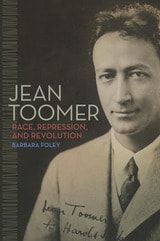
Jean Toomer
Race, Repression, and RevolutionBarbara Foley
University of Illinois Press, 2019
The 1923 publication of Cane established Jean Toomer as a modernist master and one of the key literary figures of the emerging Harlem Renaissance. Though critics and biographers alike have praised his artistic experimentation and unflinching eyewitness portraits of Jim Crow violence, few seem to recognize how much Toomer's interest in class struggle, catalyzed by the Russian Revolution and the post–World War One radical upsurge, situate his masterwork in its immediate historical context. In Jean Toomer: Race, Repression, and Revolution, Barbara Foley explores Toomer's political and intellectual connections with socialism, the New Negro movement, and the project of Young America. Examining his rarely scrutinized early creative and journalistic writings, as well as unpublished versions of his autobiography, she recreates the complex and contradictory consciousness that produced Cane. Foley's discussion of political repression runs parallel with a portrait of repression on a personal level. Examining family secrets heretofore unexplored in Toomer scholarship, she traces their sporadic surfacing in Cane. Toomer's text, she argues, exhibits a political unconscious that is at once public and private.
Repression And Mobilization
Christian Davenport
University of Minnesota Press, 2005
Brings together leading scholars from political science and sociology
Recent events—from the collapse of Leninist regimes in Eastern Europe to the democratization of South Asian and South American states—have profoundly changed our ways of understanding and studying contentious politics, particularly the relationship between state repression and political mobilization.
With case studies that range from Germany to the Philippines, the United States to Japan, Guatemala to China, the authors take up topics as varied as the dynamic interactions between protesters and policing agents, distinctions between “hard” and “soft” repression, the impact of media on our understanding of political contention, the timing and shape of protest and resistance cycles, and how measurements of social and geographic control influence states’s responses to insurgencies. Together these essays synthesize what we know about repression and mobilization and provide thoughtful insight for the future.
Contributors: Patrick Ball, Science and Human Rights Program of the American Association for the Advancement of Science; Vince Boudreau, City College of New York; Myra Marx Ferree, U of Wisconsin; Ronald A. Francisco, U of Kansas; Ruud Koopmans, Free U Amsterdam; Mark Lichbach, U of Maryland; John D. McCarthy, Pennsylvania State U; Clark McPhail, U of Illinois, Urbana-Champaign; Patricia Steinhoff, U of Hawaii; Charles Tilly, Columbia U; Gilda Zwerman, SUNY, Old Westbury.
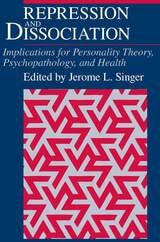
Repression and Dissociation
Implications for Personality Theory, Psychopathology and HealthJerome L. Singer
University of Chicago Press, 1990
"Rarely does a volume present contributions on a controversial topic from such distinguished clinicians and experimentalists . . . . There is something of interest in this volume for almost anyone involved in experimental cognitive psychology and psychiatry."—Carroll E. Izard, Contemporary Psychology
"The concept of repression is the cornerstone of psychoanalytic theory. . . . This is a delightful book, unusually well-written. . . . Recommended."—Choice
"Readable, thorough, wide ranging and consistently interesting. . . . A testament to the continuing power of psychodynamic ideas when faced with individual psychopathology."—Sue Llewelyn, Psychologist
"Singer has brought together some of the best empirical research in the areas of unconscious mental activity and repression—that is at once interdisciplinary and scholarly."—Howard D. Lerner, International Review of Psycho-analysis
"A rich reference, replete with summaries and citations, covering a variety of topics related to the psychology of repression and dissociation. . . . A thoughtful, detailed and eclectic discussion of the scientific and theoretical basis of repression and dissociation."—Steven Lazrove, M.D., American Journal of Psychiatry
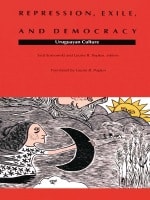
Repression, Exile, and Democracy
Uruguayan CultureSaul Sosnowski and Louise B. Popkin, eds.
Duke University Press, 1992
The first section provides a context for the volume, with its analyses of the historical, political, and social aspects of the Uruguayan experience. The following chapters explore various aspects of cultural production, including personal experiences of exile and imprisonment, popular music, censorship, literary criticism, return from exile, and the role that culture plays in redemocratization.
This book's appeal extends well beyond the study of Uruguay to scholars and students of the history and culture of other Latin American nations, as well as to fields of comparative literature and politics in general.
Contributors. Hugo Achugar, Alvarro Barros-Lémez, Lisa Block de Behar, Amanda Berenguer, Hiber Conteris, José Pedro Díaz, Eduardo Galeano, Edy Kaufman, Leo Masliah, Carina Perelli, Teresa Porzecanski, Juan Rial, Mauricio Rosencof, Jorge Ruffinelli, Saúl Sosonowski, Martin Weinstein, Ruben Yáñez
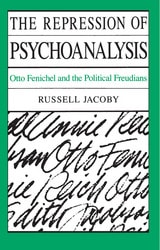
The Repression of Psychoanalysis
Otto Fenichel and the Political FreudiansRussell Jacoby
University of Chicago Press, 1986

Threatened Scholarship, Dynamics of Repression and Forms of Resistance
Towards Academic Freedom as a Transnational Human RightKerry Bystrom
Central European University Press, 2027
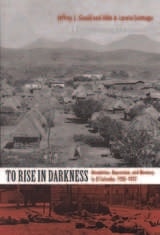
To Rise in Darkness
Revolution, Repression, and Memory in El Salvador, 1920–1932Jeffrey L. Gould, Aldo A. Lauria-Santiago
Duke University Press, 2008
Gould conducted more than two hundred interviews with survivors of la Matanza and their descendants. He and Lauria-Santiago combine individual accounts with documentary sources from archives in El Salvador, Guatemala, Washington, London, and Moscow. They describe the political, economic, and cultural landscape of El Salvador during the 1920s and early 1930s, and offer a detailed narrative of the uprising and massacre. The authors challenge the prevailing idea that the Communist organizers of the uprising and the rural Indians who participated in it were two distinct groups. Gould and Lauria-Santiago demonstrate that many Communist militants were themselves rural Indians, some of whom had been union activists on the coffee plantations for several years prior to the rebellion. Moreover, by meticulously documenting local variations in class relations, ethnic identity, and political commitment, the authors show that those groups considered “Indian” in western El Salvador were far from homogeneous. The united revolutionary movement of January 1932 emerged out of significant cultural difference and conflict.
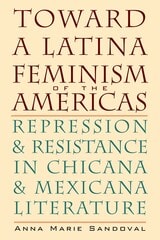
Toward a Latina Feminism of the Americas
Repression and Resistance in Chicana and Mexicana LiteratureBy Anna Marie Sandoval
University of Texas Press, 2008
Weaving strands of Chicana and Mexicana subjectivities, Toward a Latina Feminism of the Americas explores political and theoretical agendas, particularly those that undermine the patriarchy, across a diverse range of Latina authors. Within this range, calls for a coalition are clear, but questions surrounding the process of these revolutionary dialogues provide important lines of inquiry. Examining the works of authors such as Sandra Cisneros, Laura Esquivel, Carmen Boullosa, and Helena María Viramontes, Anna Sandoval considers resistance to traditional cultural symbols and contemporary efforts to counteract negative representations of womanhood in literature and society.
Offering a new perspective on the oppositional nature of Latina writers, Sandoval emphasizes the ways in which national literatures have privileged male authors, whose viewpoint is generally distinct from that of women—a point of departure rarely acknowledged in postcolonial theory. Applying her observations to the disciplinary, historical, and spatial facets of literary production, Sandoval interrogates the boundaries of the Latina experience. Building on the dialogues begun with such works as Sonia Saldivar-Hull's Feminism on the Border and Ellen McCracken's New Latina Narrative, this is a concise yet ambitious comparative approach to the historical and cultural connections (as well as disparities) found in Chicana and Mexicana literature.

Tragedy
Contradiction and RepressionRichard Kuhns
University of Chicago Press, 1991
From Aeschylus' classic drama The Persians to the hidden tragic themes in The Merchant of Venice, from the aesthetic writings of Kant to Kleist's narrative Michael Kohlhaas, Kuhns traces the writing and rewriting of the themes of ancient tragedy through modern texts. A culture's concept of fate, Kuhns argues, evolves along with its concepts and forms of tragedy. Examining the deep philosophical concerns of tragedy, he shows how the genre has changed from loss and mourning to contradiction and repression. He sees the fact that tragedy went underground during the optimism of the Enlightenment as a repression that continues into the American consciousness. Turning to Melville's The Confidence Man as an example of Old World despair giving way to New World nihilism, Kuhns indicates how psychoanalytic understanding of tragedy provides a method of interpretation that illuminates the continuous tradition from the ancient to the modern world. The study concludes with reflections on the poetry of Walt Whitman and Emily Dickinson. Each poet's celebration of the body, and the contribution of the senses to reason, perception, and poetic intuition, is seen as an embodiment of the modern tragic sensibility.
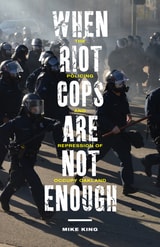
When Riot Cops Are Not Enough
The Policing and Repression of Occupy OaklandKing, Mike
Rutgers University Press, 2017
Drawn from King’s intensive field work, the book focuses on the physical, legal, political, and ideological dimensions of repression—in the streets, in courtrooms, in the media, in city hall, and within the movement itself—When Riot Cops Are Not Enough highlights the central role of political legitimacy, both for mass movements seeking to create social change, as well as for governmental forces seeking to control such movements. Although Occupy Oakland was different from other Occupy sites in many respects, King shows how the contradictions it illuminated within both social movement and police strategies provide deep insights into the nature of protest policing generally, and a clear map to understanding the full range of social control techniques used in North America in the twenty-first century.