Results by title
7 books match the query 'Reproductive health'
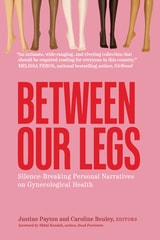
Between Our Legs
Silence-Breaking Personal Narratives on Gynecological HealthJustine Payton
University of Iowa Press, 2026
In a world where even saying the word “vagina” can feel taboo, Between Our Legs breaks the silence surrounding gynecological health. Featuring essays by award-winning authors Nina de Gramont, Nafissa Thompson-Spires, and Jessica Hendry Nelson, as well as by practicing medical experts, this collection explores topics ranging from childbirth, menopause, abortion, endometriosis, and PMOS to yeast and urinary tract infections, while contending with the shame, frustrations, and stigmas that women, nonbinary, and trans individuals navigate when searching for basic care.
Between Our Legs serves as a catalyst for difficult conversations. It illustrates the necessity of not just having access to basic gynecological care, but good, equitable, patient-centered care. Care that sees the patient as a whole person, not solely as someone capable of making a baby. As reproductive rights and maternal healthcare are stripped away in state after state, it’s urgent that our voices be heard, elevated, and addressed. The consequences for not doing so can be fatal.

Bodies of Knowledge
Sexuality, Reproduction, and Women's Health in the Second WaveWendy Kline
University of Chicago Press, 2010
Throughout the 1970s and ’80s, women argued that unless they gained access to information about their own bodies, there would be no equality. In Bodies of Knowledge, Wendy Kline considers the ways in which ordinary women worked to position the female body at the center of women’s liberation.
As Kline shows, the struggle to attain this knowledge unified women but also divided them—according to race, class, sexuality, or level of professionalization. Each of the five chapters of Bodies of Knowledge examines a distinct moment or setting of the women’s movement in order to give life to the ideas, expectations, and pitfalls encountered by the advocates of women’s health: the making of Our Bodies, Ourselves (1973); the conflicts surrounding the training and practice of women’s pelvic exams; the emergence of abortion as a feminist issue; the battles over contraceptive regulation at the 1983 Depo-Provera FDA hearings; and the rise of the profession of midwifery. Including an epilogue that considers the experiences of the daughters of 1970s feminists, Bodies of Knowledge is an important contribution to the study of the bodies—that marked the lives—of feminism’s second wave.

Dying to Count
Post-Abortion Care and Global Reproductive Health Politics in SenegalSiri Suh
Rutgers University Press, 2021
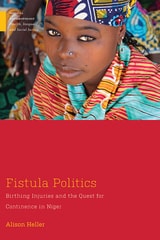
Fistula Politics
Birthing Injuries and the Quest for Continence in NigerHeller, Alison
Rutgers University Press, 2019

Infertile Environments
Epigenetic Toxicology and the Reproductive Health of Chinese MenJanelle Lamoreaux
Duke University Press, 2023
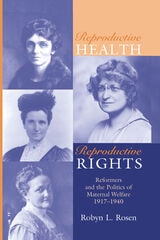
REPRODUCTIVE HEALTH, REPRODUCTIVE RIGHTS
REFORMERS & THE POLITICS OF MATERNAL WELFARE, 1917–1940Robyn L. Rosen
The Ohio State University Press, 2003
In the early twentieth century, shifting attitudes and new public health standards brought an unprecedented interest in and effort to regulate issues affecting reproduction and maternity. Maternal and infant health, nutrition, and medical care came under scrutiny, as did the issue of birth control. While the prior gained public support, the latter remained controversial. Though some reformers saw birth control as an important part of maternal welfare, others sought to separate it from more popular reforms. The careers of the four prominent but usually neglected reformers (Elizabeth Lowell Putnam, Ethel Sturges Dummer, Mary Ware Dennett, and Blanche Ames) examined in this book embody the struggle to define and resolve these tensions.
The study of these reformers offers a new perspective on more recognized leaders in the arena of reproductive health and rights, especially the U.S. Children's Bureau and Margaret Sanger. Putnam's elitism contextualizes the class politics of the Bureau, underscoring its sensitivity to the vulnerable and its innovative approach to public health. Dummer reminds us of roads not taken by policy makers in the Bureau, accentuating the differences between a child-centered and a woman-centered agenda. Dennett highlights the obstacles to women reformers in the formal political sphere, while Ames's penchant toward maternalism and compromise also led to difficulties. Together, they illustrate the complexities of formulating an effective approach to securing reproductive rights and health.
Where Human Rights Begin
Edited by Wendy Chavkin and Ellen Chesler
Rutgers University Press, 2005
More than a decade ago, three landmark world conferences placed the human rights of women on the international agenda. The first, in Vienna, officially extended the definition of human rights to include a woman’s right to self-determination and equality. A year later, in Cairo, this concept was elaborated to deal explicitly with issues of sexuality and procreation. Subsequently, at a conference in Beijing, the international community committed to a wide range of practical interventions to advance women’s sexual, social, political, and economic rights.
Despite these accomplishments, we find ourselves at an ever more difficult juncture in the struggle to fully realize women’s rights as human rights. Complications, such as terrorism and the “war” against it, the HIV/AIDS pandemic, the incursion of religious fundamentalism into governments, and the U.S. government’s retreat from the international agenda on sexual and reproductive rights have raised questions about the direction of policy implementations and have prevented straightforward progress.
This timely collection brings together eight wide-reaching and provocative essays that examine the practical and theoretical issues of sexual and reproductive health policy and implementation.