Results by title
28 books match the query 'Reproductive rights'
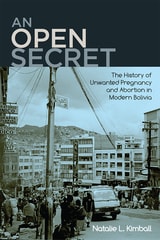
An Open Secret
The History of Unwanted Pregnancy and Abortion in Modern BoliviaNatalie L. Kimball
Rutgers University Press, 2020
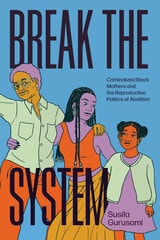
Break the System
Criminalized Black Mothers and the Reproductive Politics of AbolitionSusila Gurusami
University of Chicago Press, 2026
Upends the “broken systems” myth and reveals how the law deliberately criminalizes and punishes Black women, inflicting lasting harm on Black communities in the process.
The United States has one of the highest rates of incarceration in the world, with Black Americans representing a disproportionate share of theimprisoned. Many view this statistic as evidence of a broken system. But sociologist Susila Gurusami argues that the carceral system that so disproportionately harms Black families is not broken at all. In fact, it works just as it was intended. Looking closely at the lives of formerly incarcerated Black mothers, Gurusami shows how state institutions—the criminal-legal, child welfare, and healthcare systems—keep Black mothers from their families, harming Black communities in the process. She also shows how Black women work towards conditions that seem impossible—and even utopian—as part of their everyday mothering labor, but find themselves criminalized for these same actions.
Drawing on ethnographic data and interviews with formerly incarcerated Black women in South Los Angeles, Gurusami challenges dominant assumptions about mothering and criminal justice reform. Gurusami finds that criminalized Black women endure multigenerational political, social, and embodied assaults–what she calls “reproductive warfare”— and still, they build networks, practices, and theories of radical care that protect Black maternal life, legacies, and futures. With incarcerated, formerly incarcerated, and system-impacted Black mothers at the forefront of the growing movement to abolish prisons and jails, Gurusami demonstrates how their everyday mothering work—what she calls “abolitionist motherwork”—is essential to imagining the end of incarceration and ultimately achieving it.
Written with a tender and honest voice, Break the System shares moving vignettes that underscore why we must break the system, rather than reform it, and why we must imagine a future that is radically different than the one we’re told we must accept or salvage.
Challenging Pregnancy
A Journey through the Politics and Science of Healthcare in AmericaGenevieve Grabman
University of Iowa Press, 2022
Ultimately, national anti-abortion politics—not medicine or her own choices—determined the outcome of Grabman’s pregnancy. At every juncture, anti-abortion politics limited the care available to her, the doctors and hospitals willing to treat her, the tools doctors could use, and the words her doctors could say. Although she asked for aggressive treatment to save at least one baby, hospital ethics boards blocked all able doctors from helping her.
Challenging Pregnancy is about Grabman’s harrowing pregnancy and the science and politics of maternal healthcare in the United States, where every person must self-advocate for the desired outcome of their own pregnancy.
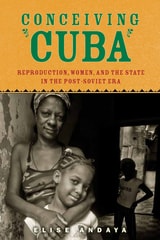
Conceiving Cuba
Reproduction, Women, and the State in the Post-Soviet EraAndaya, Elise
Rutgers University Press, 2014
Winner of the Adele E. Clarke Book Award from ReproNetwork
After Cuba’s 1959 revolution, the Castro government sought to instill a new social order. Hoping to achieve a new and egalitarian society, the state invested in policies designed to promote the well-being of women and children. Yet once the Soviet Union fell and Cuba’s economic troubles worsened, these programs began to collapse, with serious results for Cuban families.
Conceiving Cuba offers an intimate look at how, with the island’s political and economic future in question, reproduction has become the subject of heated public debates and agonizing private decisions. Drawing from several years of first-hand observations and interviews, anthropologist Elise Andaya takes us inside Cuba’s households and medical systems. Along the way, she introduces us to the women who wrestle with the difficult question of whether they can afford a child, as well as the doctors who, with only meager resources at their disposal, struggle to balance the needs of their patients with the mandates of the state.
Andaya’s groundbreaking research considers not only how socialist policies have profoundly affected the ways Cuban families imagine the future, but also how the current crisis in reproduction has deeply influenced ordinary Cubans’ views on socialism and the future of the revolution. Casting a sympathetic eye upon a troubled state, Conceiving Cuba gives new life to the notion that the personal is always political.

Contraception and Persecution
Charles E. Rice
St. Augustine's Press, 2014

Corporal Rhetoric
Regulating Reproduction in the Progressive EraBarbara Schneider
University of Alabama Press, 2021
Examines public discourse from the Progressive Era over the state’s right to regulate women’s bodies and their reproduction
When Justice Oliver Wendell Holmes determined in 1927 that sterilization was a legitimate means of safeguarding the nation’s health, he was asserting the state’s right to regulate the production of the national body. His opinion represented a culmination of arguments about reproduction and immigration that had been circulating for years but that intensified during the Progressive Era. Arguments about reproductive and immigration practices surged to the foreground, and tectonic shifts in the conceptual schemes and practices of reproduction in the United States followed.
Drawing on feminist historiography and genre studies, Corporal Rhetoric: Regulating Reproduction in the Progressive Era explores the rhetoric of medical research, new technologies, and material practices that shifted the idea of childbirth as an act of God or Nature to a medical procedure enacted by male physicians on the bodies of women made passive by both drugs and discourse. Barbara Schneider considers how efficiency, the hallmark of scientific management, was raised to a cardinal virtue by its inclusions in the powerful mediums of presidential speeches, national educational policies, and eugenics discourse to reclassify babies, long regarded as gifts, as either valuable assets or defective products.
Schneider shows how the legal system drew upon medicine, scientific management, and the emerging discipline of sociology to restrict women’s labor in order to preserve reproductive capacity, categorized by Supreme Court opinions as a public good rather than a private capacity. Throughout, she ties the arguments developed during this era to current debates about mothering rhetorics, reproductive rights, immigration, and conceptions of the nation.
By weaving together medical research reports, clinical practices, case studies, legal opinions and legislative acts, and the epistemology of scientific management, Schneider illuminates the network that women such as Margaret Sanger, Jane Addams, Lillian Gilbreth and multiple others negotiated as they sought to give women room to exercise their reproductive capacity. Through her analysis of the machinery of these discourses and the material uptake of their genres in the daily practices of reproductive bodies, Schneider offers a provisional theory of corporal rhetoric that begins to answer the call for a new material theory of the body.
Criminalization of Women
Abortion, Inequity, and Resistance in ChileMichele Eggers-Barison
University of Illinois Press, 2025
Eggers-Barison uncovers the narratives of economically disadvantaged, Indigenous, and immigrant women who broke the Chilean law by terminating a pregnancy. Their stories reveal how laws and policies that regulate and control women’s reproductive lives also construct women as criminals. As Eggers-Barison shows, systems of inequality legitimize and sustain harmful attitudes and practices while creating concrete expressions of discrimination and other forms of violence against women. Their experience with abortion remains hidden within spaces of illegality and only becomes visible due to health or legal consequences. Yet despite the obstacles, women used individual and collective forms of group action to resist anti-abortion laws.
Timely and vivid, Criminalization of Women shows how abortion’s illegality inscribes itself on a woman’s body and reality.
Fit to Be Tied
Sterilization and Reproductive Rights in America, 1950-1980Kluchin, Rebecca M
Rutgers University Press, 2011
During the first half of the twentieth century, sterilization (tubal ligation and vasectomy) was a tool of eugenics. Individuals who endorsed crude notions of biological determinism sought to control the reproductive decisions of women they considered "unfit" by nature of race or class, and used surgery to do so. Incorporating first-person narratives, court cases, and official records, Rebecca M. Kluchin examines the evolution of forced sterilization of poor women, especially women of color, in the second half of the century and contrasts it with demands for contraceptive sterilization made by white women and men. She chronicles public acceptance during an era of reproductive and sexual freedom, and the subsequent replacement of the eugenics movement with "neo-eugenic" standards that continued to influence American medical practice, family planning, public policy, and popular sentiment.
Homeland Maternity
US Security Culture and the New Reproductive RegimeNatalie Fixmer-Oraiz
University of Illinois Press, 2019

Love in the Time of Zika
Environmental Crisis and the Future of ReproductionPaige Marie Patchin
Duke University Press, 2026

Making Kin not Population
Reconceiving GenerationsEdited by Adele Clarke and Donna Haraway
Prickly Paradigm Press, 2018
Making Kin Not Population ends the silence on these issues with essays from leading anti-racist, ecologically-concerned, feminist scholars. Though not always in accord, these contributors provide bold analyses of complex issues of intimacy and kinship, from reproductive justice to environmental justice, and from human and nonhuman genocides to new practices for making families and kin. This timely work offers vital proposals for forging innovative personal and public connections in the contemporary world.
Matters of Choice
Puerto Rican Women's Struggle for Reproductive FreedomLopez, Iris
Rutgers University Press, 2008
In Matters of Choice, Iris Lopez presents a comprehensive analysis of the dichotomous views that have portrayed sterilization either as part of a coercive program of population control or as a means of voluntary, even liberating, fertility control by individual women. Drawing upon her twenty-five years of research on sterilized Puerto Rican women from five different families in Brooklyn, Lopez untangles the interplay between how women make fertility decisions and their social, economic, cultural, and historical constraints. Weaving together the voices of these women, she covers the history of sterilization and eugenics, societal pressures to have fewer children, a lack of adequate health care, patterns of gender inequality, and misinformation provided by doctors and family members.
Lopez makes a stirring case for a model of reproductive freedom, taking readers beyond victim/agent debates to consider a broader definition of reproductive rights within a feminist anthropological context.
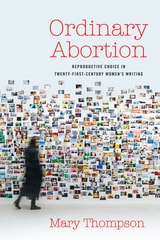
Ordinary Abortion
Reproductive Choice in Twenty-First-Century Women’s WritingMary Thompson
The Ohio State University Press, 2026
The Supreme Court’s Dobbs v. Jackson (2022) decision, which erased the constitutional right to abortion, abruptly redramatized access in the United States. Yet twenty-first-century literature written before Dobbs reflects a landscape in which abortion appears as an undramatic, routine part of women’s lives. In Ordinary Abortion, Mary Thompson argues that many contemporary women writers depict abortion as a commonplace decision intertwined with health, education, career, sexuality, relationships, family-making, and motherhood.
Drawing on American poetry, fiction, nonfiction, memoir, and dystopian writing, Ordinary Abortion examines how ideas about abortion circulate through literature and how literary forms, in turn, shape readers’ understandings of reproduction and politics. Thompson traces new plots, characters, narrative strategies, and genres emerging around birth control, unplanned pregnancy, termination, and family formation. These works reveal renewed thematic attention to abortion’s relationship with motherhood and mother-loss, neoliberal pressures, stratified reproduction, masculinity, violence, care work, and disability.
Ultimately, Ordinary Abortion shows that abortion literature extends far beyond stories centered on crisis or choice. Instead, twenty-first-century women’s writing reveals a quiet, pervasive truth: Abortion has long been woven into everyday American life, normalized in ways that public discourse has often failed to acknowledge.
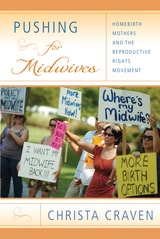
Pushing for Midwives
Homebirth Mothers and the Reproductive Rights MovementAuthored by Christa Craven
Temple University Press, 2010
With the increasing demand for midwives, activists are lobbying to loosen restrictions that deny legal access to homebirth options. In Pushing for Midwives, Christa Craven presents a nuanced history of women’s reproductive rights activism in the U.S. She also provides an examination of contemporary organizing strategies for reproductive rights in an era increasingly driven by “consumer rights.”
An historical and ethnographic case study of grassroots organizing, Pushing for Midwives is an in-depth look at the strategies, successes, and challenges facing midwifery activists in Virginia. Craven examines how decades-old race and class prejudices against midwives continue to impact opposition to—as well as divisions within—women’s contemporary legislative efforts for midwives. By placing the midwifery struggle within a broader reproductive rights context, Pushing for Midwives encourages activists to reconsider how certain political strategies have the potential to divide women. This reflection is crucial in the wake of neoliberal political-economic shifts that have prioritized the rights of consumers over those of citizens—particularly if activists hope to maintain their commitment to expanding reproductive rights for all women.
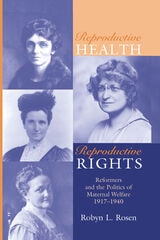
REPRODUCTIVE HEALTH, REPRODUCTIVE RIGHTS
REFORMERS & THE POLITICS OF MATERNAL WELFARE, 1917–1940Robyn L. Rosen
The Ohio State University Press, 2003
In the early twentieth century, shifting attitudes and new public health standards brought an unprecedented interest in and effort to regulate issues affecting reproduction and maternity. Maternal and infant health, nutrition, and medical care came under scrutiny, as did the issue of birth control. While the prior gained public support, the latter remained controversial. Though some reformers saw birth control as an important part of maternal welfare, others sought to separate it from more popular reforms. The careers of the four prominent but usually neglected reformers (Elizabeth Lowell Putnam, Ethel Sturges Dummer, Mary Ware Dennett, and Blanche Ames) examined in this book embody the struggle to define and resolve these tensions.
The study of these reformers offers a new perspective on more recognized leaders in the arena of reproductive health and rights, especially the U.S. Children's Bureau and Margaret Sanger. Putnam's elitism contextualizes the class politics of the Bureau, underscoring its sensitivity to the vulnerable and its innovative approach to public health. Dummer reminds us of roads not taken by policy makers in the Bureau, accentuating the differences between a child-centered and a woman-centered agenda. Dennett highlights the obstacles to women reformers in the formal political sphere, while Ames's penchant toward maternalism and compromise also led to difficulties. Together, they illustrate the complexities of formulating an effective approach to securing reproductive rights and health.
Reproduction, Globalization, and the State
New Theoretical and Ethnographic PerspectivesCarole H. Browner and Carolyn F. Sargent, eds.
Duke University Press, 2011
Contributors. Aditya Bharadwaj, Caroline H. Bledsoe, Carole H. Browner, Junjie Chen, Aimee R. Eden, Susan L. Erikson, Didier Fassin, Claudia Lee Williams Fonseca, Ellen Gruenbaum, Matthew Gutmann, Marcia C. Inhorn, Mark B. Padilla, Rayna Rapp, Lisa Ann Richey, Carolyn Sargent, Papa Sow, Cecilia Van Hollen, Linda Whiteford
Reproductive Justice
The Politics of Health Care for Native American WomenGurr, Barbara
Rutgers University Press, 2015

Reproductive Labor and Innovation
Against the Tech Fix in an Era of HypeJennifer Denbow
Duke University Press, 2024
Reproductive Rights in a Global Context
South Africa, Uganda, Peru, Denmark, United States, Vietnam, JordanLara M. Knudsen
Vanderbilt University Press, 2006
Traveling alone when she was between 17 and 22, with no institutional affiliation and no financial assistance, the author visited five developing countries and two developed ones on five continents. Her goal was to extend her own experience in an abortion clinic in Portland, Oregon. Lara Knudsen interviewed over 90 women's rights activists, health professionals, NGO workers, and government officials, gaining a sense of both official policies and the actual delivery of services in local clinics. The book places the experiences of women within the global context of how international population control agendas have influenced women's reproductive rights in the past, and how the changing international discourse on reproductive health continues to influence those rights today.
Scrap Theory
Reproductive Injustice in the Black Feminist ImaginationMali D. Collins
The Ohio State University Press, 2025
Seizing the Means of Reproduction
Entanglements of Feminism, Health, and TechnoscienceM. Murphy
Duke University Press, 2012
Murphy traces the transnational circulation of cheap, do-it-yourself health interventions, highlighting the uneasy links between economic logics, new forms of racialized governance, U.S. imperialism, family planning, and the rise of NGOs. In the twenty-first century, feminist health projects have followed complex and discomforting itineraries. The practices and ideologies of alternative health projects have found their way into World Bank guidelines, state policies, and commodified research. While the particular moment of U.S. feminism in the shadow of Cold War and postcolonialism has passed, its dynamics continue to inform the ways that health is governed and politicized today.

Teenage Dreams
Girlhood Sexualities in the U.S. Culture WarsCharlie Jeffries
Rutgers University Press, 2022
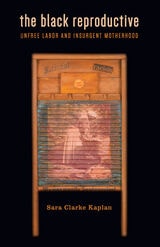
The Black Reproductive
Unfree Labor and Insurgent MotherhoodSara Clarke Kaplan
University of Minnesota Press, 2021
How Black women’s reproduction became integral to white supremacy, capitalism, and heteropatriarchy—and remains key to their dismantling
In the United States, slavery relied on the reproduction and other labors of unfree Black women. Nearly four centuries later, Black reproductivity remains a vital technology for the creation, negotiation, and transformation of sexualized and gendered racial categories. Yet even as Black reproduction has been deployed to resolve the conflicting demands of white supremacy, capitalism, and heteropatriarchy, Sara Clarke Kaplan argues that it also holds the potential to destabilize the oppressive systems it is supposed to maintain.
The Black Reproductive convenes Black literary and cultural studies with feminist and queer theory to read twentieth- and twenty-first-century texts and images alongside their pre-emancipation counterparts. These provocative, unexpected couplings include how Toni Morrison’s depiction of infanticide regenders Orlando Patterson’s theory of social death, and how Mary Prince’s eighteenth-century fugitive slave narrative is resignified through the representational paradoxes of Gayl Jones’s blues novel Corregidora. Throughout, Kaplan offers new perspectives on Black motherhood and gendered labor, from debates over the relationship between President Thomas Jefferson and Sally Hemings, to the demise of racist icon Aunt Jemima, to discussions of Black reproductive freedom and abortion.
The Black Reproductive gives vital insight into the historic and ongoing conditions of Black unfreedom, and points to the possibilities for a Black feminist practice of individual and collective freedom.
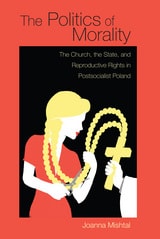
The Politics of Morality
The Church, the State, and Reproductive Rights in Postsocialist PolandJoanna Mishtal
Ohio University Press, 2015
After the fall of the state socialist regime and the end of martial law in 1989, Polish society experienced both a sense of relief from the tyranny of Soviet control and an expectation that democracy would bring freedom. After this initial wave of enthusiasm, however, political forces that had lain concealed during the state socialist era began to emerge and establish a new religious-nationalist orthodoxy. While Solidarity garnered most of the credit for democratization in Poland, it had worked quietly with the Catholic Church, to which a large majority of Poles at least nominally adhered. As the church emerged as a political force in the Polish Sejm and Senate, it precipitated a rapid erosion of women’s reproductive rights, especially the right to abortion, which had been relatively well established under the former regime.
The Politics of Morality is an anthropological study of this expansion of power by the religious right and its effects on individual rights and social mores. It explores the contradictions of postsocialist democratization in Poland: an emerging democracy on one hand, and a declining tolerance for reproductive rights, women’s rights, and political and religious pluralism on the other. Yet, as this thoroughly researched study shows, women resist these strictures by pursuing abortion illegally, defying religious prohibitions on contraception, and organizing into advocacy groups. As struggles around reproductive rights continue in Poland, these resistances and unofficial practices reveal the sharp limits of religious form of governance.
The Politics of Reproduction
Adoption, Abortion, and Surrogacy in the Age of NeoliberalismEdited by Modhumita Roy and Mary Thompson
The Ohio State University Press, 2019
Undoing Motherhood
Collaborative Reproduction and the Deinstitutionalization of U.S. MaternityKatherine M. Johnson
Rutgers University Press, 2023
Unlearning Eugenics
Sexuality, Reproduction, and Disability in Post-Nazi EuropeDagmar Herzog
University of Wisconsin Press, 2020
Bringing together the latest findings in Holocaust studies, the history of religion, and the history of sexuality in postwar—and now also postcommunist—Europe, Unlearning Eugenics shows how central the controversies over sexuality, reproduction, and disability have been to broader processes of secularization and religious renewal. Herzog also restores to the historical record a revelatory array of activists: from Catholic and Protestant theologians who defended abortion rights in the 1960s–70s to historians in the 1980s–90s who uncovered the long-suppressed connections between the mass murder of the disabled and the Holocaust of European Jewry; from feminists involved in the militant "cripple movement" of the 1980s to lawyers working for right-wing NGOs in the 2000s; and from a handful of pioneers in the 1940s–60s committed to living in intentional community with individuals with cognitive disability to present-day disability self-advocates.

Willing and Unable
Doctors' Constraints in Abortion CareLori R. Freedman
Vanderbilt University Press, 2010
Structural barriers to the mainstream practice of abortion effectively institutionalize the buck-passing of abortion patients to abortion clinics. As the author notes, "Public-health-minded HMOs and physician practices could significantly change the world of abortion care if they stopped outsourcing it."
Drawing from forty in-depth interviews, the book presents a challenge to a commonly held assumption that physicians decide whether or not to provide abortion based on personal ideology. Physician narratives demonstrate how their choices around learning, doing, and even having abortions themselves disrupt the pro-choice/pro-life moral and political binary.