Results by title
5 books match the query 'Research Methods'
International Organizations and Research Methods
An IntroductionFanny Badache, Leah R. Kimber and Lucile Maertens, Editors
University of Michigan Press, 2023
Scholars have studied international organizations (IOs) in many disciplines, thus generating important theoretical developments. Yet a proper assessment and a broad discussion of the methods used to research these organizations are lacking. Which methods are being used to study IOs and in what ways? Do we need a specific methodology applied to the case of IOs? What are the concrete methodological challenges when doing research on IOs? International Organizations and Research Methods: An Introduction compiles an inventory of the methods developed in the study of IOs under the five headings of Observing, Interviewing, Documenting, Measuring, and Combining. It does not reconcile diverging views on the purpose and meaning of IO scholarship, but creates a space for scholars and students embedded in different academic traditions to reflect on methodological choices and the way they impact knowledge production on IOs.
Race, Rhetoric, and Research Methods
Alexandria Lockett
University Press of Colorado, 2021
Research Methods in Sport Management
Second EditionBrenda G. Pitts
FiT Publishing, 2018
Research—the systematic investigation of materials and sources to establish facts and reach new conclusions—is carried out for a variety of purposes and to achieve a variety of goals. For sport business industry, research is critical for developing strategies to effectively understand and manage the franchise, property, or facility.
This second edition of Research Methods in Sport Management provides a detailed introduction into the research itself, and applies those methods directly to the field of sport business management. With established reputations as expert researchers in the field, the authors have reorganized foundational concepts and updated methods and industry examples to provide students, instructors and professionals with a knowledge base and resources to prepare, collect, analyze and present targeted research for scholarly publication or to better interpret and respond to the needs of an array of areas in the sport management industry.
Researching Writing
An Introduction to Research MethodsJoyce Kinkead
Utah State University Press, 2016
Author Joyce Kinkead lays out the research process, including finding and defining questions, planning, and starting the research. Expository content introduces the language and methods of writing research, and specific methods are demonstrated in published examples, illustrating student work using student work and showing that it is possible for students to join the scholarly conversation in writing studies. Other features include student activities, instructor resources, student resources, and links to external content on journal websites, digital publications, YouTube, and similar work.
The first-ever textbook for research methods in writing studies for undergraduates, Researching Writing takes a hands-on approach that excites and engages students in the depth and complexities of research and will influence the creation of courses in new writing majors as the field continues to grow.
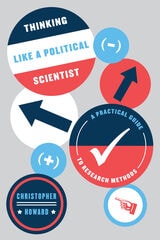
Thinking Like a Political Scientist
A Practical Guide to Research MethodsChristopher Howard
University of Chicago Press, 2017
With wit and practical wisdom, Christopher Howard draws on more than a decade of experience teaching research methods to transform a typically dreary subject and teach budding political scientists the critical skills they need to read published research more effectively and produce better research of their own. The first part of the book is devoted to asking three fundamental questions in political science: What happened? Why? Who cares? In the second section, Howard demonstrates how to answer these questions by choosing an appropriate research design, selecting cases, and working with numbers and written documents as evidence. Drawing on examples from American and comparative politics, international relations, and public policy, Thinking Like a Political Scientist highlights the most common challenges that political scientists routinely face, and each chapter concludes with exercises so that students can practice dealing with those challenges.