Results by title
3 books match the query 'Reservation'
Murder on the Reservation
American Indian Crime FictionRay B. Browne
University of Wisconsin Press, 2004
State and Reservation
New Perspectives on Federal Indian PolicyEdited by George Pierre Castile and Robert L. Bee
University of Arizona Press, 1992
CONTENTS
Introduction, George Pierre Castile & Robert L. Bee
Part I—Historical Foundations of the Reservation System
An Elusive Institution: The Meanings of Indian Reservations in Gold Rush California, John M. Findlay
Crow Leadership Amidst Reservation Oppression, Frederick E. Hoxie
Part II—The Nonreservation Experience
Utah Indians and the Homestead Laws, Martha C. Knack
The Enduring Reservations of Oklahoma, John H. Moore
Without Reservation: Federal Indian Policy and the Landless Tribes of Washington, Frank W. Porter, III
Part III—Power and Symbols
Riding the Paper Tiger, Robert L. Bee
Indian Sign: Hegemony and Symbolism in Federal Indian Policy, George P. Castile
Part IV—The Resource Base
Primitive Accumulation, Reservations, and the Alaska Native Claims Settlement Act, Lawrence Weiss & David C.Maas
Shortcomings of the Indian Self-Determination Policy, George S. Esber, Jr.
Getting to Yes in the New West: The Negotiation of Policy, Thomas R. McGuire
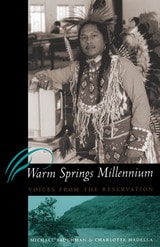
Warm Springs Millennium
Voices from the ReservationBy Michael Baughman and Charlotte Hadella
University of Texas Press, 2000
Established in 1855 on an area one-fifteenth the size of the lands relinquished in return for it, the Warm Springs Reservation in north central Oregon is home to some 3,600 Warm Springs, Wasco, and Paiute Indians, half of whom are under twenty. This book seeks to understand the reservation's inhabitants as a "viable people" who are both visible and vocal as they reflect on their daily lives, their struggles and successes, and their hopes for the future.
Michael Baughman and Charlotte Hadella present extended interviews with seven Indian and two non-Indian members of the community. They discuss issues such as the difficulty of maintaining traditional lifeways centered around hunting, fishing, and gathering; the disruptions caused by alcoholism and diseases such as diabetes; and the need for culturally appropriate education for the young. The authors frame the interviews with explanatory material that covers the reservation's history and relations with white society and its efforts to transmit native languages and cultural traditions to its children.