Results by title
2 books match the query 'Respect for persons'

Asylum
The Concept and the PracticeRanjana Khanna
Duke University Press, 2026
In Asylum, Ranjana Khanna examines how sanctuaries, refugee camps, mental asylums, holding facilities for asylum seekers, and state boundaries all are understood through the term asylum. Engaging with continental philosophy, psychoanalysis, literary theory, postcolonial studies, and Marxist critique, Khanna considers the multiple and entangled senses of asylum in the histories of mental health, incarceration, and human rights. She shows that diverse forms of migration are now assessed in terms of a new set of moral criteria concerning the right to political asylum. She further shows how postcolonial asylum, simultaneously signifying safety and incarceration, constructs spaces of hospitality and hostility that render divisions between the human and the nonhuman, dignity and shame, and value and disposability. As Khanna demonstrates, the notion of asylum reveals the importance of sovereignty as understood through the formulation and imposition of the concepts of the human and of the valuable.
[more]
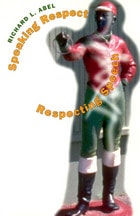
Speaking Respect, Respecting Speech
Richard L. Abel
University of Chicago Press, 1998
The feminist campaign against pornography, the furor over a racial epithet in the O. J. Simpson trial, and Iran's continuing threat to kill Salman Rushdie exemplify the intense passions aroused by hurtful speech. Richard Abel offers an original framework for understanding and attempting to resolve these pervasive and intractable conflicts. Drawing on sociological theories of symbolic politics, he views such confrontations as struggles for respect among status categories defined by nationality, religion, race, gender, sexual orientation, and physical difference. Abel convincingly exposes the inadequacies of the conventional responses to speech: absolutist civil libertarianism and enthusiastic state regulation. Instead, he argues, only apologies exchanged within the communities that construct collective identities can readjust social standing damaged by hurtful words and images. In recasting the problem in terms of equalizing cultural capital, Abel opens a new pathway through the wrongs and rights of speech.
[more]