Results by title
15 books match the query 'Restoration'

Digital Signal Filtering, Analysis and Restoration
Jiří Jan
The Institution of Engineering and Technology, 2000
Divergent Paths of the Restoration
An Encyclopedia of the Smith–Rigdon MovementSteven L. Shields
Signature Books, 2021
Divergent Paths of the Restoration
An Encyclopedia of the Smith–Rigdon Movement, Volume 1: Sections 1–4Steven L. Shields
Signature Books, 2022
Divergent Paths of the Restoration
An Encyclopedia of the Smith–Rigdon Movement, Volume 2: Sections 5–12 & AppendicesSteven L. Shields
Signature Books, 2022
Francis Warrington Dawson and the Politics of Restoration
South Carolina, 1874-1889E. Culpepper Clark
University of Alabama Press, 1980
A revealing biography of a powerful Southern editor at the center of South Carolina’s post‑Reconstruction political transformation.
In the decades following the Civil War, South Carolina—like much of the South—struggled to redefine its political identity amid the collapse of Reconstruction and the rise of conservative “Redeemer” governments. In Francis Warrington Dawson and the Politics of Restoration, historian E. Culpepper Clark offers a deeply researched and incisive study of this transformation through the life and work of Francis Warrington Dawson, one of the state’s most influential newspaper editors.
Dawson was far more than a chronicler of events. As a powerful voice in South Carolina’s political press, he helped shape public opinion, broker alliances among conservative factions, and articulate the ideological foundations of post‑Reconstruction governance. Clark situates Dawson at the center of the struggles among Redeemers, Straight‑Out Democrats, agrarian reformers, and emerging political leaders such as Ben Tillman, revealing a political landscape marked by rivalry, class conflict, and competing visions of the New South.
Drawing on extensive manuscript collections, newspapers, and political correspondence, Clark explores the close relationship between journalism and power in the late nineteenth century and demonstrates how newspapers functioned as active political actors rather than neutral observers. The result is both a compelling political biography and a broader analysis of how restoration politics operated at the state level.
Francis Warrington Dawson and the Politics of Restoration is an essential work for readers interested in Southern history, Reconstruction and its aftermath, the history of American journalism, and the forces that shaped the political culture of the modern South.

Michigan's Capitol
Construction and RestorationWilliam Seale
University of Michigan Press, 1995
Michigan's Capitol: Construction and Restoration is the history of a great American landmark, one among fifty statehouses. Construction of Michigan's State Capitol began in 1871, six years after the close of the Civil War, and was brought to completion less than a decade later. It has survived for more than a century to become the object of one of America's most authentic restorations. This volume allows the reader to chronicle the building and restoration of Michigan's Capitol through words and magnificent color and black-and-white photographs. An archive of treasured historical images, beginning with a group scene at the time the cornerstone was placed, is also included alongside original architectural drawings and sketches.
Michigan's Capitol: Construction and Restoration is not only the history of a great vision realized, but a celebration of the rediscovery and revival of that vision in the 1980s and 1990s culminating in one of the most comprehensive restorations ever carried out on an American building. The author, William Seale, a part of the restoration team for Michigan's Capitol from the start, has written extensively about many American buildings, including the White House.
Written in a lively, narrative style accessible to readers of all ages, Michigan's Capitol: Construction and Restoration is an especially useful introduction to the art of building as well as the politics of public building.

Restoration
PoemsChristina Pugh
Northwestern University Press, 2008
Complex and focused, this collection of poems moves along the line between waking and sleeping to reveal a narrator who is contemplating her origins as well as her future. Pugh frequently turns in her work to the image of a bed--as a source of comfort, an erotic landing, and a place for dreaming. For Pugh, dreams both obscure and reveal, their language a code to be analyzed, as in her longer meditation inspired by Freud's case history "Dora." After dipping dangerously far into dreams, Pugh's poems return to a world of activity, full of physicality before becoming calm. At the end of the book, the self is restored and can see the world through a newly formed lens taken from its dreams.
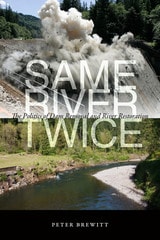
Same River Twice
The Politics of Dam Removal and River RestorationPeter Brewitt
Oregon State University Press, 2019
How did this happen? Same River Twice answers this question by telling the stories of three major Northwestern dam removals – the politics, people, hopes, and fears that shaped three rivers and their communities. Brewitt begins each story with the dam’s construction, shows how its critics gained power, details the conflicts and controversies of removal, and explores the aftermath as the river re-established itself.
Each dam removal offers a unique case study. On the Elwha and Rogue Rivers, dam removal was a multi-decade political brawl; on the Sandy River it was swift and amicable. A key controversy in every case was the loss of the recreational lake created by the dam. Local communities loved their lakes and felt that they were natural, public spaces rather than industrial creations. They fought dam removal with passion and ingenuity. To be successful, dam removal advocates had to learn to weld together mega-coalitions that embraced most interest groups and moved forward together.
While the dams profiled here are all in the Pacific Northwest, dam removal is a national and international phenomenon, and Brewitt’s findings apply everywhere. Written for both a scholarly and a general audience, Same River Twice presents invaluable case studies for scholars of environmental politics, wildlife and public land professionals, environmental activists, and anyone interested in the intersection of politics, public policy, and dam removal.

The Novel Stage
Narrative Form from the Restoration to Jane AustenMarcie Frank
Bucknell University Press, 2020
2020 Choice Outstanding Academic Title
Marcie Frank’s study traces the migration of tragicomedy, the comedy of manners, and melodrama from the stage to the novel, offering a dramatic new approach to the history of the English novel that examines how the collaboration of genres contributed to the novel’s narrative form and to the modern organization of literature. Drawing on media theory and focusing on the less-examined narrative contributions of such authors as Aphra Behn, Frances Burney, and Elizabeth Inchbald, alongside those of Samuel Richardson, Henry Fielding, and Jane Austen, The Novel Stage tells the story of the novel as it was shaped by the stage.
Published by Bucknell University Press. Distributed worldwide by Rutgers University Press.
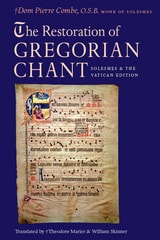
The Restoration of Gregorian Chant
Solesmes and the Vatican EditionDom Pierre Combe, O.S.B.
Catholic University of America Press, 2003

The Restoration of Order
The Normalization of Czechoslovakia 1969–1976Milan Šimecka
Karolinum Press, 2025
In an engaging style, not lacking in irony and detachment, Milan Šimečka describes the process of restoring order and its result—so-called real socialism—in a brilliant analysis of the “normalization” regime in Czechoslovakia that came to power after the Soviet-led invasion that crushed the Prague Spring of 1968. These poignant reflections and essays coincided with Šimečka’s first-hand experience of the consequences of the time’s political and cultural purges.
This second edition of Cold War classics, first written between 1975 and 1977, with a new preface from Martin Šimečka and afterword from Jonathan Bolton, highlights chilling parallels with contemporary political developments and current civic and ethical questions.
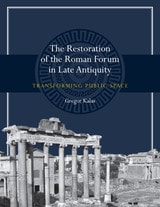
The Restoration of the Roman Forum in Late Antiquity
Transforming Public SpaceBy Gregor Kalas
University of Texas Press, 2015
In The Restoration of the Roman Forum in Late Antiquity, Gregor Kalas examines architectural conservation during late antiquity period at Rome’s most important civic center: the Roman Forum. During the fourth and fifth centuries CE—when emperors shifted their residences to alternate capitals and Christian practices overtook traditional beliefs—elite citizens targeted restoration campaigns so as to infuse these initiatives with political meaning. Since construction of new buildings was a right reserved for the emperor, Rome’s upper echelon funded the upkeep of buildings together with sculptural displays to gain public status. Restorers linked themselves to the past through the fragmentary reuse of building materials and, as Kalas explores, proclaimed their importance through prominently inscribed statues and monuments, whose placement within the existing cityscape allowed patrons and honorees to connect themselves to the celebrated history of Rome.
Building on art historical studies of spolia and exploring the Forum over an extended period of time, Kalas demonstrates the mutability of civic environments. The Restoration of the Roman Forum in Late Antiquity maps the evolution of the Forum away from singular projects composed of new materials toward an accretive and holistic design sensibility. Overturning notions of late antiquity as one of decline, Kalas demonstrates how perpetual reuse and restoration drew on Rome’s venerable past to proclaim a bright future.
The Restoration of the Self
Heinz Kohut
University of Chicago Press, 2009
In his foundational work The Restoration of the Self, noted psychoanalyst Heinz Kohut boldly challenges what he called “the limits of classical analytic theory” and the Freudian orthodoxy. Here Kohut proposes a “psychology of the self” as a theory in its own right—one that can stand beside the teachings of Freud and Jung.
Using clinical data, Kohut explores issues such as the role of narcissism in personality, when a patient can be considered cured, and the oversimplifications and social biases that unduly influenced Freudian thought. This volume puts forth some of Kohut’s most influential ideas on achieving emotional health through a balanced, creative, and joyful sense of self.
"Kohut speaks clearly from his identity as a psychoanalyst-healer, showing that he is more of a psychoanalyst than most, and yet calling for major theoretical revisions including a redefinition of the essence of psychoanalysis.”—American Journal of Psychotherapy
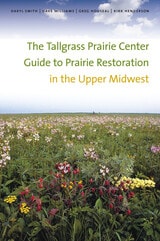
The Tallgrass Prairie Center Guide to Prairie Restoration in the Upper Midwest
Daryl Smith
University of Iowa Press, 2010
Although less than 3 percent of the original vast landscape survives, the tallgrass prairie remains a national treasure, glowing with a vast array of colorful wildflowers in spring and summer, enriched by the warm reds and browns of grasses in fall and winter. This comprehensive manual, crafted by the staff of the Tallgrass Prairie Center at the University of Northern Iowa, will be an essential companion for everyone dedicated to planning, developing, and maintaining all types of prairie restorations and reconstructions in the tallgrass prairie region of Iowa, northern Illinois, northwestern Indiana, southwestern Wisconsin, southwestern Minnesota, eastern South Dakota, eastern Nebraska, northwestern Missouri, and northeastern Kansas.
Focusing on conservation plantings, prairie recovery, native landscaping in yards and at schools, roadside plantings, and pasture renovations, the authors—who collectively have more than a hundred years of experience with prairie restoration—have created a manual that will be particularly useful to landowners, conservation agency personnel, ecosystem managers, native-seeding contractors, prairie enthusiasts, teachers, and roadside managers. A wealth of color and black-and-white photographs taken in the field as well as checklists and tables support the detailed text, which also includes useful online and print sources and references, a glossary, and lists of common and scientific names of all plant species discussed.
The text is divided into five parts. Part I, Reconstruction Planning, provides an overall summary of the entire process, information about securing good-quality seed, and the design of seed mixes. In Part II, Implementing Reconstruction, the authors consider ways to prepare and seed the site, manage the site in its first growing season, identify seedlings, and evaluate success. Part III, Prairie Restoration and Management, deals with identifying and assessing prairie remnants, working toward a predetermined restoration goal, and managing restored prairie remnants and completed reconstructions, including prescribed burning. Chapters in Part IV, Special Cases, discuss the uses of prairie in public spaces, roadside vegetation management, and landscaping on a smaller scale in yards and outdoor classrooms. Part V, Native Seed Production, describes the processes of harvesting, drying, cleaning, and storing native seed as well as propagating and transplanting native seedlings.
Although we cannot recreate the original blacksoil prairie, tallgrass prairie restoration offers the opportunity to reverse environmental damage and provide for the recovery of vital aspects of this lost ecosystem. Anyone in the Upper Midwest who wishes to improve water quality, reduce flood damage, support species diversity, preserve animal habitats, and enjoy the changing panorama of grasses and wildflowers will benefit from the clear, careful text and copious illustrations in this authoritative guide.
The Theatre of Death
Rituals of Justice from the English Civil Wars to the RestorationP J Klemp
University of Delaware Press, 2017
This book discusses some rituals of justice—such as public executions, printed responses to the Archbishop of Canterbury’s execution speech, and King Charles I’s treason trial—in early modern England. Focusing on the ways in which genres shape these events’ multiple voices, I analyze the rituals’ genres and the diverse perspectives from which we must understand them.
The execution ritual, like such cultural forms as plays and films, is a collaborative production that can be understood only, and only incompletely, by being alert to the presence of its many participants and their contributions. Each of these participants brings a voice to the execution ritual, whether it is the judge and jury or the victim, executioner, sheriff and other authorities, spiritual counselors, printer, or spectators and readers. And each has at least one role to play. No matter how powerful some institutions and individuals may appear, none has a monopoly over authority and how the events take shape on and beyond the scaffold. The centerpiece of the mid-seventeenth-century’s theatre of death was the condemned man’s last dying utterance. This study focuses on the words and contexts of many of those final speeches, including King Charles I’s (1649), Archbishop William Laud’s (1645), and the Earl of Strafford’s (1641), as well as those of less well known royalists and regicides. Where we situate ourselves to view, hear, and comprehend a public execution—through specific participants’ eyes, ears, and minds or accounts—shapes our interpretation of the ritual. It is impossible to achieve a singular, carefully indoctrinated meaning of an event as complex as a state-sponsored public execution.
Along with the variety of voices and meanings, the nature and purpose of the rituals of justice maintain a significant amount of consistency in a number of eras and cultural contexts. Whether the focus is on the trial and execution of the Marian martyrs, English royalists in the 1640s and 1650s, or the Restoration’s regicides, the events draw on a set of cultural expectations or conventions. Because rituals of justice are shaped by diverse voices and agendas, with the participants’ scripts and counterscripts converging and colliding, they are dramatic moments conveying profound meanings.
Published by University of Delaware Press. Distributed worldwide by Rutgers University Press.