Results by title
16 books match the query 'Return migration'
Between Foreign and Family
Return Migration and Identity Construction among Korean Americans and Korean ChineseLee, Helene K
Rutgers University Press, 2018
Between Foreign and Family explores the impact of inconsistent rules of ethnic inclusion and exclusion on the economic and social lives of Korean Americans and Korean Chinese living in Seoul. These actors are part of a growing number of return migrants, members of an ethnic diaspora who migrate “back” to the ancestral homeland from which their families emigrated. Drawing on ethnographic observations and interview data, Helene K. Lee highlights the “logics of transnationalism” that shape the relationships between these return migrants and their employers, co-workers, friends, family, and the South Korean state.
While Koreanness marks these return migrants as outsiders who never truly feel at home in the United States and China, it simultaneously traps them into a liminal space in which they are neither fully family, nor fully foreign in South Korea. Return migration reveals how ethnic identity construction is not an indisputable and universal fact defined by blood and ancestry, but a contested and uneven process informed by the interplay of ethnicity, nationality, citizenship, gender, and history.
Counterstreams in Migration
Ethiopians' Choices to Stay, Leave, or ReturnHewan Girma
Temple University Press, 2026
Weaving together nearly 100 stories of non-migrants, returnees, and repeat migrants from Ethiopia, Girma advances a theory of migra-emotions, emotions specific to migration, to understand decisions and experiences, such as the imaginary of home and the lived reality of alienation, disaffection abroad, and feelings of duty to one’s homeland.
Looking beyond the meanings of migration or processes of integration, Girma explores the emotional subtext of migration aspirations. In doing so, Counterstreams of Migration complicates conventional understandings of migration and provides a more complete picture of migrant stories.
Double Passage
The Lives of Caribbean Migrants Abroad and Back HomeGeorge Gmelch
University of Michigan Press, 1993
Good Maya Women
Migration and Revitalization of Clothing and Language in Highland Guatemalaby Joyce N. Bennett
University of Alabama Press, 2022
Good Maya Women: Migration and Revitalization of Clothing and Language in Highland Guatemala analyzes how Indigenous women’s migration contributes to women’s empowerment in their home communities in Guatemala. This decolonial ethnographic analysis of Kaqchikel Maya women’s linguistic and cultural activism demonstrates that marginalized people can and do experience empowerment and hope for the future of their communities, even while living under oppressive neoliberal regimes. Joyce N. Bennett contests dominant frameworks of affect theory holding that marginalized peoples never truly experience unrestricted hope or empowerment, and she contributes new understandings of the intimate connections between Indigenous women, migration, and language and clothing revitalization.
Based on more than twenty months of fieldwork, the study begins with an ethnographic investigation of how economic policies force Indigenous women into migration for wage work. To survive, many, like the three young women profiled in this ethnography, are forced to leave their schooling, families, and highland homes to work in cities or other countries. They might work, for example, as vendors, selling crafts to tourists, or as housekeepers or waitresses. Their work exposes them to structural violence, including anti-Indigenous slurs, sexual harassment and violence, and robbery.
Furthermore, the women are pressured to wear Western clothing and to speak Spanish, which endangers Indigenous culture and language in Guatemala. Yet the Indigenous migrant women profiled do not abandon their Indigenous clothing and language, in this case Kaqchikel Maya. Instead, they find inspiration and pride in revitalizing Kaqchikel traditions in their hometowns post-migration. As women attempt to revitalize Kaqchikel Maya language and clothing, they seek to earn the title of “good” women in their home communities.
Unpacking women’s daily activisms reveals that women attempt to retain their language and clothing and also collectively seek to make space for Indigenous people in the modern world. Bennett reveals that women find their attempts at revitalization to be personally empowering, even when their communities do not support them.
Kaleidoscopic Ethnicity
International Migration and the Reconstruction of Community Identities in IndiaKurien, Prema A
Rutgers University Press, 2002
Co-Winner of the 2003 American Sociological Association's Asia/Asian American book award.
Based on ethnographic research in three communities (Ezhava Hindu, Mappila Muslim, and Syrian Christian) in Kerala, India, which sent large numbers of workers to the Middle East for temporary jobs, Kaleidoscopic Ethnicity explores the factors responsible for the striking differences in the groups’ patterns of migration and migration-induced social change. Most broadly, Prema Kurien seeks to understand what ethnicity is and how it affects people’s activities and decisions. She argues that, in each case, a community-specific nexus of religion, gender, and status shaped migration, and was, in turn, transformed by it.
The religious background of the three groups determined their social location within colonial and postcolonial Kerala. This social location in turn affected their occupational profiles, family structures, and social networks, as well as their conceptions of gender and honor, and thus was fundamental in shaping migration patterns. The rapid enrichment brought about by international migration resulted in a reinterpretation of religious identity and practice which was manifested by changes in patterns of gendered behavior and status in each of the three communities. What makes this book unique is its focus on the sociocultural patterns of short-term international migration and its comparative ethnographic approach.
Mexican Migration to the United States
Perspectives From Both Sides of the BorderEdited by Harriett D. Romo and Olivia Mogollon-Lopez
University of Texas Press, 2016
Borderlands migration has been the subject of considerable study, but the authorship has usually reflected a north-of-the-border perspective only. Gathering a transnational group of prominent researchers, including leading Mexican scholars whose work is not readily available in the United States and academics from US universities, Mexican Migration to the United States brings together an array of often-overlooked viewpoints, reflecting the interconnectedness of immigration policy.
This collection’s research, principally empirical, reveals significant aspects of labor markets, family life, and educational processes. Presenting recent data and accessible explanations of complex histories, the essays capture the evolving legal frameworks and economic implications of Mexico-US migrations at the national and municipal levels, as well as the experiences of receiving communities in the United States. The volume includes illuminating reports on populations ranging from undocumented young adults to elite Mexican women immigrants, health-care rights, Mexico’s incorporation of return migration, the impact of Deferred Action for Childhood Arrivals on higher education, and the experiences of young children returning to Mexican schools after living in the United States. Reflecting a multidisciplinary approach, the list of contributors includes anthropologists, demographers, economists, educators, policy analysts, and sociologists.
Underscoring the fact that Mexican migration to the United States is unique and complex, this timely work exemplifies the cross-border collaboration crucial to the development of immigration policies that serve people in both countries.
Migrant Returns
Manila, Development, and Transnational ConnectivityEric J. Pido
Duke University Press, 2017
Mixtec Evangelicals
Globalization, Migration, and Religious Change in a Oaxacan Indigenous GroupMary I. O'Connor
University Press of Colorado, 2016
Mixtec Evangelicals is a comparative ethnography of four Mixtec communities in Oaxaca, detailing the process by which economic migration and religious conversion combine to change the social and cultural makeup of predominantly folk-Catholic communities. The book describes the effects on the home communities of the Mixtecs who travel to northern Mexico and the United States in search of wage labor and return having converted from their rural Catholic roots to Evangelical Protestant religions.
O’Connor identifies globalization as the root cause of this process. She demonstrates the ways that neoliberal policies have forced Mixtecs to migrate and how migration provides the contexts for conversion. Converts challenge the set of customs governing their Mixtec villages by refusing to participate in the Catholic ceremonies and social gatherings that are at the center of traditional village life. The home communities have responded in a number of ways—ranging from expulsion of converts to partial acceptance and adjustments within the village—depending on the circumstances of conversion and number of converts returning.
Presenting data and case studies resulting from O’Connor’s ethnographic field research in Oaxaca and various migrant settlements in Mexico and the United States, Mixtec Evangelicals explores this phenomenon of globalization and observes how ancient communities are changed by their own emissaries to the outside world. Students and scholars of anthropology, Latin American studies, and religion will find much in this book to inform their understanding of globalization, modernity, indigeneity, and religious change.
Oaxaca in Motion
An Ethnography of Internal, Transnational, and Return MigrationIván Sandoval-Cervantes
University of Texas Press, 2022
Migration is typically seen as a transnational phenomenon, but it happens within borders, too. Oaxaca in Motion documents a revealing irony in the latter sort: internal migration often is global in character, motivated by foreign affairs and international economic integration, and it is no less transformative than its cross-border analogue.
Iván Sandoval-Cervantes spent nearly two years observing and interviewing migrants from the rural Oaxacan town of Santa Ana Zegache. Many women from the area travel to Mexico City to work as domestics, and men are encouraged to join the Mexican military to fight the US-instigated “war on drugs” or else leave their fields to labor in industries serving global supply chains. Placing these moves in their historical and cultural context, Sandoval-Cervantes discovers that migrants’ experiences dramatically alter their conceptions of gender, upsetting their traditional notions of masculinity and femininity. And some migrants bring their revised views with them when they return home, influencing their families and community of origin. Comparing Oaxacans moving within Mexico to those living along the US West Coast, Sandoval-Cervantes clearly demonstrates the multiplicity of answers to the question, “Who is a migrant?”
Peace, Preference, and Property
Return Migration after Violent ConflictSandra F. Joireman
University of Michigan Press, 2022
Growing numbers of people are displaced by war and violent conflict. In Ukraine, Afghanistan, Ethiopia, Myanmar, Syria, and elsewhere violence pushes civilian populations from their homes and sometimes from their countries, making them refugees. In previous decades, millions of refugees and displaced people returned to their place of origin after conflict or were resettled in countries in the Global North. Now displacements last longer, the number of people returning home is lower, and opportunities for resettlement are shrinking. More and more people spend decades in refugee camps or displaced within their own countries, raising their children away from their home communities and cultures. In this context, international policies encourage return to place of origin.
Using case studies and first-person accounts from interviews and fieldwork in post-conflict settings such as Uganda, Liberia, and Kosovo, Sandra F. Joireman highlights the divergence between these policies and the preferences of conflict-displaced people. Rather than looking from the top down, at the rights that people have in international and domestic law, the perspective of this text is from the ground up—examining individual and household choices after conflict. Some refugees want to go home, some do not want to return, some want to return to their countries of origin but live in a different place, and others are repatriated against their will when they have no other options. Peace, Preference, and Property suggests alternative policies that would provide greater choice for displaced people in terms of property restitution and solutions to displacement.
Peruvian Lives across Borders
Power, Exclusion, and HomeM. Cristina Alcalde
University of Illinois Press, 2018
Alcalde draws on interviews, surveys, participant observation, and textual analysis to argue that to belong is to exclude. To that end, transnational Peruvians engage in both subtle and direct policing along the borders of belonging. These acts allow them to claim and maintain the social status they enjoyed in their homeland even as they profess their openness and tolerance. Alcalde details these processes and their origins in Peru's gender, racial, and class hierarchies. As she shows, the idea of return—whether desired or rejected, imagined or physical—spurs constructions of Peruvianness, belonging, and home.
Deeply researched and theoretically daring, Peruvian Lives across Borders answers fascinating questions about an understudied group of migrants.
Return Of Guatemala'S Refugees
Clark Taylor
Temple University Press, 1998
Twelve years later, utilizing terms of refugee agreements reached in 1982, villagers from Santa Maria who had fled to Mexico returned to their homes and lands to re-create their community with those who had stayed in Guatemala. Return of Guatemala's Refugees tells the story of that process. In this moving and provocative book, Clark Taylor describes the experiences of the survivors -- both those who stayed behind in conditions of savage repression and those who fled to Mexico where they learned to organize and defend their rights. Their struggle to rebuild is set in the wider drama of efforts by grassroots groups to pressure the government, economic elites, and army to fulfill peace accords signed in December of 1996.
Focusing on the village of Santa Maria Tzeja, Taylor defines the challenges that faced returning refugees and their community. How did the opposing subcultures of fear (generated among those who stayed in Guatemala) and of education and human rights (experienced by those who took refuge in Mexico) coexist? Would the flood of international money sent to settle the refugees and fulfill the peace accords serve to promote participatory development or new forms of social control? How did survivors expand the space for democracy firmly grounded in human rights? How did they get beyond the grief and trauma that remained from the terror of the early eighties? Finally, the ultimate challenge, how did they work within conditions of extreme poverty to create a grassroots democracy in a militarized society?
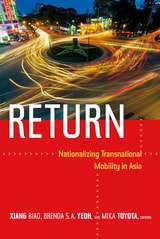
Return
Nationalizing Transnational Mobility in AsiaXiang Biao, Brenda S. A. Yeoh and Mika Toyota, eds.
Duke University Press, 2013
Contributors. Sylvia Cowan, Johan Lindquist, Melody Chia-wen Lu, Koji Sasaki, Shin Hyunjoon, Mariko Asano Tamanoi, Mika Toyota, Carol Upadhya, Wang Cangbai, Xiang Biao, Brenda S. A. Yeoh
The New World Inside A Basque Village
The Oiartzun Valley And Its Atlantic Emigrants, 1550-1800Juan Javier Pescador
University of Nevada Press, 2003
An ethnohistory detailing the lives of fifteen generations in a Basque-speaking community in Spain and the result of their diverse contacts with the New World. The Basques’ remarkable role in the establishment and exploitation of Spain’s American empire is well known, but until now the impact of these achievements on the Basque Country itself has received little attention. In this pioneering study, Juan Javier Pescador meticulously examines three centuries of social and economic change in the Oiartzun Valley of Gipuzkoa, a typical Basque peasant community altered by its contacts with the New World.
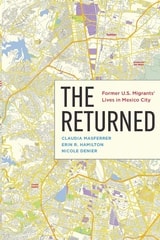
The Returned
Former U.S. Migrants’ Lives in Mexico CityClaudia Masferrer
Russell Sage Foundation, 2025
Masferrer, Hamilton, and Denier draw on interviews with former U.S. migrants living in Mexico City to better understand the experience of return migration to urban areas. Each of the migrants they spoke with lived in the United States for long periods with noncitizen status during the last four decades. During this time, U.S. immigration policy became increasingly focused on restriction and enforcement, which made it difficult for migrants to safely move back and forth across the border for work or to visit family without documentation. The authors find that upon their return, migrants in Mexico City felt disoriented and lost and had difficulty adapting to a massive urban environment where there is little support for returnees. They struggled to translate their work experience from their time in the U.S. to find quality jobs. Additionally, many found their family lives upended as they reunited with or formed families in the U.S.. Some found themselves separated from family members still in the U.S. with no ability to legally visit them. Others brought their families back to Mexico, some of whom were U.S. citizens and had never been to Mexico before. They, too, struggled to adapt and integrate to life in Mexico City.
The authors use the experiences of return migrants to discuss policies and practices that would improve their lives and ease their reintegration. To help with the disorientation they experience, returnees proposed ongoing psychological support with mental health professionals who have knowledge and training in the social and legal issues that return migrants face. Return migrants also advocated for policies to enhance skill matching, job creation, and entrepreneurship, as many felt the occupational skills they developed in the U.S. were undervalued in Mexico. To address family separation, returnees argued for legal and policy reform to accommodate family reunification.
The Returned is an illuminating account of the difficulties faced by return migrants and their families in Mexico City.
The Translator's Daughter
A MemoirGrace Loh Prasad
The Ohio State University Press, 2024