Results by title

18 books match the query 'Rhythm'

cover of All the Fun’s in How You Say a Thing: An Explanation of Meter and Versification

All the Fun’s in How You Say a Thing

An Explanation of Meter and Versification

Timothy Steele

Ohio University Press, 1999
Perfect for the general reader of poetry, students and teachers of literature, and aspiring poets, All the Fun’s in How You Say a Thing is a lively and comprehensive study of versification by one of our best contemporary practitioners of traditional poetic forms. Emphasizing both the coherence and the diversity of English metrical practice from Chaucer’s time to ours, Timothy Steele explains how poets harmonize the fixed units of meter with the variable flow of idiomatic speech, and examines the ways in which poets have used meter, rhyme, and stanza to communicate and enhance meaning. Steele illuminates as well many practical, theoretical, and historical issues in English prosody, without ever losing sight of the fundamental pleasures, beauties, and insights that fine poems offer us. Written lucidly, with a generous selection of helpful scansions and explanations of the metrical effects of the great poets of the English language, All the Fun’s in How You Say a Thing is not only a valuable handbook on technique; it is also a wide-ranging study of English verse and a mine of entertaining information for anyone wishing more fully to write, enjoy, understand, or teach poetry.
[more]
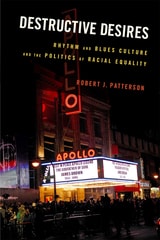
cover of Destructive Desires: Rhythm and Blues Culture and the Politics of Racial Equality

Destructive Desires

Rhythm and Blues Culture and the Politics of Racial Equality

Robert J. Patterson

Rutgers University Press, 2019

Despite rhythm and blues culture’s undeniable role in molding, reflecting, and reshaping black cultural production, consciousness, and politics, it has yet to receive the serious scholarly examination it deserves. Destructive Desires corrects this omission by analyzing how post-Civil Rights era rhythm and blues culture articulates competing and conflicting political, social, familial, and economic desires within and for African American communities. As an important form of black cultural production, rhythm and blues music helps us to understand black political and cultural desires and longings in light of neo-liberalism’s increased codification in America’s racial politics and policies since the 1970s. Robert J. Patterson provides a thorough analysis of four artists—Kenneth “Babyface” Edmonds, Adina Howard, Whitney Houston, and Toni Braxton—to examine black cultural longings by demonstrating how our reading of specific moments in their lives, careers, and performances serve as metacommentaries for broader issues in black culture and politics.
[more]
cover of English Pronunciation: Excercises in Sound Segments, Intonation, and Rhythm

English Pronunciation

Excercises in Sound Segments, Intonation, and Rhythm

Robert Lado and Charles C. Fries

University of Michigan Press, 1954
English Pronunciation: Exercises in Sound Segments, Intonation, and Rhythm, authored by Robert Lado, Charles C. Fries, and the Staff of the English Language Institute, is a comprehensive guide for mastering the intricacies of English pronunciation. This book is designed to improve the learner's ability to recognize and produce the sounds of English through a series of well-structured lessons and practical exercises. Starting with an introductory lesson designed to familiarize students with the phonemic alphabet and intonation markings, the book then progresses through a series of lessons that address both vowel and consonant contrasts, intonation patterns, rhythm, and stress. Each lesson includes drills for both recognition and production, emphasizing the importance of practice in achieving accurate pronunciation. The material is particularly focused on the needs of Spanish-speaking learners, with numerous aids and detailed articulatory descriptions to facilitate learning. Teachers will find tips on classroom atmosphere, individual differences, and specific teaching techniques that ensure effective learning. The latter part of the book continues to refine pronunciation skills, introducing more complex consonant clusters and combinations and providing supplementary information on English pronunciation irregularities and dialectal variations. By the end of the book, students are expected to have a solid grasp of English sound segments, intonation, and rhythm, enabling them to speak accurately and fluently.
[more]
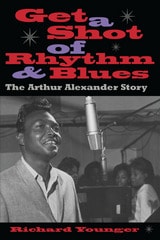
cover of Get a Shot of Rhythm and Blues: The Arthur Alexander Story

Get a Shot of Rhythm and Blues

The Arthur Alexander Story

Richard Younger

University of Alabama Press, 2000

The first book-length biography of an influential country/soul legend whose songs have been recorded by the Beatles, the Rolling Stones, and Bob Dylan.

Get a Shot of Rhythm and Blues chronicles the rise, fall, and rebirth of Arthur Alexander, an African American singer-songwriter whose music influenced many of the rock and soul musicians of the 1960s. Although his name is not well known today, Alexander's musical legacy is vast. His 1962 song "You Better Move On" was the first hit to emerge from the fledgling Muscle Shoals FAME studio in Alabama, and his fusion of country and soul and his heartfelt vocals on such songs as "Anna (Go to Him)" and "Every Day I Have to Cry" were revered by musicians including the Beatles, the Rolling Stones, and Bob Dylan, all of whom recorded his songs.

Alexander's story is a tragic one, with a brief, redemptive finale. His meteoric rise after the release of "You Better Move On" gave way to lean years caused both by his drug and alcohol abuse and by the mishandling of his career by producers and managers. In 1977, he quit the music business, but his music lived on. In 1992, Alexander returned to
the studio and recorded the critically praised album Lonely Just Like Me. Just three months after the album's release in March 1993, he suffered a heart attack in the offices of his music publisher in Nashville and died three days later.

In telling Alexander's story, Richard Younger captures the burgeoning music scenes in Muscle Shoals and Nashville during the 1960s and 1970s and recovers the life of a fascinating musician whose influence was international. Younger's account is enriched by his interviews with more than 200 artists, family members, and friends--such as Rick Hall, Billy Sherrill, Charlie McCoy, Chuck Jackson, Gerry Marsden, and Kris Kristofferson--and includes an abundance of never-before-seen photographs.
[more]
cover of Meaninglessness: Time, Rhythm, and the Undead in Postcolonial Cinema

Meaninglessness

Time, Rhythm, and the Undead in Postcolonial Cinema

Vlad Dima

Michigan State University Press, 2023
For too long, the approach to seemingly universal experiences like love, death, and even time in film has been dominated by the Global North. But what if such explorations developed horizontally instead? Drawing from both European and African cultural theorists, including Gilles Deleuze and Wole Soyinka, Vlad Dima invites us to consider what happens to postcolonial African film if we no longer privilege the idea of time. How else might we understand the cinematic image, and how would its meanings change? Meaninglessness: Time, Rhythm, and the Undead in Postcolonial Cinema is a study of meaning and meaninglessness through the figure of the undead, beginning with francophone Africa and extending to postcolonial France. Through the analysis of films like Mati Diop’s Atlantics and Jean-Pierre Bekolo’s Miraculous Weapons, Dima shows how the African cinematic image may produce meaning without any attachment to European time, and how that meaning is connected instead to the philosophy of negritude and to the notion of rhythm. Meaninglessness introduces the concept of the rhythm-sequence as a new way to understand the African moving image.
[more]
cover of Meter Matters: Verse Cultures of the Long Nineteenth Century

Meter Matters

Verse Cultures of the Long Nineteenth Century

Jason David Hall

Ohio University Press, 2011

Across the nineteenth century, meter mattered—in more ways and to more people than we might well appreciate today. For the period’s poets, metrical matters were a source of inspiration and often vehement debate. And the many readers, teachers, and pupils encountered meter and related topics in both institutional and popular forms.

The ten essays in Meter Matters showcase the range of metrical practice of poets from Wordsworth and Byron to Hopkins, Swinburne, and Tennyson; at the same time, the contributors bring into focus some of the metrical theorizing that shaped poetic thinking and responses to it throughout the nineteenth century. Paying close attention to the historical contours of Romantic and Victorian meters, as well as to the minute workings of the verse line, Meter Matters presents a fresh perspective on a subject that figured significantly in the century’s literature, and in its culture.
[more]
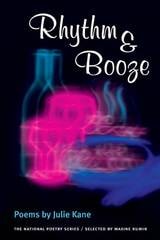
cover of Rhythm & Booze: POEMS

Rhythm & Booze

POEMS

Julie Kane

University of Illinois Press, 2003

Arranged in four parts--each associated with a particular Louisiana city--the poems in Rhythm & Booze trace the hardships and uncertainties, as well as the moments of unexpected sublimity, of a life lived in a continuous struggle between fresh starts and destructive old patterns.
 
Mirroring the music of New Orleans, Kane's poems combine traditional form with improvisational flourishes. Rhythm & Booze charts her progress as she undertakes a number of journeys, from youth to experience, from blues bars to college classrooms, from city to country, from chaos to something approaching peace.
 
[more]
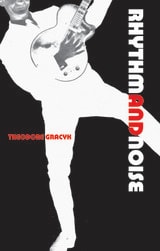
cover of Rhythm and Noise: An Aesthetics of Rock

Rhythm and Noise

An Aesthetics of Rock

Theodore Gracyk

Duke University Press, 1996

You know it when you hear it, but can you say what it is? How you know? Why you either love or loathe it? What makes it original or derivative? To a music that tends to render its aficionados and detractors equally inarticulate, Theodore Gracyk brings a rare critical clarity. His book tells us once and for all what makes rock music rock. A happy marriage of aesthetic theory and the aesthetic practice that moved a generation, Rhythm and Noise is the only thorough-going account of rock as a distinct artistic medium rather than a species of popular culture.
What’s in a name? “Rock” or “Rock ’n’ Roll?” Grayck argues that rock and roll is actually a performance style, one in a number of musical styles comprising rock. What distinguishes rock, Gracyk tells us, is how it is mediated by technology: The art is in the recording. The lesson is a heady one, entailing a tour through the history of rock music from Elvis Presley’s first recordings in 1954 to Kurt Cobain’s suicide in 1994. Gracyk takes us through key recordings, lets us hear what rock musicians and their critics have to say, shows us how other kinds of music compare, and gives us the philosophical background to make more than passing sense of the medium. His work takes up the common myths and stereotypes about rock, popular and academic, and focuses on the features of the music that electrify fans and consistently generate controversy. When Elvis came to town, did southern sheriffs say that rock was barbaric and addictive? Well so did Theodor Adorno, in his way, and Allan Bloom, in his, and Gracyk takes aim at this charge as it echoes through the era of recorded music. He looks at what rock has to do with romanticism and, even more, with commercialism. And he questions the orthodoxy of making grand distinctions between “serious” and “popular” art.
Keenly attuned to the nuances of music and of all the ways that we can think about it, this exhilarating book tunes us in, as no other has, to the complex role of rock in American culture.
[more]
cover of Rhythm: Form and Dispossession

Rhythm

Form and Dispossession

Vincent Barletta

University of Chicago Press, 2020

More than the persistent beat of a song or the structural frame of poetry, rhythm is a deeply imbedded force that drives our world and is also a central component of the condition of human existence. It’s the pulse of the body, a power that orders matter, a strange and natural force that flows through us. Virginia Woolf describes it as a “wave in the mind” that carries us, something we can no more escape than we could stop our hearts from beating.

Vincent Barletta explores rhythm through three historical moments, each addressing it as a phenomenon that transcends poetry, aesthetics, and even temporality. He reveals rhythm to be a power that holds us in place, dispossesses us, and shapes the foundations of our world. In these moments, Barletta encounters rhythm as a primordial and physical binding force that establishes order and form in the ancient world, as the anatomy of lived experience in early modern Europe, and as a subject of aesthetic and ethical questioning in the twentieth century.

A wide-ranging book covering a period spanning two millennia and texts from over ten languages, Rhythm will expand the conversation around this complex and powerful phenomenon.
 
[more]
cover of Rhythmic Gesture in Mozart: Le Nozze di Figaro and Don Giovanni

Rhythmic Gesture in Mozart

Le Nozze di Figaro and Don Giovanni

Wye Jamison Allanbrook

University of Chicago Press, 1984
Wye Jamison Allanbrook’s widely influential Rhythmic Gesture in Mozart challenges the view that Wolfgang Amadeus Mozart’s music was a “pure play” of key and theme, more abstract than that of his predecessors. Allanbrook’s innovative work shows that Mozart used a vocabulary of symbolic gestures and musical rhythms to reveal the nature of his characters and their interrelations. The dance rhythms and meters that pervade his operas conveyed very specific meanings to the audiences of the day.
[more]
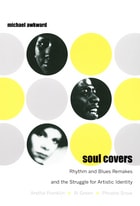
cover of Soul Covers: Rhythm and Blues Remakes and the Struggle for Artistic Identity (Aretha Franklin, Al Green, Phoebe Snow)

Soul Covers

Rhythm and Blues Remakes and the Struggle for Artistic Identity (Aretha Franklin, Al Green, Phoebe Snow)

Michael Awkward

Duke University Press, 2007

Soul Covers is an engaging look at how three very different rhythm and blues performers—Aretha Franklin, Al Green, and Phoebe Snow—used cover songs to negotiate questions of artistic, racial, and personal authenticity. Through close readings of song lyrics and the performers’ statements about their lives and work, the literary critic Michael Awkward traces how Franklin, Green, and Snow crafted their own musical identities partly by taking up songs associated with artists such as Dinah Washington, Hank Williams, Willie Nelson, George Gershwin, Billie Holiday, and the Supremes.

Awkward sees Franklin’s early album Unforgettable: A Tribute to Dinah Washington, released shortly after Washington’s death in 1964, as an attempt by a struggling young singer to replace her idol as the acknowledged queen of the black female vocal tradition. He contends that Green’s album Call Me (1973) reveals the performer’s attempt to achieve formal coherence by uniting seemingly irreconcilable aspects of his personal history, including his career in popular music and his religious yearnings, as well as his sense of himself as both a cosmopolitan black artist and a forlorn country boy. Turning to Snow’s album Second Childhood (1976), Awkward suggests that through covers of blues and soul songs, Snow, a white Jewish woman from New York, explored what it means for non-black enthusiasts to perform works considered by many to be black cultural productions. The only book-length examination of the role of remakes in American popular music, Soul Covers is itself a refreshing new take on the lives and work of three established soul artists.
[more]
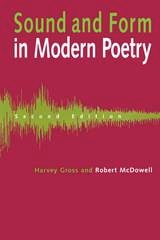
cover of Sound and Form in Modern Poetry: Second Edition

Sound and Form in Modern Poetry

Second Edition

Harvey Gross and Robert McDowell

University of Michigan Press, 1996

Why are poems important? What do people mean when they use the word prosody? How does a poem read and sound? How does a poem's shape--its form--help to create its meaning? Sound and Form in Modern Poetry provides useful answers to these questions for readers of poetry. Through careful attention to the poems of modern masters, the book offers an accessible guide to the way today's poems really work, and to the way they are linked in style to poems of earlier times.
Poet, critic, and editor Robert McDowell has updated this classic text in the light of the poetic and critical developments of the last three decades. Segments on Dickinson, Robinson, Frost, Jeffers, and Lowell, among other poets, have been greatly expanded, and Ashbery, Creeley, Ginsberg, Hall, Kees, Kumin, Levertov, Levine, O'Hara, Plath, Rich, Simpson, and Wilbur added, among others. The epilogue discusses a new generation of poets whose works will likely be read well into the next century-- among others, Thomas M. Disch, Rita Dove, Dana Gioia, Emily Grosholz, Mark Jarman, Molly Peacock, Gjertrud Schnackenberg, Timothy Steele, Mary Swander, and Marilyn Nelson Waniek.
Over the last ten years, the most inspiring topic of conversation and argument among poets and their readers has been the resurgence of narrative and traditional forms. The new Sound and Form in Modern Poetry is a seminal text in this discussion, examining not only this movement but all of the important developments (Dadaism, Surrealism, Imagism, Language Poetry, and the Confessional School) that have defined our poetry in the twentieth century and have set the stage for poetry's continued life in the twenty-first. The original Sound and Form in Modern Poetry enjoyed extensive classroom use as a text; the revised version promises to be even more accessible, and more essential, for years to come.
The late Harvey Gross was Professor of Comparative Literature, State University of New York at Stony Brook.
Robert McDowell is publisher and editor of Story Line Press, and is also poet, critic, translator, fiction writer, and essayist.
[more]
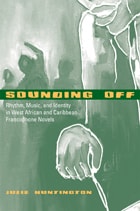
cover of Sounding Off: Rhythm, Music, and Identity in West African and Caribbean Francophone Novels

Sounding Off

Rhythm, Music, and Identity in West African and Caribbean Francophone Novels

Julie Huntington

Temple University Press, 2009

Intrigued by "texted" sonorities—the rhythms, musics, ordinary noises, and sounds of language in narratives—Julie Huntington examines the soundscapes in contemporary Francophone novels such as Ousmane Sembene's God's Bits of Wood (Senegal), and Patrick Chamoiseau's Solibo Magnificent (Martinique). Through an ethnomusicological perspective, Huntington argues in Sounding Off that the range of sounds —footsteps, heartbeats, drumbeats—represented in West African and Caribbean works provides a rhythmic polyphony that creates spaces for configuring social and cultural identities.

Huntington’s analysis shows how these writers and others challenge the aesthetic and political conventions that privilege written texts over orality and invite readers-listeners to participate in critical dialogues—to sound off, as it were, in local and global communities.

[more]
cover of Technology's Pulse: Essays on Rhythm in German Modernism

Technology's Pulse

Essays on Rhythm in German Modernism

Michael Cowan

University of London Press, 2011
, in particular, witnessed numerous efforts to define, discipline or 'liberate' temporal experience. Within this broader framework of thinking about temporality, 'rhythm' came to form the object of an intense and widespread preoccupation. Rhythmical research played a central role not only in the reconceptualisation of human physiology and labour in the late nineteenth century, but also in the emergence of a new leisure culture in the early twentieth. The book traces the ways in which notions of 'rhythm' were mobilised both to conceptualise modernity (narrate its origins and prescribe its directions) and, in particular, to forge a new understanding of temporal media that came to mark the mass-mediated experience of the 1920s: a conception of artistic media as mediators between the organic and the rational, the time of the body and that of the machine. Michael Cowan is Associate Professor of German and World Cinemas at McGill University. He is the author of Cult of the Will: Nervousness and German Modernity (2008), as well as several articles and collections on German literature, film, media and cultural history.
[more]
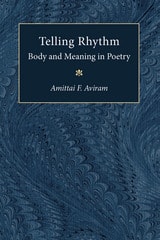
cover of Telling Rhythm: Body and Meaning in Poetry

Telling Rhythm

Body and Meaning in Poetry

Amittai Aviram

University of Michigan Press, 1994
In an era when poetry as a cultural force in the West appears to be waning, Telling Rhythm presents a hopeful and invigorating new approach to reading and interpreting poetry. At the same time, the book reviews a tradition of theorizing about poetry and suggests some innovations in literary theory itself that point to new ways of thinking about poetic texts.
[more]
cover of The Muse is Music: Jazz Poetry from the Harlem Renaissance to Spoken Word

The Muse is Music

Jazz Poetry from the Harlem Renaissance to Spoken Word

Meta DuEwa Jones

University of Illinois Press, 2013

 This wide-ranging, ambitiously interdisciplinary study traces jazz's influence on African American poetry from the Harlem Renaissance to contemporary spoken word poetry. Examining established poets such as Langston Hughes, Ntozake Shange, and Nathaniel Mackey as well as a generation of up-and-coming contemporary writers and performers, Meta DuEwa Jones highlights the intersections of race, gender, and sexuality within the jazz tradition and its representation in poetry. Applying prosodic analysis to emphasize the musicality of African American poetic performance, she examines the gendered meanings evident in collaborative performances and in the criticism, images, and sounds circulating within jazz cultures.
Jones also considers poets who participated in contemporary venues for black writing such as the Dark Room Collective and the Cave Canem Foundation, including Harryette Mullen, Elizabeth Alexander, and Carl Phillips. Incorporating a finely honed discussion of the Black Arts Movement, the poetry-jazz fusion of the late 1950s, and slam and spoken word performance milieus such as Def Poetry Jam, she focuses on jazz and hip hop-influenced performance artists including Tracie Morris, Saul Williams, and Jessica Care Moore.
 
Through attention to cadence, rhythm, and structure, The Muse is Music fills a gap in literary scholarship by attending to issues of gender in jazz and poetry and by analyzing recordings of poets both with and without musical accompaniment. Applying the methodology of textual close reading to a critical "close listening" of American poetry's resonant soundscape, Jones's analyses include exploring the formal innovation and queer performance of Langston Hughes's recorded collaboration with jazz musicians, delineating the relationship between punctuation and performance in the post-soul John Coltrane poem, and closely examining jazz improvisation and hip-hop stylization. An elaborate articulation of the connections between jazz, poetry and spoken word, and gender, The Muse Is Music offers valuable criticism of specific texts and performances and a convincing argument about the shape of jazz and African-American poetic performance in the contemporary era.
[more]
cover of The Rhythm of Images: Cinema beyond Measure

The Rhythm of Images

Cinema beyond Measure

Domietta Torlasco

University of Minnesota Press, 2021

A rigorous and imaginative inquiry into rhythm’s vital importance for film and the moving image

Focusing attention on a concept much neglected in the study of film, The Rhythm of Images opens new possibilities for thinking about expanded perception and idiosyncratic modes of being. Author Domietta Torlasco engages with both philosophy and cinema to elaborate a notion of rhythm in its pre-Socratic sense as a “manner of flowing”—a fugitive mode that privileges contingency and calls up the forgotten fluidity of forms. In asking what it would mean to take this rhythm as an ontological force in its own right, she creatively draws on thinkers such as Giorgio Agamben, Roland Barthes, Gilles Deleuze, and Luce Irigaray. Rhythm emerges here as a form that eludes measure, a key to redefining the relation between the aesthetic and the political, and thus a pivotal means of resistance to power.

Working with constellations of films and videos by international artists—from Michelangelo Antonioni, Jean-Luc Godard, and David Lynch to Harun Farocki and Victor Burgin, among others—Torlasco brings to bear on them her distinctive concept of rhythm with respect to four interrelated domains: life, labor, memory, and medium. With innovative readings of artworks and critical texts alike, The Rhythm of Images fashions a vibrant, provocative theory of rhythm as the excess or potential of perception. 

Ultimately, the book reconceives the relation between rhythm and the world-making power of images. The result is a vision of cinema as a hybrid medium endowed with the capacity not only to reinvent corporeal boundaries but also to find new ways of living together.
[more]
cover of The Rhythm of Thought: Art, Literature, and Music after Merleau-Ponty

The Rhythm of Thought

Art, Literature, and Music after Merleau-Ponty

Jessica Wiskus

University of Chicago Press, 2013

Between present and past, visible and invisible, and sensation and idea, there is resonance—so philosopher Maurice Merleau-Ponty argued and so Jessica Wiskus explores in The Rhythm of Thought. Holding the poetry of Stéphane Mallarmé, the paintings of Paul Cézanne, the prose of Marcel Proust, and the music of Claude Debussy under Merleau-Ponty’s phenomenological light, she offers innovative interpretations of some of these artists’ masterworks, in turn articulating a new perspective on Merleau-Ponty’s philosophy.
 
More than merely recovering Merleau-Ponty’s thought, Wiskus thinks according to it. First examining these artists in relation to noncoincidence—as silence in poetry, depth in painting, memory in literature, and rhythm in music—she moves through an array of their artworks toward some of Merleau-Ponty’s most exciting themes: our bodily relationship to the world and the dynamic process of expression. She closes with an examination of synesthesia as an intertwining of internal and external realms and a call, finally, for philosophical inquiry as a mode of artistic expression. Structured like a piece of music itself, The Rhythm of Thought offers new contexts in which to approach art, philosophy, and the resonance between them.
[more]