Results by title
5 books match the query 'Riding'

Hope, Hype and VoIP
Riding the Library Technology CycleChar American Library Association
American Library Association, 2010
Riding
Pardis Mahdavi
Duke University Press, 2025
Riding on Comets
A MemoirCat Pleska
West Virginia University Press, 2015
Riding on Comets is the true story of an only child growing up in a working-class family during the 1950s and ‘60s.
As the family storyteller, Cat Pleska whispers and shouts about her life growing up around savvy, strong women and hard-working, hard-drinking men. Unlike many family stories set within Appalachia, this story provides an uncommon glimpse into this region: not coal, but an aluminum plant; not hollers, but small-town America; not hillbillies, but a hard-working family with traditional values.
From the dinner table, to the back porch, to the sprawling countryside, Cat Pleska reveals the sometimes tender, sometimes frightening education of a child who listens at the knees of these giants. She mimics and learns every nuance, every rhythm—how they laugh, smoke, cuss, fight, love, and tell stories—as she unwittingly prepares to carry their tales forward, their words and actions forever etched in her mind. And finally, she discovers a life story of her own.
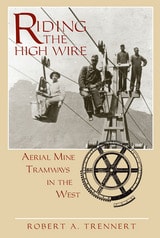
Riding the High Wire
Aerial Mine Tramways in the WestRobert A. Trennert
University Press of Colorado, 2001
Aerial mine tramways proved to have a special fascination; people often rode them for a thrill, sometimes with disastrous results. They were also very temperamental, needed constant attention, and were prone to accidents. The years between 1900 and 1920 saw the operation of some of the west's most spectacular tramways, but the decline in high-country mining beginning in the 1920s--coupled with the development of more efficient means of transportation--made this technology all but obsolete by the end of the Second World War.
Historians and the general reader will be equally enthralled by Trennert's fascinating story of the rise and fall of aerial mine tramways.
"Professor Trennert has explored a new area of mining history, and is to be commended for his pioneering work." --Liston Leyendecker, author of The Griffith Family and the Founding of Georgetown.
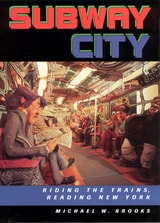
Subway City
Riding the Trains, Reading New YorkBrooks, Michael
Rutgers University Press, 1997
None of the world's great cities is as closely identified with its subway as New York. Its trains provide much more than just rapid transit. They give New Yorkers a powerful symbol of their metropolis, one that they use to express both their hopes and their fears for the urban future.
Subway City explores New York's transit system as both fact and metaphor. Brooks traces the development of the subway from its inception as the newest and most efficient public transportation system to its decline as an overcrowded and dangerous part of city life. The crowded cars gave Harold Lloyd material for comedy, fueled William Randolph Hearst's crusade against the Traction Trust, and convinced Lewis Mumford that the subway was a futile effort to solve the city's problems. Brooks explores films which have dramatized the dangers lurking below ground, and examines the infamous Bernhard Goetz shooting that made the subway a symbol of urban decay. More hopefully, he describes the Metropolitan Transportation Authority's station improvements and ambitious programs for Music Underground, Poetry in Transit, and Arts-in-Transit, as keys to the city's renewal.