Results by title

8 books match the query 'Right and left (Political science) in literature'
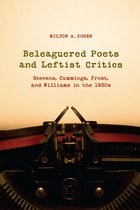
cover of Beleaguered Poets and Leftist Critics: Stevens, Cummings, Frost, and Williams in the 1930s

Beleaguered Poets and Leftist Critics

Stevens, Cummings, Frost, and Williams in the 1930s

Milton A. Cohen

University of Alabama Press, 2011

A critical examination of modernist poetry and the demands of leftist literary theory.

Different as they were as poets, Wallace Stevens, E. E. Cummings, Robert Frost, and William Carlos Williams grappled with the highly charged literary politics of the 1930s in comparable ways. As other writers moved sharply to the Left, and as leftist critics promulgated a proletarian aesthetics, these modernist poets keenly felt the pressure of the times and politicized literary scene. All four poets saw their reputations critically challenged in these years and felt compelled to respond to the new politics, literary and national, in distinct ways, ranging from rejection to involvement.

Beleaguered Poets and Leftist Critics closely examines the dynamics of these responses: what these four poets wrote—in letters, essays, lectures, fiction (for Williams), and most importantly, in their poems; what they believed politically and aesthetically; how critics, particularly leftist critics, reviewed their work; how these poets reacted to that criticism and to the broader milieu of leftism. Each poet’s response and its subsequent impact on his poetic output is a unique case study of the conflicting demands of art and politics in a time of great social change. 
 

[more]
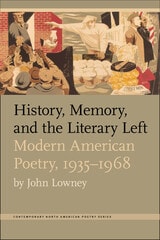
cover of History, Memory, and the Literary Left: Modern American Poetry, 1935-1968

History, Memory, and the Literary Left

Modern American Poetry, 1935-1968

John Lowney

University of Iowa Press, 2006
In this nuanced revisionist history of modern American poetry, John Lowney investigates the Depression era’s impact on late modernist American poetry from the socioeconomic crisis of the 1930s through the emergence of the new social movements of the 1960s. Informed by an ongoing scholarly reconsideration of 1930s American culture and concentrating on Left writers whose historical consciousness was profoundly shaped by the Depression, World War II, and the Cold War, Lowney articulates the Left’s challenges to national collective memory and redefines the importance of late modernism in American literary history. The late modernist writers Lowney studies most closely---Muriel Rukeyser, Elizabeth Bishop, Langston Hughes, Gwendolyn Brooks, Thomas McGrath, and George Oppen---are not all customarily associated with the 1930s, nor are they commonly seen as literary peers. By examining these late modernist writers comparatively, Lowney foregrounds differences of gender and sexuality, race and ethnicity, and social class and region while emphasizing how each writer developed poetic forms that responded to the cultural politics and socioaesthetic debates of the 1930s. In so doing he calls into question the boundaries that have limited the scholarly dialogue about modern poetry.No other study of American poetry has considered the particular gathering of careers that Lowney considers. As poets whose collective historical consciousness was profoundly shaped by the turmoil of the Depression and war years and the Cold War’s repression or rewriting of history, their diverse talents represent a distinct generational impact on U.S. and international literary history.
[more]
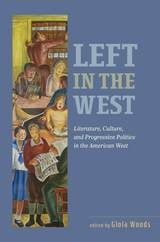
cover of Left in the West: Literature, Culture, and Progressive Politics in the American West

Left in the West

Literature, Culture, and Progressive Politics in the American West

Gioia Woods

University of Nevada Press, 2018

In this edited collection, Gioia Woods and her contributors bring together histories, biographies, close readings, and theories about the literary and cultural Left in the American West—as it is distinct from the more often-theorized literary left in major eastern metropolitan centers. Left in the West expands our understanding of what constitutes the literary left in the U.S. by including writers, artists, and movements not typically considered within the traditional context of the literary left. In doing so, it provides a new understanding of the region’s place among global and political ideologies.

From the early 19th century to the present, a remarkably complex and varied body of literary and cultural production has emerged out of progressive social movements. While the literary left in the West shared many interests with other regional expressions—labor, class, anti-fascism, and anti-imperialism, the influence of Manifest Destiny—the distinct history of settler colonialism in western territories caused western leftists to develop concerns unique to the region. 

Chapters in the volume provide an impressive range of analysis, covering artists and movements from suffragist writers to bohemian Californian photographers, from civil rights activists to popular folk musicians, from Latinx memoirists to Native American experimental writers, to name just a few.

The unique consideration of the West as a socio-political region establishes a framework for political critique that moves beyond class consequences, anti-fascism, and civil liberties, and into distinct Western concerns such as Native American sovereignty, environmental exploitation, and the legacies of settler colonialism. What emerges is a deeper understanding of the region and its unique people, places, and concerns.
[more]
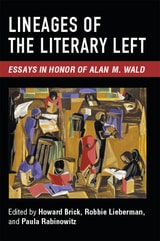
cover of Lineages of the Literary Left: Essays in Honor of Alan M. Wald

Lineages of the Literary Left

Essays in Honor of Alan M. Wald

Howard Brick, Robbie Lieberman, and Paula Rabinowitz, Editors

Michigan Publishing Services, 2015
For nearly half a century, Alan M. Wald’s pathbreaking research has demonstrated that attention to the complex lived experiences of writers on the Left provides a new context for viewing major achievements as well as instructive minor ones in United States fiction, poetry, drama, and criticism. The essays in this volume in honor of Alan M. Wald investigate aspects of intellectual, literary, and cultural movements and figures associated with left-wing politics beginning in the early twentieth century and continuing into our own time. Intimately linked with social struggle, the thinkers and actors analyzed in these diverse essays can be collectively understood to form the intertwined lineages of the Literary Left.
[more]
cover of Materializing Imaginaries in Senegal: Modern African Literature and Global 1968

Materializing Imaginaries in Senegal

Modern African Literature and Global 1968

Fatoumata Seck

Duke University Press, 2026
In Materializing Imaginaries in Senegal, Fatoumata Seck shows how cultural revolutionary projects in Senegal and beyond in the 1960s shaped African literature, cinema, and intellectual thought throughout the latter half of the twentieth century. She charts an intellectual and literary history that positions Global 1968 as a defining moment in modern African literature, analyzing the literature of this period through the prism of creative dissidence, revolutionary fervor, and cultural experimentation. Seck examines the role of African students and intellectuals in forging a decolonizing aesthetics underpinned by the Pan-African and internationalist solidarities of the 1960s. She traces the presence of these revolutionary projects in African letters, illuminating how revolutionary imaginaries sediment and remain as latent possibilities, while also reframing the emergence and reception of works by figures such as Léopold Sédar Senghor, Cheikh Anta Diop, David Mandessi Diop, Aminata Sow Fall, Ousmane Sembène, Awa Thiam, Djibril Diop Mambéty, Ken Bugul, Boubacar Boris Diop, and others. In so doing, Seck demonstrates that unfulfilled revolutions do not prevent the materialization of revolutionary imaginaries.
[more]
cover of Raising Your Kids Right: Children's Literature and American Political Conservatism

Raising Your Kids Right

Children's Literature and American Political Conservatism

Abate, Michelle Ann

Rutgers University Press, 2011

Dr. Seuss's classic character the Lorax has delighted children for decades while passing along a powerful message about environmental responsibility. The book's young readers, and their parents, would likely be surprised by the emergence of a new character, Truax, a kindly logger created by a longtime employee of the wood products industry, who, not surprisingly, has a far different viewpoint to share. Yet the Truax character, and the book of the same name, is just one example of a growing genre of conservative-themed narratives for young readers spawned by the continuing strength of the American political right.

Highlighting the works of William Bennett, Lynne Cheney, Bill O'Reilly, and others, Michelle Ann Abate brings together such diverse fields as cultural studies, literary criticism, political science, childhood studies, brand marketing, and the cult of celebrity. Raising Your Kids Right dispels lingering societal attitudes that narratives for young readers are unworthy of serious political study by examining a variety of texts that offer information, ideology, and even instructions on how to raise kids right, not just figuratively but politically.
[more]
cover of The Novel and the American Left: Critical Essays on Depression-Era Fiction

The Novel and the American Left

Critical Essays on Depression-Era Fiction

Janet Galligani Casey

University of Iowa Press, 2004


The first collection of critical essays to focus specifically on the fiction produced by American novelists of the Depression era, The Novel and the American Left contributes substantially to the newly emerging emphasis on twentieth-century American literary radicalism. Recent studies have recovered this body of work and redefined in historical and theoretical terms its vibrant contribution to American letters. Casey consolidates and expands this field of study by providing a more specific consideration of individual novels and novelists, many of which are reaching new contemporary audiences through reprints.

The Novel and the American Left focuses exclusively on left-leaning fiction of the Depression era, lending visibility and increased critical validity to these works and showing the various ways in which they contributed not only to theorizations of the Left but also to debates about the content and form of American fiction. In theoretical terms, the collection as a whole contributes to the larger reconceptualization of American modernity currently under way. More pragmatically, individual essays suggest specific authors, texts, and approaches to teachers and scholars seeking to broaden and/or complicate more traditional “American modernism” syllabi and research agendas.

The selected essays take up, among others, such “hard-core"” leftist writers as Mike Gold and Myra Page, who were associated with the Communist Party; the popular novels of James M. Cain and Kenneth Fearing, whose works were made into successful films; and critically acclaimed but nonetheless “lost” novelists such as Josephine Johnson, whose Now in November (Pulitzer Prize, 1936) anticipates and complicates the more popular agrarian mythos of Steinbeck’s The Grapes of Wrath.

This volume will be of interest not only to literary specialists but also to historians, social scientists, and those interested in American cultural studies.
[more]
cover of The Pull of Politics: Steinbeck, Wright, Hemingway, and the Left in the Late 1930s

The Pull of Politics

Steinbeck, Wright, Hemingway, and the Left in the Late 1930s

Milton A. Cohen

University of Missouri Press, 2018

In the late 1930s, John Steinbeck, Richard Wright, and Ernest Hemingway wrote novels that won critical acclaim and popular success: The Grapes of Wrath, Native Son, and For Whom the Bell Tolls. All three writers were involved with the Left at the time, and that commitment informed their fiction. Milton Cohen examines their motives for involvement with the Left; their novels’ political themes; and why they separated from the Left after the novels were published. These writers were deeply conflicted about their political commitments, and Cohen explores the tensions that arose between politics and art, resulting in the abandonment of a political attachment.
[more]