Results by title
12 books match the query 'Risk-taking (Psychology)'
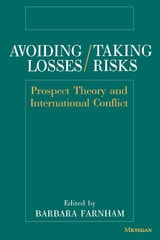
Avoiding Losses/Taking Risks
Prospect Theory and International ConflictBarbara Farnham, Editor
University of Michigan Press, 1995
This volume is a comprehensive examination of the benefits and potential pitfalls of employing prospect theory---a leading alternative to expected utility as a theory of decision under risk---to understand and explain political behavior. The collection brings together both theoretical and empirical studies, thus grounding the conclusions about prospect theory's potential for enriching political analyses in an assessment of its performance in explaining actual cases.
The theoretical chapters provide an overview of the main hypotheses of prospect theory: people frame risk-taking decisions around a reference point, they tend to accept greater risk to prevent losses than to make gains, and they often perceive the devastation of a loss as greater than the benefit of a gain. The three case studies---Roosevelt's decision-making during the Munich crisis of 1938, Carter's April 1980 decision to rescue the American hostages in Iran, and Soviet behavior toward Syria in 1966-67---generally support these hypotheses. Nevertheless, the authors are frank about potentially difficult conceptual and methodological problems, making explicit reference to alternative explanations, such as the rational actor model, which posits the maximization of expected value.
Contributors to the volume include Jack Levy, Robert Jervis, Barbara Farnham, Rose McDermott, Audrey McInerney, and Eldar Shafir.
Betting on Ideas
Wars, Invention, InflationReuven Brenner
University of Chicago Press, 1986
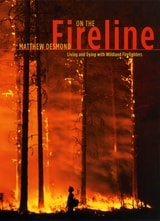
On the Fireline
Living and Dying with Wildland FirefightersMatthew Desmond
University of Chicago Press, 2007
A classic early work by the author of Evicted, a close-up look at the lives of wildland firefighters
In this rugged account of a rugged profession, Matthew Desmond explores the heart and soul of the wildland firefighter. Having joined a firecrew in Northern Arizona as a young man, Desmond relates his experiences with intimate knowledge and native ease, adroitly balancing emotion with analysis and action with insight. On the Fireline shows that these firefighters aren’t the adrenaline junkies or romantic heroes as they’re so often portrayed.
An immersion into a dangerous world, On the Fireline is also a sophisticated analysis of a high-risk profession—and a captivating read.
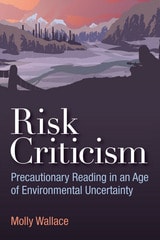
Risk Criticism
Precautionary Reading in an Age of Environmental UncertaintyMolly Wallace
University of Michigan Press, 2016
Taking inspiration from the questions raised by the Bulletin’s synecdochical “nuclear,” Risk Criticism aims to generate a hybrid form of critical practice that brings “nuclear criticism” into conversation with ecocriticism. Through readings of novels, films, theater, poetry, visual art, websites, news reports, and essays, Risk Criticism tracks the diverse ways in which environmental risks are understood and represented today.
Risk Taking
A Managerial PerspectiveZur Shapira
Russell Sage Foundation, 1995
Risk, Courage, and Women
Contemporary Voices in Prose and PoetryKaren A. Waldron
University of North Texas Press, 2007
Risk-Taking in International Politics
Prospect Theory in American Foreign PolicyRose McDermott
University of Michigan Press, 1998
Risk plays a dramatic role in international relations as leaders make decisions about such issues as war and peace, disarmament, and about lowering economic barriers to trade and investment. How a country's leaders think about risk in making foreign policy decisions is important in understanding why and how they make decisions. Rose McDermott applies prospect theory, a theory developed by psychologists to understand decisionmaking under conditions of risk, to four cases in American foreign policy. Prospect theory suggests that decisionmakers who are confronting losses are more likely to take risks than are those decisionmakers who are satisfied with the status quo. The cases used to demonstrate this dynamic include: the Suez Crisis, the U-2 affair, the decisions surrounding the admission of the Shah of Iran to the United States in 1979, and the attempted rescue of the American hostages in Iran in 1980. McDermott shows how prospect theory enables us to understand cases that are otherwise inexplicable. Risk Taking in International Relations offers a unique application of a sophisticated psychological model to international relations theory. The book will be of interest to political scientists and psychologists interested in decision making, in international relations and in American foreign policy.

Risky Business
Taking and Managing Risks in Library Services for TeensLinda W. American Library Association
American Library Association, 2010
Risky Writing
Self-Disclosure and Self-Transformation in the ClassroomJeffrey Berman
University of Massachusetts Press, 2001
This is the final volume in a trilogy of works that examine the impact of writing and reading about traumatic subjects. Diaries to an English Professor (1994) explores the ways in which undergraduate students use psychoanalytic diaries to probe conflicted issues in their lives. Surviving Literary Suicide (1999) investigates how graduate students respond to suicidal literature—novels and poems that portray and sometimes glorify self-inflicted death.
In Risky Writing, Jeffrey Berman builds on those earlier studies, describing ways teachers can encourage college students to write safely on a wide range of subjects often deemed too personal or too dangerous for the classroom: grieving the loss of a beloved relative or friend, falling into depression, coping with the breakup of one's family, confronting sexual abuse, depicting a drug or alcohol problem, encountering racial prejudice. Berman points out that nearly everyone has difficulty talking or writing about such issues because they arouse shame and tend to be enshrouded in secrecy and silence. This is especially true for college students, who are just emerging from adolescence and find themselves at institutions that rarely promote self-disclosure.
Recognizing the controversial nature of his subject, Berman confronts academic opposition to personal writing head on. He also discusses the similarities between the “writing cure” and the “talking cure,” the role of the teacher and audience in the self-disclosing classroom, and the pedagogical strategies necessary to minimize risk, including the importance of empathy and other befriending skills.
The Chemistry of Fire
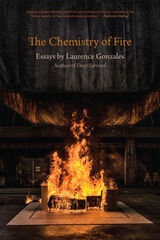
EssaysLaurence Gonzales
University of Arkansas Press, 2020
—Publishers Weekly starred review, July 2020
In 1989, Laurence Gonzales was a young writer with his first book of essays, The Still Point, just published by the University of Arkansas Press. Imagine his surprise, one winter day, to receive a letter from none other than Kurt Vonnegut. “The excellence of your writing and the depth of your reporting saddened me, in a way,” Vonnegut wrote, “reminding me yet again what a tiny voice facts and reason have in this era of wrap-around, mega-decibel rock-and-roll.”
Several books, many articles, and a growing list of awards later, Gonzales -- known for taking us to enthralling extremes – is still writing with excellence and depth. In this latest collection, we go from the top of Mount Washington and ”the worst weather in the world,” to 12,000 feet beneath the ocean, where a Naval Intelligence Officer discovers the Titanic using the government’s own spy equipment. We experience night assaults with the 82nd Airborne Division, the dynamiting of the 100-foot snowpack on Going-to-the-Sun Road in Glacier National Park, a trip to the International Space Station, the crash of an airliner to the bottom of the Everglades, and more.
The University of Arkansas Press is proud to bring these stories to a new era, stories that, as with all of Gonzales’s work, “fairly sing with a voice all their own.” (Chicago Sun-Times)
Unlimited Intimacy
Reflections on the Subculture of BarebackingTim Dean
University of Chicago Press, 2009
Barebacking—when gay men deliberately abandon condoms and embrace unprotected sex—has incited a great deal of shock, outrage, anger, and even disgust, but very little contemplation. Purposely flying in the face of decades of safe-sex campaigning and HIV/AIDS awareness initiatives, barebacking is unquestionably radical behavior, behavior that most people would rather condemn than understand. Thus the time is ripe for Unlimited Intimacy, Tim Dean’s riveting investigation into barebacking and the distinctive subculture that has grown around it.
Audacious and undeniably provocative, Dean’s profoundly reflective account is neither a manifesto nor an apology; instead, it is a searching analysis that tests the very limits of the study of sex in the twenty-first century. Dean’s extensive research into the subculture provides a tour of the scene’s bars, sex clubs, and Web sites; offers an explicit but sophisticated analysis of its pornography; and documents his own personal experiences in the culture. But ultimately, it is HIV that animates the controversy around barebacking, and Unlimited Intimacy explores how barebackers think about transmitting the virus—especially the idea that deliberately sharing it establishes a new network of kinship among the infected. According to Dean, intimacy makes us vulnerable, exposes us to emotional risk, and forces us to drop our psychological barriers. As a committed experiment in intimacy without limits—one that makes those metaphors of intimacy quite literal—barebacking thus says a great deal about how intimacy works.
Written with a fierce intelligence and uncompromising nerve, Unlimited Intimacy will prove to be a milestone in our understanding of sexual behavior.
Why Would Anyone Do That?
Lifestyle Sport in the Twenty-First CenturyStephen C. Poulson
Rutgers University Press, 2016