Results by title
64 books match the query 'Ritual' and 6 start with a
A Common Humanity
Ritual, Religion, and Immigrant Advocacy in Tucson, ArizonaLane Van Ham
University of Arizona Press, 2011
As debate about immigration policy rages from small towns to state capitals, from coffee shops to Congress, would-be immigrants are dying in the desert along the US–Mexico border. Beginning in the 1990s, the US government effectively sealed off the most common border crossing routes. This had the unintended effect of forcing desperate people to seek new paths across open desert. At least 4,000 of them died between 1995 and 2009. While some Americans thought the dead had gotten what they deserved, other Americans organized humanitarian aid groups. A Common Humanity examines some of the most active aid organizations in Tucson, Arizona, which has become a hotbed of advocacy on behalf of undocumented immigrants.
This is the first book to examine immigrant aid groups from the inside. Author Lane Van Ham spent more than three years observing the groups and many hours in discussions and interviews. He is particularly interested in how immigrant advocates both uphold the legitimacy of the United States and maintain a broader view of its social responsibilities. By advocating for immigrants regardless of their documentation status, he suggests, advocates navigate the conflicting pulls of their own nation-state citizenship and broader obligations to their neighbors in a globalizing world. And although the advocacy organizations are not overtly religious, Van Ham finds that they do employ religious symbolism as part of their public rhetoric, arguing that immigrants are entitled to humane treatment based on universal human values.
Beautifully written and immensely engaging, A Common Humanity adds a valuable human dimension to the immigration debate.
[more]

An Archaeology of the Soul
NORTH AMERICAN INDIAN BELIEF AND RITUALRobert L. Hall
University of Illinois Press, 1997
The richness and the range of Native American spirituality has long been
noted, but it has never been examined so thoroughly, nor with such an
eye for the amazing interconnectedness of Indian tribal ceremonies and
practices, as in An Archaeology of the Soul. In this monumental
work, destined to become a classic in its field, Robert Hall traces the
genetic and historical relationships of the tribes of the Midwest and
Plains--including roots that extend back as far as 3,000 years.
Looking beyond regional barriers, An Archaeology of the Soul offers new depths of insight into American Indian ethnography. Hall uncovers the lineage and kinship shared by Native North Americans through the perspectives of history, archaeology, archaeoastronomy, biological anthropology, linguistics, and mythology. The wholeness and panoramic complexity of American Indian belief has never been so fully explored--or more deeply understood.
[more]
An Intimate Rebuke
Female Genital Power in Ritual and Politics in West AfricaLaura S. Grillo
Duke University Press, 2018
Throughout West African societies, at times of social crises, postmenopausal women—the Mothers—make a ritual appeal to their innate moral authority. The seat of this power is the female genitalia. Wielding branches or pestles, they strip naked and slap their genitals and bare breasts to curse and expel the forces of evil. In An Intimate Rebuke Laura S. Grillo draws on fieldwork in Côte d’Ivoire that spans three decades to illustrate how these rituals of Female Genital Power (FGP) constitute religious and political responses to abuses of power. When deployed in secret, FGP operates as spiritual warfare against witchcraft; in public, it serves as a political activism. During Côte d’Ivoire’s civil wars FGP challenged the immoral forces of both rebels and the state. Grillo shows how the ritual potency of the Mothers’ nudity and the conjuration of their sex embodies a moral power that has been foundational to West African civilization. Highlighting the remarkable continuity of the practice across centuries while foregrounding the timeliness of FGP in contemporary political resistance, Grillo shifts perspectives on West African history, ethnography, comparative religious studies, and postcolonial studies.
[more]
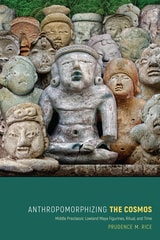
Anthropomorphizing the Cosmos
Middle Preclassic Lowland Maya Figurines, Ritual, and TimePrudence M. Rice
University Press of Colorado, 2019
Anthropomorphizing the Cosmos explores the sociocultural significance of more than three hundred Middle Preclassic Maya figurines uncovered at the site of Nixtun-Ch'ich' on Lake Petén Itzá in northern Guatemala. In this careful, holistic, and detailed analysis of the Petén lakes figurines—hand-modeled, terracotta anthropomorphic fragments, animal figures, and musical instruments such as whistles and ocarinas—Prudence M. Rice engages with a broad swath of theory and comparative data on Maya ritual practice.
Presenting original data, Anthropomorphizing the Cosmos offers insight into the synchronous appearance of fired-clay figurines with the emergence of societal complexity in and beyond Mesoamerica. Rice situates these Preclassic Maya figurines in the broader context of Mesoamerican human figural representation, identifies possible connections between anthropomorphic figurine heads and the origins of calendrics and other writing in Mesoamerica, and examines the role of anthropomorphic figurines and zoomorphic musical instruments in Preclassic Maya ritual. The volume shows how community rituals involving the figurines helped to mitigate the uncertainties of societal transitions, including the beginnings of settled agricultural life, the emergence of social differentiation and inequalities, and the centralization of political power and decision-making in the Petén lowlands.
Literature on Maya ritual, cosmology, and specialized artifacts has traditionally focused on the Classic period, with little research centering on the very beginnings of Maya sociopolitical organization and ideological beliefs in the Middle Preclassic. Anthropomorphizing the Cosmos is a welcome contribution to the understanding of the earliest Maya and will be significant to Mayanists and Mesoamericanists as well as nonspecialists with interest in these early figurines
[more]
Archaeology at El Perú-Waka'
Ancient Maya Performances of Ritual, Memory, and PowerEdited by Olivia C. Navarro-Farr and Michelle Rich
University of Arizona Press, 2014
Archaeology at El Perú-Waka’ is the first book to summarize long-term research at this major Maya site. The results of fieldwork and subsequent analyses conducted by members of the El Perú-Waka’ Regional Archaeological Project are coupled with theoretical approaches treating the topics of ritual, memory, and power as deciphered through material remains discovered at Waka’. The book is site-centered, yet the fifteen wide-ranging contributions offer readers greater insight to the richness and complexity of Classic-period Maya culture, as well as to the ways in which archaeologists believe ancient peoples negotiated their ritual lives and comprehended their own pasts.
El Perú-Waka’ is an ancient Maya city located in present-day northwestern Petén, Guatemala. Rediscovered by petroleum exploration workers in the mid-1960s, it is the largest known archaeological site in the Laguna del Tigre National Park in Guatemala’s Maya Biosphere Reserve. The El Perú-Waka’ Regional Archaeological Project initiated scientific investigations in 2003, and through excavation and survey, researchers established that Waka’ was a key political and economic center well integrated into Classic-period lowland Maya civilization, and reconstructed many aspects of Maya life and ritual activity in this ancient community. The research detailed in this volume provides a wealth of new, substantive, and scientifically excavated data, which contributors approach with fresh theoretical insights. In the process, they lay out sound strategies for understanding the ritual manipulation of monuments, landscapes, buildings, objects, and memories, as well as related topics encompassing the performance and negotiation of power throughout the city’s extensive sociopolitical history.
El Perú-Waka’ is an ancient Maya city located in present-day northwestern Petén, Guatemala. Rediscovered by petroleum exploration workers in the mid-1960s, it is the largest known archaeological site in the Laguna del Tigre National Park in Guatemala’s Maya Biosphere Reserve. The El Perú-Waka’ Regional Archaeological Project initiated scientific investigations in 2003, and through excavation and survey, researchers established that Waka’ was a key political and economic center well integrated into Classic-period lowland Maya civilization, and reconstructed many aspects of Maya life and ritual activity in this ancient community. The research detailed in this volume provides a wealth of new, substantive, and scientifically excavated data, which contributors approach with fresh theoretical insights. In the process, they lay out sound strategies for understanding the ritual manipulation of monuments, landscapes, buildings, objects, and memories, as well as related topics encompassing the performance and negotiation of power throughout the city’s extensive sociopolitical history.
[more]
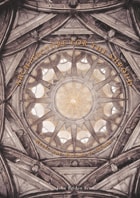
Architecture for the Shroud
Relic and Ritual in TurinJohn Beldon Scott
University of Chicago Press, 2003
The famed linen cloth preserved in Turin Cathedral has provoked pious devotion, scientific scrutiny, and morbid curiosity. Imprinted with an image many faithful have traditionally believed to be that of the crucified Christ "painted in his own blood," the Shroud remains an object of intense debate and notoriety yet today.
In this amply illustrated volume, John Beldon Scott traces the history of the unique relic, focusing especially on the black-marble and gilt-bronze structure Guarino Guarini designed to house and exhibit it. A key Baroque monument, the chapel comprises many unusual architectural features, which Scott identifies and explains, particulary how the chapel's unprecedented geometry and bizarre imagery convey to the viewer the supernatural powers of the object enshrined there. Drawing on early plans and documents, he demonstrates how the architect's design mirrors the Shroud's strange history as well as political aspirations of its owners, the Dukes of Savoy. Exhibiting it ritually, the Savoy prized their relic with its godly vestige as a means to link their dynasty with divine purposes. Guarini, too, promoted this end by fashioning an illusionary world and sacred space that positioned the duke visually so that he appeared close to the Shroud during its ceremonial display. Finally, Scott describes how the additional need for an outdoor stage for the public showing of the relic to the thousands who came to Turin to see it also helped shape the urban plan of the city and its transformation into the Savoyard capital.
Exploring the mystique of this enigmatic relic and investigating its architectural and urban history for the first time, Architecture for the Shroud will appeal to anyone curious about the textile, its display, and the architectural settings designed to enhance its veneration and boost the political agenda of the ruling family.
[more]