Results by title
11 books match the query 'River life'

Before Mark Twain
A Sampler of Old, Old Times on the MississippiEdited by John Francis McDermott
Southern Illinois University Press, 1998
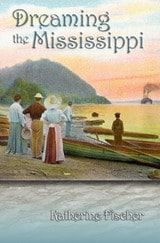
Dreaming the Mississippi
Katherine Fischer
University of Missouri Press, 2006
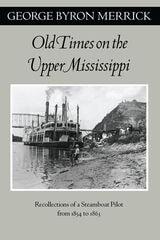
Old Times on the Upper Mississippi
Recollections of a Steamboat Pilot from 1854 to 1863George Byron Merrick
University of Minnesota Press, 2001
A long-awaited new edition of the steamboating classic.
George Byron Merrick chronicles the entire panorama of steamboat life he experienced in the mid-1800s, where he started as a cabin boy and worked up to cub pilot on the mighty Mississippi. Originally published in 1909, Merrick’s narrative matches lively stories about gamblers, shipwrecks, and steamboat races with rich descriptions of river life and steamboat operations.
Fesler-Lampert Minnesota Heritage Series
Oneota Flow
The Upper Iowa River and Its PeopleDavid S. Faldet
University of Iowa Press, 2009
Whether profiling the chief of the last hunter-gatherers on the river, an early settler witnessing her first prairie fire and a modern wildlife biologist using fire to manage prairies, the manager of the Granger Farmer’s Co-op Creamery, or a landowner whose bottomlands are continually eaten away by floods, Faldet steadily develops the central idea that people are walking tributaries of the river basin in which they make their homes.
Faldet moves through the history of life along the now-polluted Upper Iowa, always focusing on the ways people depend on the river, the environment, and the resources of the region. He blends contemporary conversations, readings from the historical record, environmental research, and personal experience to show us that the health of the river is best guaranteed by maintaining the biological communities that nurture it. In return, taking care of the Upper Iowa is the best way to take care of our future.

River Life and the Upspring of Nature
Naveeda Khan
Duke University Press, 2023

River Life and the Upspring of Nature
Naveeda Khan
Duke University Press, 2023
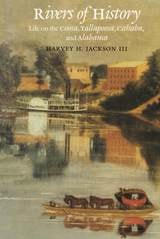
Rivers of History
Life on the Coosa, Tallapoosa, Cahaba, and AlabamaHarvey H. Jackson, III
University of Alabama Press, 1995
An illuminating study of how rivers shaped the history, culture, and environment of Alabama and the American South.
In Rivers of History, acclaimed historian Harvey H. Jackson III blends environmental history with compelling storytelling and traces the evolving relationship between people and rivers—from Indigenous communities who first depended on these waterways, to European settlers, to the development of modern towns and industries. Along the way, readers encounter stories of transportation and trade, conflict and cooperation, ecological change and conservation, all tied to the flow of these essential rivers.
Far more than a geographical study, Rivers of History demonstrates how waterways act as lifelines of human experience. Rivers shaped patterns of settlement, enabled agricultural and economic growth, and served as critical channels for communication across the American South. At the same time, they created challenges—flooding, environmental degradation, and competing demands for natural resources—that continue to influence life in the region today.
Jackson shows how the history of Alabama cannot be understood apart from its rivers. The Coosa, Tallapoosa, Cahaba, and Alabama rivers emerge not simply as physical features on a map, but as powerful forces that connect past and present, nature and society. His interdisciplinary approach—bringing together history, geography, and environmental studies—makes this work especially valuable for students, scholars, and general readers alike.
Accessible yet authoritative, Rivers of History is essential reading for anyone interested in Southern history, environmental change, or the enduring relationship between landscapes and human communities. It offers a compelling reminder that the story of a place is often written in the movement of its waters.

Stepping Twice Into the River
Following Dakota WatersRobert King
University Press of Colorado, 2005
Blending travel narrative and poetic reflection, Stepping Twice Into the River takes readers on a journey through time, revealing both stability and change and offering prairie wisdom. An affectionate and shrewd observer, King illuminates the ordinary from the perspectives of history, science, and literature. In the hands of this gifted thinker and writer, local facts yield universal metaphor.
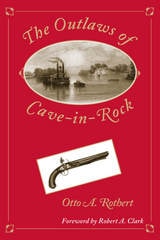
The Outlaws of Cave-in-Rock
Otto A. Rothert. Foreword by Robert Clark
Southern Illinois University Press, 1996
Exceptionally rare and valued by book collectors, Otto A. Rothert’s riveting saga of the outlaws and scoundrels of Cave-in-Rock chronicles the adventures of an audacious cast of river pirates and highwaymen who operated in and around the famous Ohio River cavern from 1795 through 1820 (adventures featured in Disney’s Davy Crockett and the film How the West Was Won). Once sporting the enticing sign "Liquor Vault and House for Entertainment," this beautiful cavern location decoyed the unsuspecting by offering a venue for food, drink, and rest.
Compellingly lively, The Outlaws of Cave-in-Rock is nonetheless the work of a scholar, a historian who documents his findings and leaves a detailed bibliographical trail. Presenting many eyewitness accounts, Rothert supplies the lore and legend of the colorful villains of Cave-in-Rock. Always maintaining the difference between stories he tells with historical authority and those that are pure speculation, Rothert provides both a fascinating narrative and a valuable regional history.

Up on the River
People and Wildlife of the Upper MississippiMadson, John
University of Iowa Press, 1985
@font-face { font-family: "Times";}@font-face { font-family: "Verdana";}@font-face { font-family: "Palatino";}p.MsoNormal, li.MsoNormal, div.MsoNormal { margin: 0in 0in 0.0001pt; font-size: 12pt; font-family: "Times New Roman"; }div.Section1 { page: Section1; }
Up on the River is John Madson’s loving and often hilarious tribute to the people, animal life, and places of the Upper Mississippi. Madson’s Upper Mississippi is the part “between the saints,” from St. Louis to St. Paul, where for thirty years he explored the bright waters of the upper reaches of the mighty river itself as well as the tangled multitude of sloughs, cuts, and side channels that wander through its wooded islands and floodplain forests.
“Some of my best time on the River has been in the company of game wardens, biologists, commercial fishermen, clammers, trappers, hunters, and a smelly, mud-smeared coterie of river rats in general, and my views of the River are far more likely to reflect theirs than those of the transportation industry,” Madson writes of his thirty-year acquaintance with the Mississippi. Traveling mainly by canoe and johnboat, he tells of encounters between archetypal commercial fishermen and archetypal game wardens over hot fish chowder, fishing for crappies in the tops of submerged trees and for walleyes amid gale force winds, nesting and migrating herons and ducks and eagles, the histories of river logging and pearling and button making, and towboats and barges and the lives of the “ramstugenous” people who move freight on the river.
Learning about the Upper Mississippi via the wry tutelage of John Madson, who discovered that “whenever I am out on a river some of its freeness rubs off on me,” readers of this classic book will also come under the spell of this freeness.
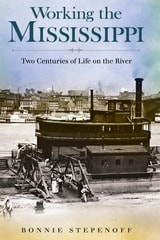
Working the Mississippi
Two Centuries of Life on the RiverBonnie Stepenoff
University of Missouri Press, 2015
The Mississippi River occupies a sacred place in American culture and mythology. Often called The Father of Rivers, it winds through American life in equal measure as a symbol and as a topographic feature. To the people who know it best, the river is life and a livelihood. River boatmen working the wide Mississippi are never far from land. Even in the dark, they can smell plants and animals and hear people on the banks and wharves.
Bonnie Stepenoff takes readers on a cruise through history, showing how workers from St. Louis to Memphis changed the river and were in turn changed by it. Each chapter of this fast-moving narrative focuses on representative workers: captains and pilots, gamblers and musicians, cooks and craftsmen. Readers will find workers who are themselves part of the country’s mythology from Mark Twain and anti-slavery crusader William Wells Brown to musicians Fate Marable and Louis Armstrong.