Results by title
4 books match the query 'River steamers'
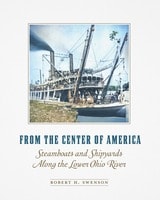
From the Center of America
Steamboats and Shipyards Along the Lower Ohio RiverRobert H. Swenson
Southern Illinois University Press, 2026
WINNER, 2026 Morris Library Delta Award!
Charting the legacy of mid-America's shipyards and iconic steamboats
Before the railroad stitched together the American landscape, the dominant mode of transportation in the United States was by steamboat. These grand vessels, their iconic paddlewheels churning the country’s rivers, have long captured the national imagination as symbols of innovation and adventure.
In the heart of America, four major rivers converge—the Cumberland and Tennessee with the Ohio; then the Ohio with the Mississippi. These three confluences, which author Robert Swenson christens the Four Rivers Reach, played a unique role in the development of the steamboats that dominated American continental transport for almost 100 years. Between 1825 and 1936, the river towns of Smithland, Paducah, Metropolis, Mound City, and Cairo launched 295 wood-hulled, steam-powered vessels. Drawing from a wealth of archival sources, Swenson presents detailed histories of these steamboats over a span of 110 years, accompanied by nearly one hundred illustrations and photographs.
The book focuses on distinct events in steamboat history, tracing the impact of these shipyards on the economies and communities of the river towns where they were built. It reveals how the availability of steamboats along this sixty-mile Reach affected migration, politics, and the US economy of the nineteenth century. Steamboats built at the Four Rivers Reach played pivotal roles in the forced relocation of Native Americans from southern Appalachia to Oklahoma, the outcome of the Civil War, and the Montana gold rush. From the Center of America demonstrates how steamboat building shaped the culture, people, and economy of this region—and how, in turn, the area and its steamships influenced the growth of the young United States.
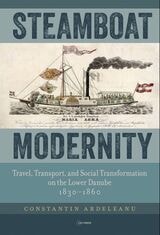
Steamboat Modernity
Travel, Transport, and Social Transformation on the Lower Danube, 1830–1860Constantin Ardeleanu
Central European University Press, 2024
Through a skillful combination of economic and cultural history, this book describes the impact on Moldavia and Wallachia of steam navigation on the Danube. The Danube route integrated the two principalities into a dense network of European roads and waterways. From the 1830s to the 1860s, steamboat transport transformed time and space for the areas that benefited from regular services. River traffic accelerated urban development along the Lower Danube and contributed directly to institutional modernization in one of Europe’s peripheries.
Beyond technological advances and the transportation of goods on a trans-imperial waterway, steamboat travel revolutionized human interactions, too. The book offers a fascinating insight into the social and cultural milieu of the nineteenth century, drawing on first-hand accounts of Danube cruising. Describing the story of travelers who interacted, met, and visited the places they stopped, Constantin Ardeleanu creates a transnational history of travel up and down the Danube from Vienna to Constantinople. The pleasures and sometimes the travails of the travelers unfold against a backdrop of technical and economic transformation in the crucial period of modernization.
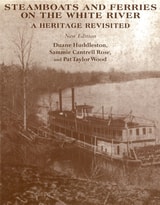
Steamboats and Ferries on the White River
A Heritage RevisitedDuane Huddleston
University of Arkansas Press, 1998
From the time the Waverly first steamed up the White River to Batesville from the Mississippi River in 1831, the haunting blast of river whistles signaled service, comfort, and delight for residents along this major Arkansas waterway. In a terrain that lacked good roads, steamboats contributed significantly to new economic development and settlement of the region. They carried animal hides, cotton, and rendered bear oil downriver to market and transported settlers, food staples, and manufactured goods upriver. For a hundred years these elegant boats were used for mail delivery, excursion parties, and freight hauling, eventually bringing about their own demise when they hauled in the material to build the railroads.
Over 120 black-and-white photographs, sketches, and maps illustrate the colorful text. Interwoven with the history of steamboats is that of ferries keelboats, flatboats, and Civil War tinclads, all of which plied the White River in the 1800s and early 1900s. A keenly researched regional study, this book is nonetheless representative of conditions and activities on similar river systems in many parts of America during the same period. Steamboats and Ferries on the White River pays lasting tribute to the golden age of steam travel.

Steamboats on the Colorado River, 1852-1916
Richard E. Lingenfelter
University of Arizona Press, 1978