Results by title
3 books match the query 'Rivera-Rideau, Petra R.'
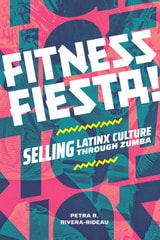
Fitness Fiesta!
Selling Latinx Culture through ZumbaPetra R. Rivera-Rideau
Duke University Press, 2024
As a fitness brand, Zumba Fitness has cultivated a devoted fan base of fifteen million participants spread across 180 countries. In Fitness Fiesta! Petra R. Rivera-Rideau analyzes how Zumba uses Latin music and dance to create and sell a vision of Latinness that’s tropical, hypersexual, and party-loving. Rivera-Rideau focuses on the five tropes that the Zumba brand uses to create this Latinness: authenticity, fiesta, fun, dreams, and love. Closely examining videos, ads, memes, and press coverage as well as interviews she conducted with instructors, Rivera-Rideau traces how Zumba Fitness constructs its ideas of Latinx culture by carefully balancing a longing for apparent authenticity with a homogenization of a marketable “south of the border”-style vacation. She shows how Zumba Fitness claims to celebrate Latinx culture and diversity while it simultaneously traffics in the same racial and ethnic stereotypes that are used to justify racist and xenophobic policies targeting Latinx communities in the United States. In so doing, Rivera-Rideau demonstrates not only the complex relationship between Latinidad and neoliberal, postracial America but also what that relationship means for the limits and possibilities of multicultural citizenship today.
[more]
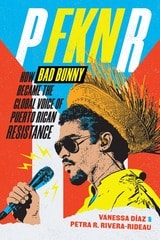
P FKN R
How Bad Bunny Became the Global Voice of Puerto Rican ResistanceVanessa Díaz and Petra R. Rivera-Rideau
Duke University Press, 2026
“Aquí mataron gente por sacar la bandera / Por eso es que ahora yo la llevo donde quiera." (Here they killed people for taking out the flag / that’s why I bring it anywhere I want now.)—LA MuDANZA
Global superstar Bad Bunny, born Benito Antonio Martínez Ocasio, like many other Puerto Ricans, has lived a life marked by public crises—blackouts, hurricanes, political corruption and oppression, among others—that have exposed the ongoing impacts of colonialism in Puerto Rico. Offering a portrait of the past and future of Puerto Rican resistance through one of its loudest and proudest voices, P FKN R draws on interviews with musicians, politicians, and journalists as well as ethnographic research to set Bad Bunny and Puerto Rican resistance in a historical, political, and cultural context. Authors Vanessa Díaz and Petra Rivera-Rideau—creators of the “Bad Bunny Syllabus”—demonstrate Bad Bunny’s place in a long tradition of infusing both joy and protest into music and honor the many evolving forms of daily resistance to oppression and colonialism that are part of Puerto Rican life.
Global superstar Bad Bunny, born Benito Antonio Martínez Ocasio, like many other Puerto Ricans, has lived a life marked by public crises—blackouts, hurricanes, political corruption and oppression, among others—that have exposed the ongoing impacts of colonialism in Puerto Rico. Offering a portrait of the past and future of Puerto Rican resistance through one of its loudest and proudest voices, P FKN R draws on interviews with musicians, politicians, and journalists as well as ethnographic research to set Bad Bunny and Puerto Rican resistance in a historical, political, and cultural context. Authors Vanessa Díaz and Petra Rivera-Rideau—creators of the “Bad Bunny Syllabus”—demonstrate Bad Bunny’s place in a long tradition of infusing both joy and protest into music and honor the many evolving forms of daily resistance to oppression and colonialism that are part of Puerto Rican life.
[more]
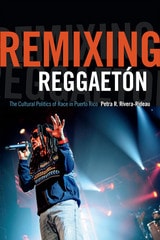
Remixing Reggaetón
The Cultural Politics of Race in Puerto RicoPetra R. Rivera-Rideau
Duke University Press, 2015
Puerto Rico is often depicted as a "racial democracy" in which a history of race mixture has produced a racially harmonious society. In Remixing Reggaetón, Petra R. Rivera-Rideau shows how reggaetón musicians critique racial democracy's privileging of whiteness and concealment of racism by expressing identities that center blackness and African diasporic belonging. Stars such as Tego Calderón criticize the Puerto Rican mainstream's tendency to praise black culture but neglecting and marginalizing the island's black population, while Ivy Queen, the genre's most visible woman, disrupts the associations between whiteness and respectability that support official discourses of racial democracy. From censorship campaigns on the island that sought to devalue reggaetón, to its subsequent mass marketing to U.S. Latino listeners, Rivera-Rideau traces reggaetón's origins and its transformation from the music of San Juan's slums into a global pop phenomenon. Reggaetón, she demonstrates, provides a language to speak about the black presence in Puerto Rico and a way to build links between the island and the African diaspora.
[more]