Results by title
2 books match the query 'Robinson, David M.'
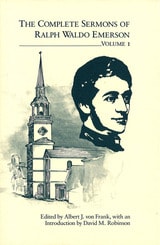
The Complete Sermons of Ralph Waldo Emerson, Volume 1
Ralph Waldo Emerson, Edited by Albert J. von Frank, Intro by David M. Robinson
University of Missouri Press, 1989
This inaugural volume of a four-volume set marks the beginning of the publication of all 180 of the extant sermons composed and delivered by Emerson between the start of his ministerial career in 1826 and his final retirement from the pulpit in 1838.
Edited from manuscripts in the Houghton Library, Harvard University, the sermons are presented in chronological order in a clear text approximating as nearly as possible the original version read by Emerson to his congregation. The historical introduction by David M. Robinson gives a significant appraisal of Emerson's life between 1826 and 1838 and of his absorption in and reaction against the religious culture of his time.
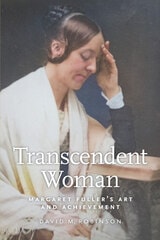
Transcendent Woman
Margaret Fuller’s Art and AchievementDavid M. Robinson
University of Massachusetts Press, 2025
Journalist, editor, critic, translator, and women’s rights advocate, Margaret Fuller was America’s first major female intellectual. Throughout much of the late-19th and 20th centuries, however, critics and scholars largely saw her as a minor figure in the transcendentalist movement with which she is associated, and her work was considered secondary to that of male figures like Emerson and Hawthorne. While her biography—including her marriage to an Italian noble and her dramatic death in a shipwreck—was often the focus, her skill as a writer was generally overlooked, and her intellectual development largely ignored.
In the early 1980s, David M. Robinson was one of the first scholars to publish an article that focused on Fuller’s mind and art. Now Transcendent Woman completes and extends this early work. Outlining the development of her philosophy, which Robinson defines as a “purpose-oriented form of thinking, tailored to the commitment and assets of each individual,” he traces Fuller’s intellectual journey, first in relation to her family and the people around her in New England and later in her travels in the midwestern United States and, more importantly, through Europe and her residency in Italy. He focuses first and foremost on what Fuller was reading (Goethe was key), what she was thinking as revealed in her letters and journals, and what she was writing, including seminal works such as Summer on the Lakes and Woman in the Nineteenth Century as well as lesser-known essays, translations, and short stories. Drawing extensively on primary sources, Robinson charts Fuller’s development and achievement as an original thinker and fearless advocate of democracy.