Results by title
3 books match the query 'Robinson, Forrest G.'
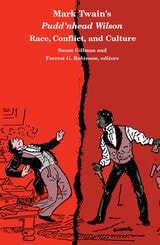
Mark Twain's Pudd'nhead Wilson
Race, Conflict and CultureSusan Gillman and Forrest Robinson, eds.
Duke University Press, 1990
This collection seeks to place Pudd’nhead Wilson—a neglected, textually fragmented work of Mark Twain’s—in the context of contemporary critical approaches to literary studies. The editors’ introduction argues the virtues of using Pudd’nhead Wilson as a teaching text, a case study in many of the issues presently occupying literary criticism: issues of history and the uses of history, of canon formation, of textual problematics, and finally of race, class, and gender.
In a variety of ways the essays build arguments out of, not in spite of, the anomalies, inconsistencies, and dead ends in the text itself. Such wrinkles and gaps, the authors find, are the symptoms of an inconclusive, even evasive, but culturally illuminating struggle to confront and resolve difficult questions bearing on race and sex. Such fresh, intellectually enriching perspectives on the novel arise directly from the broad-based interdisciplinary foundations provided by the participating scholars. Drawing on a wide variety of critical methodologies, the essays place the novel in ways that illuminate the world in which it was produced and that further promise to stimulate further study.
In a variety of ways the essays build arguments out of, not in spite of, the anomalies, inconsistencies, and dead ends in the text itself. Such wrinkles and gaps, the authors find, are the symptoms of an inconclusive, even evasive, but culturally illuminating struggle to confront and resolve difficult questions bearing on race and sex. Such fresh, intellectually enriching perspectives on the novel arise directly from the broad-based interdisciplinary foundations provided by the participating scholars. Drawing on a wide variety of critical methodologies, the essays place the novel in ways that illuminate the world in which it was produced and that further promise to stimulate further study.
Contributors. Michael Cowan, James M. Cox, Susan Gillman, Myra Jehlen, Wilson Carey McWilliams, George E. Marcus, Carolyn Porter, Forrest Robinson, Michael Rogin, John Carlos Rowe, John Schaar, Eric Sundquist
[more]
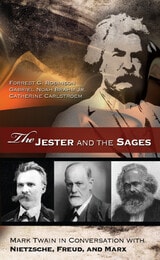
The Jester and the Sages
Mark Twain in Conversation with Nietzsche, Freud, and MarxForrest G. Robinson, Gabriel Noah Brahm, Jr., and Catherine Carlstroem
University of Missouri Press, 2011
The Jester and the Sages approaches the life and work of Mark Twain by placing him in conversation with three eminent philosophers of his time—Friedrich Nietzsche, Sigmund Freud, and Karl Marx. Unprecedented in Twain scholarship, this interdisciplinary analysis by Forrest G. Robinson, Gabriel Noah Brahm Jr., and Catherine Carlstroem rescues the American genius from his role as funny-man by exploring how his reflections on religion, politics, philosophy, morality, and social issues overlap the philosophers’ developed thoughts on these subjects. Remarkably, they had much in common.
During their lifetimes, Twain, Nietzsche, Freud, and Marx witnessed massive upheavals in Western constructions of religion, morality, history, political economy, and human nature. The foundations of reality had been shaken, and one did not need to be a philosopher—nor did one even need to read philosophy—to weigh in on what this all might mean. Drawing on a wide range of primary and secondary materials, the authors show that Twain was well attuned to debates of the time. Unlike his Continental contemporaries, however, he was not as systematic in developing his views.
Brahm and Robinson’s chapter on Nietzsche and Twain reveals their subjects’ common defiance of the moral and religious truisms of their time. Both desired freedom, resented the constraints of Christian civilization, and saw punishing guilt as the disease of modern man. Pervasive moral evasion and bland conformity were the principal end result, they believed.
In addition to a continuing focus on guilt, Robinson discovers in his chapter on Freud and Twain that the two men shared a lifelong fascination with the mysteries of the human mind. From the formative influence of childhood and repression, to dreams and the unconscious, the mind could free people or keep them in perpetual chains. The realm of the unconscious was of special interest to both men as it pertained to the creation of art.
In the final chapter, Carlstroem and Robinson explain that, despite significant differences in their views of human nature, history, and progress, Twain and Marx were both profoundly disturbed by economic and social injustice in the world. Of particular concern was the gulf that industrial capitalism opened between the privileged elite property owners and the vast class of property-less workers. Moralists impatient with conventional morality, Twain and Marx wanted to free ordinary people from the illusions that enslaved them.
Twain did not know the work's of Nietzsche, Freud, and Marx well, yet many of his thoughts cross those of his philosophical contemporaries. By focusing on the deeper aspects of Twain’s intellectual makeup, Robinson, Brahm, and Carlstroem supplement the traditional appreciation of the forces that drove Twain’s creativity and the dynamics of his humor.
[more]
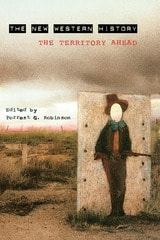
The New Western History
The Territory AheadForrest G. Robinson
University of Arizona Press, 1998
Established barely a decade ago, the New Western History has retold the story of the American West from the point of view of the oppressed, colonized, and conquered. Scholars led by William Cronon, Patricia Nelson Limerick, Richard White, and Donald Worster have challenged the Turnerian myth of the frontier and have forced scholars to reexamine their understanding of the region. Now seven scholars in American Studies, English, women's studies, philosophy, and environmental studies take a closer look at the work of the New Western Historians. While recognizing that these revisionists have broken important new ground, they observe that many of their claims to uniqueness may be overstated and identify areas of investigation that may have been overlooked. These articles discuss the need to expand the horizons of the New Western History to include fiction, women's literature, racial categories, and works of writers such as Wallace Stegner who presaged the movement. They also argue for more serious consideration of popular culture as represented in western fiction and films and include an analysis of the New Western History's treatment of nature by two natural resource managers. The New Western History was first published as a special issue of the Arizona Quarterly: A Journal of American Literature, Culture, and Theory and is now being made available to a wider audience for the first time. It was named Best Special Issue in the 1997 Council of Editors of Learned Journals International Awards Competition and was cited for its interest to general readers. This collection of essays clearly shows that the response to the New Western History is both vigorous and mixed. It advances the lively and important discussion that the New Western Historians have set in motion and makes that debate accessible to anyone with an interest in the history of the West. CONTENTS
Introduction / Jerome Frisk and Forrest G. Robinson
The Theoretical (Re)Positions of the New Western History / Jerome Frisk
Clio Bereft of Calliope: Literature and the New Western History / Forrest G. Robinson
Literature, Gender Studies, and the New Western History / Krista Comer
Haunting Presences and the New Western History: Reading Repetition, Negotiating Trauma / Carl Gutiérrez Jones
The Problem of the "Popular" in the New Western History / Stephen Tatum
The New Western History: An Essay from the Woods (and Rangelands) / Sally K. Fairfax and Lynn Huntsinger
[more]