Results by title
3 books match the query 'Roe, Peter G.'
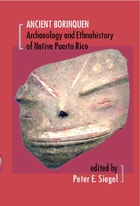
Ancient Borinquen
Archaeology and Ethnohistory of Native Puerto RicoEdited by Peter E. Siegel
University of Alabama Press, 2008
A comprehensive overview of recent thinking, new data, syntheses, and insights into current Puerto Rican archaeology
Ancient Borinquen is a re-examination of the archaeology of Puerto Rico, drawing data from beyond the boundaries of the island itself because in prehistoric times the waters between islands would not have been viewed as a boundary in the contemporary sense of the term. The last few decades have witnessed a growth of intense archaeological research on the island, from material culture in the form of lithics, ceramics, and rock art; to nutritional, architecture, and environmental studies; to rituals and social patterns; to the aftermath of Conquest.
It is unlikely that prehistoric occupants recognized the same boundaries and responded to the same political forces that operated in the formation of current nations, states, or cities. Yet, archaeologists traditionally have produced such volumes and they generally represent anchors for ongoing research in a specific region, in this case the island of Puerto Rico, its immediate neighbors, and the wider Caribbean basin.
Ancient Borinquen provides a comprehensive overview of recent thinking, new data, syntheses, and insights into current Puerto Rican archaeology, and it reflects and illuminates similar concerns elsewhere in the West Indies, lowland South America, and Central America.
[more]
Enduring Motives
The Archaeology of Tradition and Religion in Native AmericaLinea Sundstrom
University of Alabama Press, 2012
Enduring Motives examines tradition and religious beliefs as they are expressed in landscape, the built environment, visual symbols, stories, and ritual.
Bringing together archaeologists and Native American experts, this volume focuses on long-lived religious traditions of the native peoples of the Americas and how religion codifies, justifies, and reinforces these traditions by placing a high value on continuity of beliefs and practice.
Using clues from the archaeological record to piece together the oldest religions of the Americas, Enduring Motives is organized into four parts. Part 1 creates continuity through structure, iconography, and sacred stories that correspond to culture-specific symbolic representations of the universe. Part 2 explores the encoding of tradition in place and object, or how people use objects to enliven tradition and pass it on to future generations. Part 3 examines stability and change and shows how traditions can evolve over time without losing their core cultural significance. The final part recognizes deep-time traditions through the evidence of ancient cosmology and religious tradition.
Spanning cultures as diverse as the Aztec, Plains Indians, Hopi, Mississippian, and Southwest Pueblo, Enduring Motives brings to light new insights on ancient religious beliefs, practices, methods, and techniques, which allow otherwise intangible facets of culture to be productively explored.
Contributors
Wesley Bernardini / James S. Brown Jr. / Cheryl Claassen / John E. Clark / ArleneColman / Warren DeBoer /
Wesley Bernardini / James S. Brown Jr. / Cheryl Claassen / John E. Clark / ArleneColman / Warren DeBoer /
Robert L. Hall /Kelley Hays-Gilpin / Alice Beck Kehoe /John E. Kelly / Stephen H. Lekson / ColinMcEwan /
John Norder / Jeffrey Quilter /Amy Roe / Peter G. Roe / Linea Sundstrom
[more]
Rock Art of the Caribbean
Edited by Michele Hayward, Lesley-Gail Atkinson, and Michael A. Cinquino
University of Alabama Press, 2009
This compilation, by an international grouping of scholars, focuses on the nature of Caribbean rock art or rock graphics and makes clear the region's substantial and distinctive rock art tradition. Thorough and comparative, it includes data on the history of rock graphic research, the nature of the assemblages (image numbers, types, locations), and the legal, conservation, and research status of the image sites. Chapters on these topics cover research on the islands of Cuba, Haiti, Dominican Republic, the Bahamas, Jamaica, Puerto Rico, U.S. Virgin Islands, Guadeloupe, Aruba, and Bonaire. The prehispanic rock art and other ceremonial structures and artifacts, along with enthnohistorical accounts of the region at Contact, projected backward in time, all point to an active ritual and ceremonial life involving commoners, religious specialists, and elites in differing and interconnected roles and for diverse purposes. The selective use of common rock graphic design and physical elements can be seen in the distribution and execution of the carved and painted images. Pecked, ground, abraded, and scratched petroglyphs, along with pictographs done frequently in red, black, white and orange hues are found on a range of rock surfaces including limestones, granites, diorites, and andesites. Caves/rock shelters and rock formations associated with water sources (water ways, pools, ocean) account for the two most common locations, followed by ball court sites, inland rock outcroppings and beach rock.
In addition to specific area presentations, the work includes a review of recent advances in Caribbean rock graphic studies including dating and interpretative models; the application of a new documentation method and resulting computer manipulation advantages; a conservation project in Jamaica that has implications for the preservation and interpretation of the site; and a proposed dating sequence for the Lesser Antillean
Windward Islands.
[more]