Results by title

2 books match the query 'Rooms'
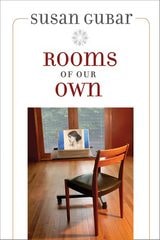
cover of Rooms of Our Own

Rooms of Our Own

Susan Gubar

University of Illinois Press, 2006

With a little help from Virginia Woolf, Susan Gubar contemplates startling transformations produced by the women's movement in recent decades. What advances have women made and what still needs to be done? Taking Woolf's classic A Room of One's Own as her guide, Gubar engages these questions by recounting one year in the life of an English professor.

A meditation on the teaching of literature and on the state of the humanities today, her chapters also provide a crash course on the challenges and changes in feminist intellectual history over the past several decades: the influence of post-structuralism and of critical race, postcolonial, and cultural studies scholarship; the stakes of queer theory and the institutionalization of women's studies; and the effects of globalism and bioengineering on conversations about gender, sex, and sexuality. Yet Rooms of Our Own eschews a scholarly approach. Instead, through narrative criticism it enlists a thoroughly contemporary cast of characters who tell us as much about the comedies and tragedies of campus life today as they do about the sometimes contentious but invariably liberating feminisms of our future.
[more]
cover of Rooms with a View: The Stages of Community in the Modern Theater

Rooms with a View

The Stages of Community in the Modern Theater

Richard L. Barr

University of Michigan Press, 1998

In Sam Shepard's play Action a character asks, "What's a community?" only to find that no one really knows. Rooms with a View attempts to chart the development of communal concepts through the discourse of dramatic modernism, defining a coherent pattern that illustrates and anticipates innovations in modern and postmodern social theory. To clarify the commonplace notion that audiences actively participate in dramatic art, the intro-ductory chapter theorizes a performance community, which audience, actors, and other backstage actants (such as playwrights and directors) provisionally form in the theater. Connecting psychological, sociological, and aesthetic insights ranging from Freud to Kohut, from Simmel to Nancy, and from Artaud and Brecht to Arnheim and Jellicoe, Richard Barr shows how modernist thinkers are repeatedly drawn to the ideal of communion. The distinctive structure of this collective inquiry helps untangle the roots and routes of modern drama and social thought. Barr analyzes the social and aesthetic theory of four in-fluential dramatists. Ibsen and Strindberg, he claims, explore ways of acknowledging the integrity of individual viewpoints while maintaining collective coherence. Pirandello and, in more radical ways, Beckett, conclude that conflict and division are not simply inevitable but invaluable in organizing alternative perspectives. By analyzing the ways playwrights variously conceive and achieve the complicated unity called community, Rooms with a View produces the rich paradox that difference may make the most difference in creative communal consensus. Richard L. Barr holds a Ph.D. from the University of Virginia, and has taught English at Rutgers University. He is currently a specialist in intersubjective relations, practicing in New Jersey and Switzerland.
[more]