Results by title
5 books match the query 'Rope'
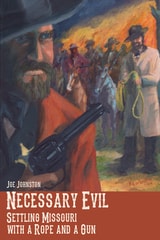
Necessary Evil
Settling Missouri with a Rope and a GunJoe Johnston
Missouri Historical Society Press, 2014
Necessary Evil is the first book to chronicle the implications of vigilantism in Missouri, ultimately showing that the state could never have been settled without a healthy dose of rebel justice. Packed with stories of popular gunslingers such as Wyatt Earp, Wild Bill Hickok, and Jesse James, this action-filled read will be of interest to crime enthusiasts and historians alike.
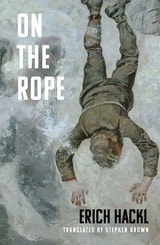
On the Rope
A Hero's StoryErich Hackl
Haus Publishing, 2020
Based on a true story, On the Rope is an account of extreme courage in the face of danger, violence, and hatred. Exploring themes of displacement and survival, friendship and family, it ends with the women’s efforts to bring recognition the selfless heroism of those who faced tremendous personal risk in order to protect them. A novella by one of Europe’s most prominent literary novelists, On the Rope layers deeply personal stories in a grounded historical account of life before, during, and after the Second World War. It paints a vivid picture of the hardships forced upon people by conflict and separation, depicting the forming and unravelling of relationships as a fact of life.
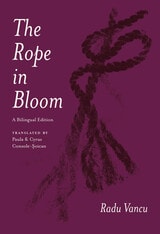
The Rope in Bloom
A Bilingual EditionRadu Vancu
University of Chicago Press, 2026
The first English translation of a Romanian poet’s celebrated and devastating 2012 collection.
In 1997, when he was nineteen, Radu Vancu discovered the body of his father, who had hanged himself in the family home. In the dark years that followed, Vancu turned to literature and self-medication. By 2009, after a decade of “Schopenhauer and vodka” and the publication of seven influential volumes of poetry and essays, Vancu was married, newly sober, and expecting his first child. With these themes in mind—bereavement, love, fatherhood, and poetry—he began writing Frânghia înflorită, or The Rope in Bloom, a poem of Dantesque ambition and scope. Through twenty-four cantos interwoven with prose vignettes, Vancu revisits the scene of the suicide and speaks with the lost soul of his father, who guides and advises him. Each canto begins with the same lines:
What your dead one, what the best-
beloved of your dead loved ones says to you
when you have the heart to dream of him:
Vancu’s verse depicts a nightmare underworld, at once terrible and banal, containing both rivers of blood and family movie nights. Prose vignettes punctuating the book narrate tender years in the early life of a new family. Here, the poet appears in everyday moments, watching cartoons with his son and seeing his wife off to work. Together, the cantos and prose accumulate into a charged collection, where the loss of a father looms over the joy of becoming one.
This volume is the first full-length English translation of Vancu’s work, marking a long-overdue introduction of the poet to anglophone audiences.
The Rope of God
James T. Siegel
University of Michigan Press, 2000
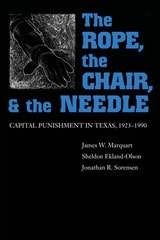
The Rope, The Chair, and the Needle
Capital Punishment in Texas, 1923-1990By James W. Marquart, Sheldon Ekland-Olson, and Jonathan R. Sorensen
University of Texas Press, 1998
In late summer 1923, legal hangings in Texas came to an end, and the electric chair replaced the gallows. Of 520 convicted capital offenders sentenced to die between 1923 and 1972, 361 were actually executed, thus maintaining Texas’ traditional reputation as a staunch supporter of capital punishment.
This book is the single most comprehensive examination to date of capital punishment in any one state, drawing on data for legal executions from 1819 to 1990. The authors show persuasively how slavery and the racially biased practice of lynching in Texas led to the institutionalization and public approval of executions skewed according to race, class, and gender, and they also track long-term changes in public opinion up to the present.
The stories of the condemned are masterfully interwoven with fact and interpretation to provide compelling reading for scholars of law, criminal justice, race relations, history, and sociology, as well as partisans on both sides of the debate.