Results by title
2 books match the query 'Rose, Jonathan D.'
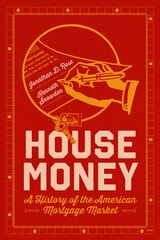
House Money
A History of the American Mortgage MarketJonathan D. Rose and Kenneth Snowden
University of Chicago Press, 0
How the market that made the American Dream was made—and what that history tells us about its future and fluctuations.
When Americans poured into cities and suburbs during the twentieth century, they needed capital to build and own homes. The market that emerged did more than merely provide it: the American mortgage market became the consequential, if occasionally misunderstood, cornerstone of the US financial system.
House Money traces the history of the growth and occasional collapse of the American mortgage market over the last 150 years. Jonathan Rose and Kenneth Snowden show how three major housing-related crises (of the 1930s, 1980s, and 2000s) were not just cyclical events nor bubbles. Rather, they were episodes in a common pattern: shocks produced when the availability of capital in the market was eclipsed by the risk the market took on. Rose and Snowden chart the macro factors that produced these capital/risk asymmetries, showing that in all three crises, the macroeconomic trends—not just bubbles, not banker avarice—conspired to create a downturn despite federal and private safeguards. This illustrates Rose and Snowden’s core principle: housing markets can (and often, must) shoulder considerable risk. When the capital behind that risk evaporates, trouble becomes more likely.
Mining more than a century of economic history, Rose and Snowden show how the institutions and practices in the American mortgage market reflect the push-pulls of its past—both the private innovations and the government interventions. House Money reveals the great risk undertaken in service to American homeownership—and the perennial question of what happens when that risk goes wrong.
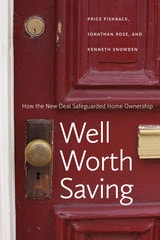
Well Worth Saving
How the New Deal Safeguarded Home OwnershipPrice Fishback, Jonathan Rose, and Kenneth Snowden
University of Chicago Press, 2013
Well Worth Saving tells the story of the disastrous housing market during the Great Depression and the extent to which an immensely popular New Deal relief program, the Home Owners’ Loan Corporation (HOLC), was able to stem foreclosures by buying distressed mortgages from lenders and refinancing them. Drawing on historical records and modern statistical tools, Price Fishback, Jonathan Rose, and Kenneth Snowden investigate important unanswered questions to provide an unparalleled view of the mortgage loan industry throughout the 1920s and early ’30s. Combining this with the stories of those involved, the book offers a clear understanding of the HOLC within the context of the housing market in which it operated, including an examination of how the incentives and behaviors at play throughout the crisis influenced the effectiveness of policy.
More than eighty years after the start of the Great Depression, when politicians have called for similar programs to quell the current mortgage crisis, this accessible account of the Home Owners’ Loan Corporation holds invaluable lessons for our own time.