Results by title
7 books match the query 'Rosenzweig, Franz'
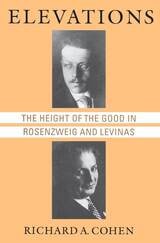
Elevations
The Height of the Good in Rosenzweig and LevinasRichard A. Cohen
University of Chicago Press, 1994
Cohen also explores the ethical philosophy of these two thinkers in relation to Nietzsche, Husserl, Heidegger, Buber, Sartre, and Derrida. The result is one of the most wide-ranging and lucid studies yet written on these crucial figures in philosophy and Jewish thought.
Judaism Despite Christianity
The 1916 Wartime Correspondence Between Eugen Rosenstock-Huessy and Franz RosenzweigEdited by Eugen Rosenstock-Huessy
University of Chicago Press, 2011
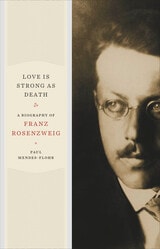
Love Is Strong as Death
A Biography of Franz RosenzweigPaul Mendes-Flohr
University of Chicago Press, 2026
Franz Rosenzweig (1886–1929) was one of the central figures of the Jewish cultural and intellectual renaissance in Weimar Germany. His masterwork, The Star of Redemption (1921), is a classic of existential thought and Jewish philosophy, and his considerable legacy also includes his collaboration with Martin Buber on a key translation of the Hebrew Bible into German and the establishment of an education center in Frankfurt that brought together the most important young German-Jewish intellectuals of its time.
Rosenzweig’s personal biography is no less fascinating than his ideas and accomplishments. Drawing on unprecedented access to Rosenzweig’s unpublished personal correspondence, Paul Mendes-Flohr skillfully weaves together the threads of Rosenzweig’s life to give us a moving portrait of this towering figure—from his near-conversion to Christianity to his tragic diagnosis with ALS. Mendes-Flohr also closely explores Rosenzweig’s relationship with Margrit Huessy, who was a vital intellectual partner for Rosenzweig, as well as a muse and lover. He worked out many of his ideas about love both in conversation and consort with her, and Mendes-Flohr shows the importance of intimacy—both romantic and platonic—in the development of Rosenzweig’s thought.
Love Is Strong as Death provides a unique and insightful look at one of the most important modern Jewish thinkers.
On Jewish Learning
Franz Rosenzweig; Edited by N. N. Glatzer
University of Wisconsin Press, 2002

The Philosophy of Franz Rosenzweig
Edited by Paul Mendes-Flohr
University Press of New England, 2002
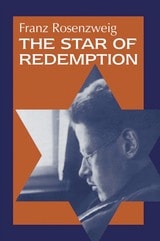
The Star of Redemption
Franz Rosenzweig; Translated by Barbara E. Galli; Foreword by Michael Oppenheim, introduction by Elliot R. Wolfson
University of Wisconsin Press, 2005
The Star of Redemption is essential reading for anyone interested in understanding religion and philosophy in the twentieth century. Fusing philosophy and theology, the book assigns both Judaism and Christianity distinct but equally important roles in the spiritual structure of the world. Franz Rosenzweig finds in both biblical religions approaches to a comprehension of reality.
The major themes and motifs of The Star—the birth, life, death, and the immortality of the soul; Eastern philosophies and Jewish mysticism; the relationship between God, world and humanity over time; and revelation as the real biblical miracle of faith and path to redemption—resonate meaningfully.

Three Stars of Redemption
The Influential Women in the Life of Franz RosenzweigAmy Hill Shevitz
University of Alabama Press, 2026
A revelatory study of the overlooked ways that Franz Rosenzweig’s closest relationships with women shaped his philosophical legacy and reframed Jewish thought
Three Stars of Redemption: The Influential Women in the Life of Franz Rosenzweig by Amy Hill Shevitz offers a groundbreaking reexamination of Franz Rosenzweig, one of the most influential Jewish philosophers of the twentieth century, through the lens of three pivotal women in his life. The book is a compelling study of the ways that Rosenzweig’s intellectual and emotional world were shaped by his mother, Adele Alsberg Rosenzweig, his wife, Edith Hahn Rosenzweig, and his lover Margrit Rosenstock-Huessy, charting the influence those women had, by extension, on modern Jewish thought.
Rosenzweig is best known for his work of essential religious philosophy The Star of Redemption and his role in the Weimar Jewish Renaissance. Yet Shevitz reveals how the maternal, romantic, and marital relationships he maintained were not peripheral but central to his philosophical development and lived Judaism. Drawing on archival research and close readings of correspondence and historical context, Shevitz restores agency to these women, whose lives have been marginalized or misrepresented in scholarship. Adele’s bourgeois upbringing and intimate intellectual bond with her son, Edith’s independent journey into Judaism, and Margrit’s complex role as both muse and thinker are explored with nuance and depth. Shevitz challenges reductive portrayals and brings their full humanity to light. This richly contextualized study expands the understanding of Jewish cultural history, gender, and the personal dimensions of philosophical inquiry. Three Stars of Redemption is a vital contribution to Jewish studies, women’s history, and the legacy of Rosenzweig’s thought.