Results by title
3 books match the query 'Rothman, Hal'
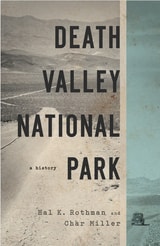
Death Valley National Park
A HistoryHal Rothman
University of Nevada Press, 2013
This history begins with a discussion of the physical setting, its geography and geology, and descriptions of the Timbisha, the first peoples to inhabit this tough and dangerous landscape. In the 19th-century and early 20th century, new arrivals came to exploit the mineral resources in the region and develop permanent agricultural and resort settlements. Although Death Valley was established as a National Monument in 1933, fear of the harsh desert precluded widespread acceptance by both the visiting public and its own administrative agency. As a result, Death Valley lacked both support and resources. This volume details the many debates over the park’s size, conflicts between miners, farmers, the military, and wilderness advocates, the treatment of the Timbisha, and the impact of tourists on its cultural and natural resources.
In time, Death Valley came to be seen as one of the great natural wonders of the United States, and was elevated to full national park status in 1994. The history of Death Valley National Park embodies the many tensions confronting American environmentalism.
The Making of Modern Nevada
Hal Rothman
University of Nevada Press, 2010
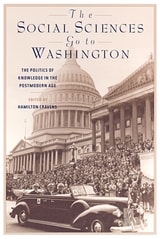
The Social Sciences Go to Washington
The Politics of Knowledge in the Postmodern AgeEdited by Hamilton Cravens
Rutgers University Press, 2003
What happens when the allegedly value-free social sciences enter the national political arena? In The Social Sciences Go to Washington, scholars examine the effects of the massive influx of sociologists, demographers, economists, educators, and others to the federal advisory process in the postwar period. Essays look at how these social scientists sought to change existing policies in welfare, public health, urban policy, national defense, environmental policy, and science and technology policy, and the ways they tried to influence future policies.
Policymakers have been troubled that followers of postmodernism have questioned the legitimacy of scientific and political authority to speak for the desires of social groups. As the social sciences increasingly become expressions of individual preferences, the contributors ask, how can they continue to be used to set public policy for us all?
This collection is a useful resource for anyone studying the relationship between science and the government in the postwar years.