Results by title
2 books match the query 'Rubén Darío'
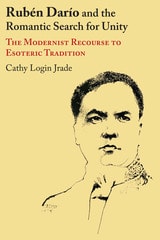
Rubén Darío and the Romantic Search for Unity
The Modernist Recourse to Esoteric TraditionBy Cathy Login Jrade
University of Texas Press, 1983
Modernism was the major Spanish American literary movement of the late nineteenth and early twentieth centuries. Leader of that influential movement was Rubén Darío, the Nicaraguan now recognized as one of the most important Hispanic poets of all time.
Like the Romantics in England and the Symbolists on the Continent, Darío and other Modernists were strongly influenced by occultist thought. But, as the poet Octavio Paz has written, "academic criticism has ... preferred to close its eyes to the stream of occultism that runs throughout Darío's work. This silence damages our comprehension of his poetry."
Cathy Login Jrade's groundbreaking study corrects this critical oversight. Her work clearly demonstrates that esoteric tradition is central to Modernism and that an understanding of this centrality clarifies both the nature of the movement and its relationship to earlier European literature.
After placing Modernism in a broad historical and literary perspective, Jrade examines the impact of esoteric beliefs upon Darío's view of the world and the role of poetry in it. Through detailed and insightful analyses of key poems, she explores the poet's quest for solutions to the nineteenth-century crisis of belief.
The movement that Ruben Darío headed brought Hispanic poetry into the mainstream of the "modern tradition," with its sense of fragmentation and alienation and its hope for integration and reconciliation with nature. Rubén Darío and the Romantic Search for Unity enriches our understanding of that movement and the work of its leading poet.
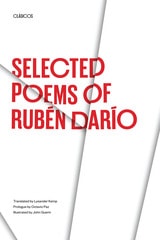
Selected Poems of Rubén Darío
By Rubén Darío
University of Texas Press, 1965
Toward the close of the last century, the poetry of the Spanish-speaking world was pallid, feeble, almost a corpse. It needed new life and a new direction. The exotic, erratic, revolutionary poet who changed the course of Spanish poetry and brought it into the mainstream of twentieth-century Modernism was Félix Rubén García Sarmiento (1867-1916) of Nicaragua, who called himself Rubén Darío.
Since its original publication in 1965, this edition of Darío's poetry has made English-speaking readers better acquainted with the poet who, as Enrique Anderson Imbert said, "divides literary history into 'before' and 'after.'" The selection of poems is intended to represent the whole range of Darío's verse, from the stinging little poems of Thistles to the dark, brooding lines of Songs of the Argentine and Other Poems. Also included, in the Epilogue, is a transcript of a radio dialogue between two other major poets, Federico García Lorca of Spain and Pablo Neruda of Chile, who celebrate the rich legacy of Rubén Darío.